Context
Tribal representatives have raised concerns over efforts by the Andaman and Nicobar Islands administration to integrate the Shompen community into a modern lifestyle.
About the Shompen
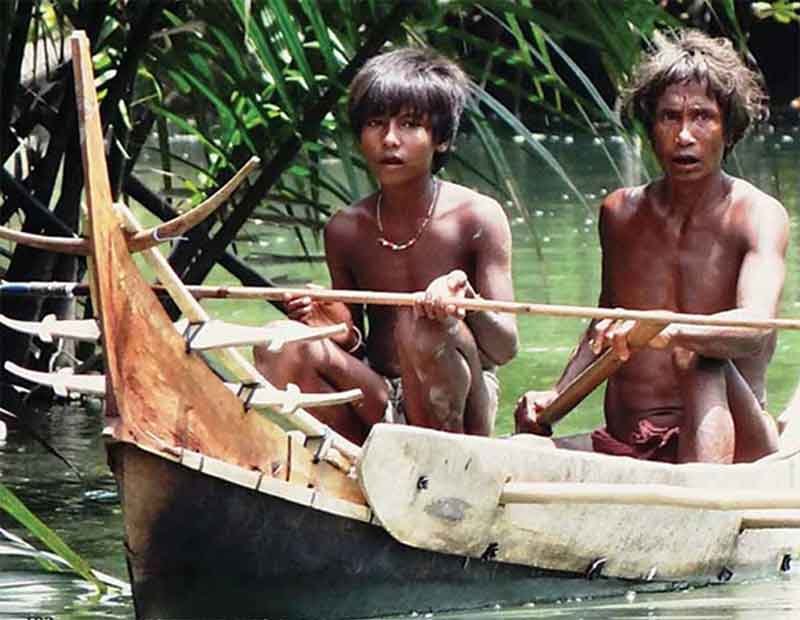
- The Shompen inhabit the tropical forests of Great Nicobar Island.
- They are classified as a Particularly Vulnerable Tribal Group (PVTG) and are among India’s most isolated indigenous communities.
- Traditionally, they practise semi-nomadic hunting and gathering, living in small groups and depending largely on forest resources.
- Pandanus fruit (larop) is an important part of their traditional diet.
- They speak the Shompen language, which has several dialectal variations.
Society and Beliefs
- The basic social unit is generally a nuclear family comprising parents and their unmarried children.
- Families are generally male-headed, with senior men playing an important role in decision-making.
- Monogamy is common, although polygamy is also reported.
- In their traditional belief system, Houou (the Moon) is regarded as the creator of the universe.
FAQs
- Where do the Shompen live?
They primarily inhabit the forested areas of Great Nicobar Island in the Andaman and Nicobar Islands.
- What is the status of the Shompen?
They are recognised as a Particularly Vulnerable Tribal Group (PVTG) in India.
- What is their traditional livelihood?
The Shompen traditionally depend on hunting, gathering and forest produce and follow a semi-nomadic lifestyle.
- What is larop?
Larop is the pandanus fruit, an important traditional food of the Shompen.
- What language do the Shompen speak?
They speak the Shompen language, which has several dialectal variations.
- What is Houou?
Houou refers to the Moon, which is traditionally regarded as the creator of the universe in Shompen belief.