Context
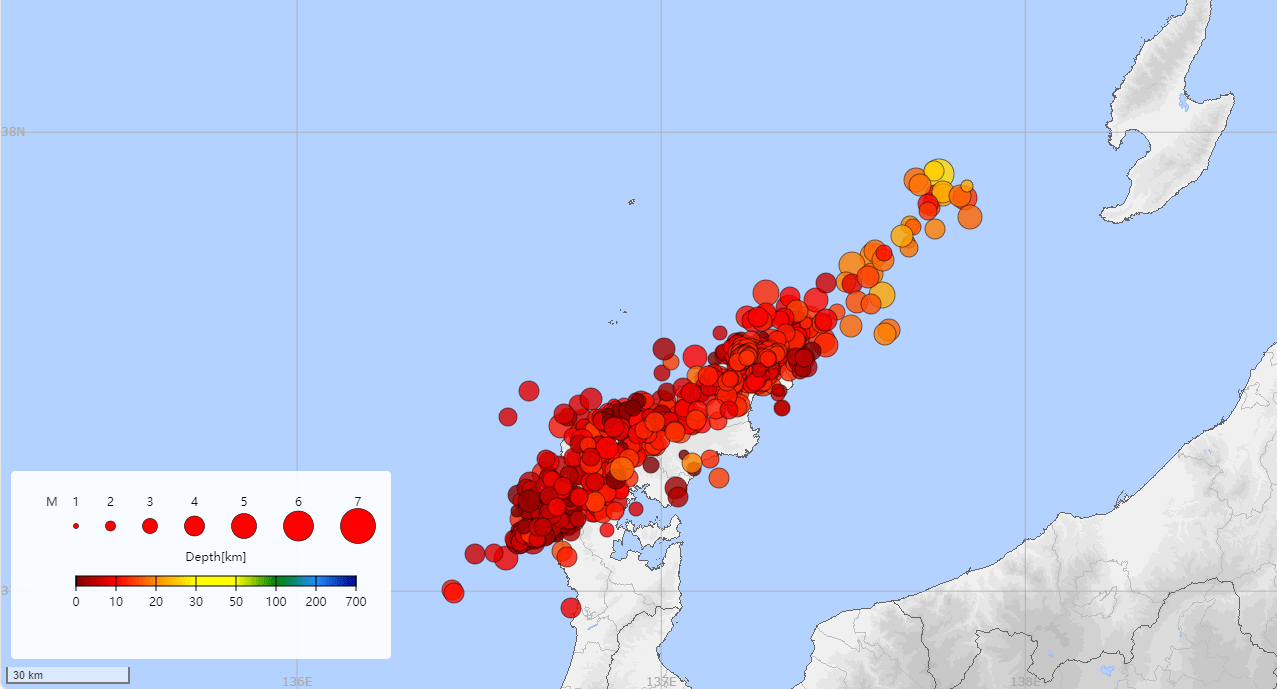
Maharashtra has recently recorded a series of small earthquakes occurring within a limited region over a short period. The state has experienced similar seismic activity in the past, known as an earthquake swarm.
About Earthquake Swarm
- A series of repeated earthquakes occurring in a small area over a short period, usually without a single dominant main shock is called earthquake swarms
- Intensity: Most tremors are low-magnitude, but hundreds or even thousands may occur over weeks or longer.
- Mechanism: They occur when stress or seismic energy is released through repeated movements along faults and cracks in the Earth’s crust.
Major Causes
- Movement of Fluids: Movement of water or other fluids through cracks increases pressure and may cause faults to slip, triggering earthquakes. It is particularly common in geothermal and volcanic regions.
- Magma Movement: In volcanic areas, the upward movement of magma can fracture surrounding rocks. The opening and expansion of magma-filled cracks generate repeated earthquakes.
- Slow-Slip Events:
- A slow-slip event is a gradual movement along a fault that occurs over weeks to years, rather than within seconds like a normal earthquake.
- They can redistribute crustal stress and trigger smaller earthquakes, especially in subduction zones.
- Tectonic Stress: Gradual movement of tectonic plates can build stress along faults and repeated small fault movements may produce an earthquake swarm.
- Human Activities: Activities such as reservoir filling, mining, fluid injection and geothermal operations can alter underground pressure and trigger small earthquakes. These are generally called induced or triggered seismicity.
Consequences of Earthquake Swarms
- Landslides and Rockfalls: Persistent shaking may destabilise steep slopes, increasing the risk of landslides and rockfalls.
- Infrastructure Stress: Frequent tremors can weaken already damaged or poorly built structures, even when individual earthquakes are small.
- Hazard Assessment: Changes in the frequency, depth and magnitude of tremors can provide useful information about underlying geological activity.
UPSC FAQs
Q1. What is an earthquake swarm?
Ans. An earthquake swarm is a cluster of repeated earthquakes occurring in a limited area over a relatively short period. It generally lacks a clearly identifiable main shock.
Q2. How is an earthquake swarm different from a normal earthquake sequence?
Ans. A normal sequence usually has a dominant main shock followed by aftershocks. In a swarm, several earthquakes occur without one clearly dominant event.
Q3. What is a slow-slip event?
Ans. It is a gradual movement along a fault that may continue for weeks to years, releasing tectonic stress much more slowly than an ordinary earthquake.