India’s structural transformation has been services-led rather than manufacturing-led. While the conventional development pathway moves from agriculture → manufacturing → services, India’s services sector expanded rapidly before manufacturing became a major source of employment.
According to NITI Aayog, services accounted for 54.5% of India’s GVA in 2023–24, compared with 28.8% for industry and 16.7% for agriculture.
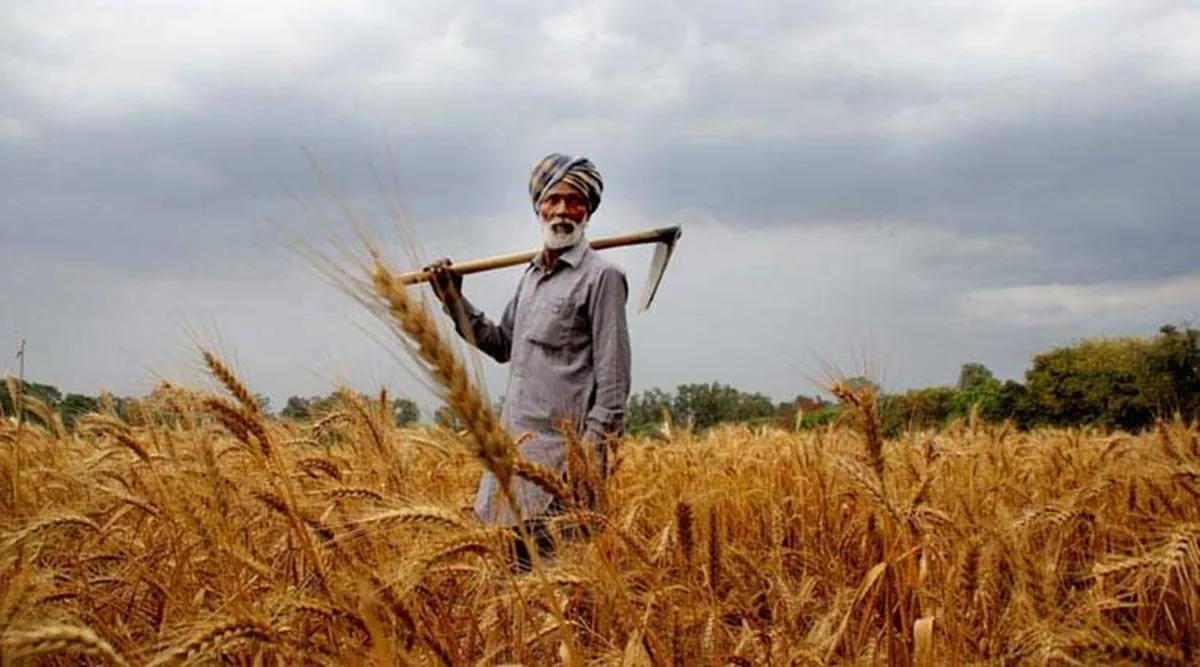
This contrast is important because agriculture’s lower share in GVA does not imply low dependence on the sector. A substantial share of India’s workforce continues to depend on agriculture, reflecting a significant productivity gap between agriculture and other sectors.
The Union Budget 2026–27 also proposed an Education to Employment and Enterprise Standing Committee to examine the growth of the services sector and its employment potential.
India’s Services-First Transformation
India did not completely bypass manufacturing. Industrial production and capabilities have expanded, but manufacturing did not absorb surplus agricultural labour on the scale witnessed in many earlier industrialising economies.
Meanwhile, IT, finance, telecommunications, business services and professional services expanded rapidly. Services consequently became the largest contributor to GVA even though agriculture continued to support a substantial share of the workforce.
Factors Behind the Shift
- Agricultural Constraints
- Low productivity and disguised unemployment limited the scope for further employment in agriculture.
- Small and fragmented landholdings constrained mechanisation, investment and economies of scale.
- Limited rural industries and agro-processing reduced opportunities for non-farm employment.
These conditions encouraged movement towards more productive activities outside agriculture.
- Manufacturing Constraints: Industrial expansion faced challenges related to land, infrastructure, finance, logistics, regulation and labour markets. Increasing capital intensity and technology adoption also limited employment generation in some manufacturing activities.
Consequently, manufacturing did not become the large-scale absorber of surplus labour that it was in several earlier industrialising economies.
- Human Capital Advantage: India developed a large pool of educated, technically skilled and English-speaking workers. This provided a strong foundation for IT, software, finance, consulting and business services.
Many modern services also require relatively less land and physical capital than large-scale manufacturing, creating lower entry barriers for firms.
- Economic Reforms and Globalisation: The 1991 economic reforms increased India’s integration with the global economy and encouraged private investment, foreign investment and international trade.
Global firms increasingly outsourced technology and business functions to India, helping develop capabilities in software, IT-enabled services and professional services.
- Technological Change: The spread of computers, telecommunications and the internet made many services tradable across borders. India could therefore participate in global markets without first developing the physical industrial infrastructure required by many manufacturing activities.
India’s digital public infrastructure, including Aadhaar, UPI and India Stack, subsequently reduced transaction costs and supported the expansion of fintech, e-commerce and other digital services.
- Rising Domestic Demand : Urbanisation, rising incomes and changing consumption patterns increased demand for banking, healthcare, education, telecommunications, transport, retail and tourism.
Thus, services benefited from both global demand and an expanding domestic market.
Economic Significance
- Strong Export Performance
India’s services exports reached a record $421.3 billion in FY2025–26, compared with $387.5 billion in FY2024–25. The services surplus generates foreign-exchange earnings and helps partly offset the merchandise trade deficit, supporting India’s external position.
- Higher Productivity
Modern activities such as IT, finance and professional services generally generate higher value per worker than many traditional economic activities. Their expansion has therefore contributed to productivity and income growth.
- Global Competitiveness
India has developed internationally competitive capabilities in IT/ITeS, software, business services, finance and professional services, strengthening its participation in global markets.
- Linkages with Other Sectors
Services are closely connected with the wider economy. Banking provides finance, logistics moves goods, telecommunications connects businesses and markets, while retail and e-commerce facilitate market access.
These linkages can improve the productivity of agriculture and manufacturing.
Government Response
India is pursuing a complementary strategy of retaining its services advantage while strengthening manufacturing and employment generation.
- Digital India, India Stack and UPI have expanded the digital ecosystem supporting payments and online economic activity.
- Skill India and NEP 2020 aim to strengthen technical, digital and industry-oriented skills.
- Startup India and PM MUDRA support entrepreneurship and access to finance.
- Global Capability Centres (GCCs) are being encouraged to undertake higher-value activities such as R&D, analytics, engineering and product development.
- Make in India and the Production Linked Incentive (PLI) scheme seek to expand domestic manufacturing and attract investment and technology.
- PM Gati Shakti and the National Logistics Policy aim to improve connectivity and address logistics constraints.
- The National Manufacturing Mission and industrial corridors seek to strengthen industrial ecosystems and expand employment opportunities.
Challenges and Way Forward
Challenges
|
Way Forward
|
| Limited Mass Employment: Services generate over half of GVA but employ only around 30% of workers, while agriculture still employs about 45%, creating an output–employment gap. | Adopt a balanced growth model: Develop agriculture, labour-intensive manufacturing and high-value services together to ensure broad-based growth.
|
| Weak Manufacturing Base: Services grew before strong industrialisation, limiting manufacturing’s ability to create jobs and support services. | Create more productive jobs: Promote textiles, footwear, food processing, electronics and tourism to absorb surplus agricultural labour. |
| Skill Mismatch: High-value services require digital, technical and analytical skills, while many workers remain low- or semi-skilled. | Raise agricultural productivity: Improve irrigation, mechanisation, storage, technology and diversification to increase farm incomes and release labour for non-farm activities. |
| Regional Concentration: High-value services are concentrated in major cities such as Bengaluru, Hyderabad, Mumbai and Delhi-NCR, widening regional disparities. | Build job-ready skills: Strengthen vocational training, apprenticeships and industry-linked education, especially in AI, digital, green and technical skills. |
| Informal Employment: A large share of service workers remains in low-productivity, informal jobs with limited wages and social security. | Strengthen MSMEs and value chains: Improve credit, technology, market access and logistics, while linking MSMEs with agriculture and large industries. |
| Global and Technological Risks: Export-oriented services face global slowdowns, protectionism and visa restrictions, while AI and automation may reduce routine jobs. | Develop Tier-2 and Tier-3 cities: Improve infrastructure, digital connectivity and skills to spread jobs and services beyond major metros. |
Conclusion
India’s services-led growth was driven by the 1991 reforms, human capital, technology, globalisation and digital infrastructure, making India a major global services hub. However, the transformation remains incomplete, as agriculture still employs a large workforce while manufacturing has not created enough mass employment.
India therefore needs a balanced model of productive agriculture + labour-intensive manufacturing + high-value services to achieve productive employment, higher incomes, inclusive growth and Viksit Bharat @2047.
UPSC-Oriented FAQs
Q1. What were the main reasons for India’s services boom?
Ans. The major drivers were 1991 reforms, skilled human capital, English proficiency, IT and telecom growth, global outsourcing, digital infrastructure and rising domestic demand.
Q2. Why did manufacturing fail to absorb labour on a large scale?
Ans. Constraints relating to infrastructure, logistics, skills, land, finance, firm fragmentation and global-value-chain integration limited manufacturing’s expansion and employment potential.
Q3. Is India’s services-led growth a weakness?
Ans. No. It is a major economic strength because it generates high productivity, exports and foreign exchange. The weakness is that high-value services cannot absorb India’s entire low- and semi-skilled workforce.
Q4. Why is manufacturing still important for India?
Ans. Manufacturing can absorb large numbers of semi-skilled workers and create strong linkages with agriculture, logistics, finance and services. It is therefore important for inclusive structural transformation.
Q5. How can India make its services growth more inclusive?
Ans. India should expand skills, digital infrastructure, Tier-2 and Tier-3 city ecosystems, formal employment and labour-intensive services, while improving access to high-productivity jobs.