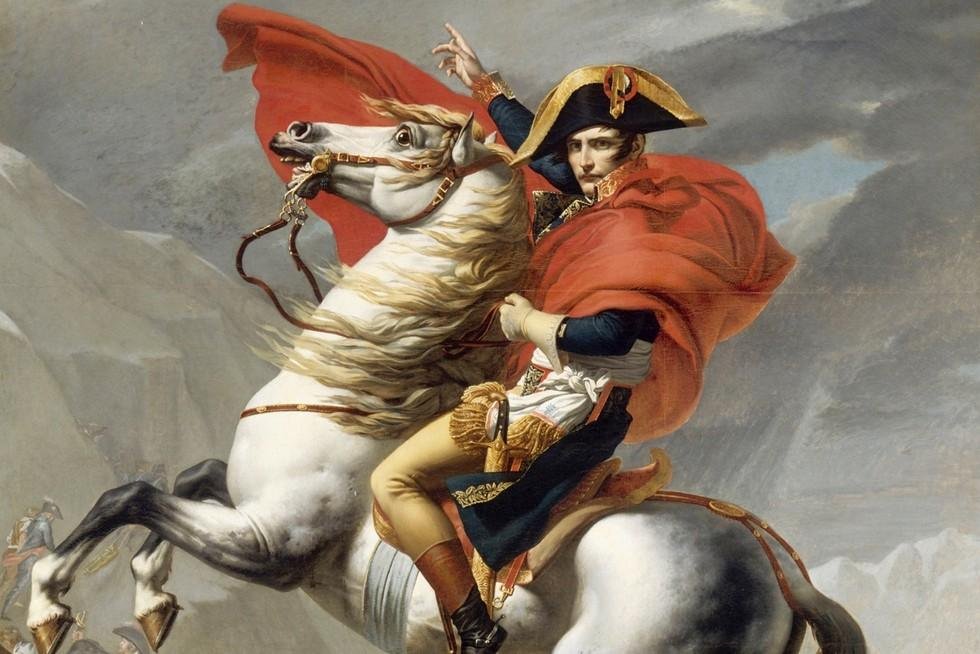
Early Life and Rise to Power
Born on 15th August 1769 in Ajaccio, Corsica, Napoleon Bonaparte emerged as a prominent military and political figure during the French Revolution (1789–1799). He later became known as Napoleon I and was crowned Emperor of France in 1804.
Napoleon rose rapidly through the French army during the French Revolutionary Wars and became a brigadier general in 1793. His military successes in Italy strengthened his reputation and contributed to the Treaty of Campo Formio in 1797, following French victories over Austria.
Napoleon married Josephine de Beauharnais in 1796. Her social connections helped him gain access to influential circles in France. However, his military achievements, particularly his victories in Italy, remained the principal factor behind his growing prominence.
His campaign in Egypt during 1798–1799 ended unsuccessfully after the French fleet was defeated by the British under Horatio Nelson at the Battle of the Nile.
In 1799, Napoleon participated in the Coup of 18 Brumaire, which ended the Directory. The Consulate was established, with Napoleon becoming First Consul. His victory over Austria at the Battle of Marengo in 1800 further strengthened his position. The Treaty of Amiens in 1802 temporarily restored peace between Britain and France.
Napoleonic Wars and Expansion
The Napoleonic Wars (1803–1815) brought France into prolonged conflicts with successive European coalitions and enabled Napoleon to extend French influence across much of Europe.
France suffered a major naval defeat at the Battle of Trafalgar in 1805, where the British fleet defeated the Franco-Spanish naval force. On land, Napoleon achieved a decisive victory at the Battle of Austerlitz later that year against Austrian and Russian forces.
The victory at Austerlitz contributed to the dissolution of the Holy Roman Empire and the creation of the Confederation of the Rhine, strengthening French influence in central Europe.
Napoleon also reshaped France’s overseas interests. In 1803, France sold the Louisiana Territory to the United States for $15 million, in what became known as the Louisiana Purchase.
Major Reforms
Napoleon’s influence extended beyond military conquest. His most important institutional contribution was the Napoleonic Code, introduced in 1804. Also known as the French Civil Code, it established equality before the law, protected freedom of religion and promoted merit-based access to public employment while removing many legal privileges based on birth.
His administration also contributed to the removal of feudal privileges and serfdom in territories under French control. In education, he established lycées, a system of secondary schools that strengthened state involvement in education.
These measures helped spread ideas of legal uniformity, merit-based administration and the weakening of traditional feudal structures across parts of Europe.
Factors Behind Napoleon’s Downfall
Napoleon’s prolonged military campaigns placed increasing economic and military pressure on France.
- The Continental System, designed to weaken Britain by restricting its trade with continental Europe, failed to achieve its intended objective and created economic difficulties.
- The Peninsular War (1807–1814) against French forces in Spain and Portugal, with British involvement, further stretched French military resources.
- The decisive setback came with the invasion of Russia in 1812. Problems related to logistics, supplies, disease, military resistance and severe weather caused heavy French losses and weakened Napoleon’s military position.
- Napoleon was defeated in 1814 and exiled to Elba. He returned briefly to power but suffered his final defeat at the Battle of Waterloo in 1815. He was subsequently exiled to Helena, where he died on 5 May 1821.
Historical Significance
Napoleon played a major role in reshaping Europe’s political, legal and administrative order. His military campaigns disrupted established political structures, while reforms such as the Napoleonic Code influenced legal and administrative systems beyond France.
His career also demonstrated the limits of prolonged military expansion when faced with economic pressure, logistical difficulties, sustained warfare and coordinated resistance.
Conclusion
Napoleon’s empire eventually collapsed, but his legal and administrative reforms left a lasting influence on modern Europe. His career remains a major turning point in European political history.
Frequently Asked Questions
Q1. When and where was Napoleon Bonaparte born?
Ans: Napoleon Bonaparte was born on 15 August 1769 in Ajaccio, Corsica.
Q2. Whom did Napoleon marry in 1796?
Ans: Napoleon married Josephine de Beauharnais in 1796. Her social connections helped him access influential circles, although his military achievements remained the main driver of his rise.
Q3. How did Napoleon come to political power?
Ans: Through the Coup of 18 Brumaire in 1799, Napoleon helped overthrow the Directory. The subsequent Consulate made him First Consul.
Q4. What was the Napoleonic Code?
Ans: Introduced in 1804, it was a civil law system that promoted equality before the law, freedom of religion and merit-based public employment while removing many legal privileges based on birth.
Q5. Why was the Battle of Austerlitz significant?
Ans: Napoleon defeated Austrian and Russian forces at Austerlitz in 1805. The victory contributed to the dissolution of the Holy Roman Empire and the formation of the Confederation of the Rhine.
Q6. Why did Napoleon’s invasion of Russia fail?
Ans: The campaign was undermined by logistical and supply problems, disease, military resistance and severe weather, resulting in heavy French losses.
Q7. When and where was Napoleon finally defeated?
Ans: Napoleon suffered his final defeat at the Battle of Waterloo in 1815. He was subsequently exiled to St. Helena, where he died in 1821.