Context
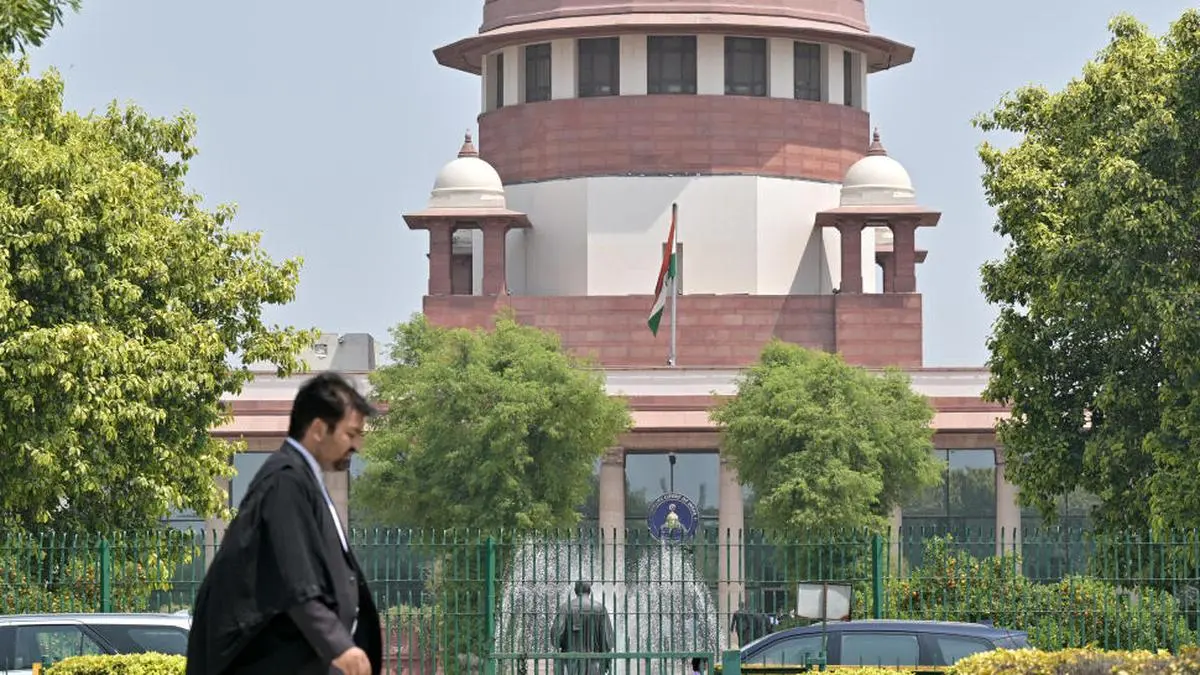
Supreme Court Judge Justice Ujjal Bhuyan recently expressed concern over the declining transparency in the functioning of the Supreme Court Collegium. He emphasised that recording brief reasons for judicial appointments would strengthen public confidence, enhance institutional accountability and reinforce the credibility of the judiciary.
About the Collegium System
The Collegium System is the mechanism through which judges of the Supreme Court and High Courts are appointed, while the transfer of High Court judges is also carried out through the Collegium mechanism.
It is a judicially evolved system and finds no explicit mention in the Constitution. The appointment of Supreme Court judges is governed by Article 124, the appointment of High Court judges by Article 217, and the transfer of High Court judges by Article 222. However, the Collegium System itself has evolved through judicial interpretation of these constitutional provisions.
The system aims to safeguard the independence of the judiciary by assigning primacy in judicial appointments to the judiciary while maintaining the constitutional balance among the Legislature, Executive and Judiciary.
Constitutional Provisions
| Articles | Provisions |
| Article 124 | Appointment of Supreme Court Judges |
| Article 217 | Appointment of High Court Judges |
| Article 222 | Transfer of High Court Judges |
| Article 143 | Presidential Reference (basis of the Third Judges Case) |
Evolution of the Collegium System
The Collegium System evolved through a series of landmark Supreme Court judgments, collectively known as the Three Judges Cases, which gradually shifted primacy in judicial appointments from the Executive to the Judiciary.
- First Judges Case (S.P. Gupta v. Union of India, 1981): The Supreme Court held that the Executive enjoyed primacy in judicial appointments and that the opinion of the Chief Justice of India (CJI) did not have overriding authority over the Government.
- Second Judges Case (Supreme Court Advocates-on-Record Association v. Union of India, 1993): The Supreme Court overruled the First Judges Case and held that the Chief Justice of India, acting collectively with the senior-most judges of the Supreme Court, would enjoy primacy in judicial appointments. This judgment laid the foundation of the Collegium System.
- Third Judges Case (Presidential Reference, 1998): Acting on a Presidential Reference under Article 143, the Supreme Court clarified the composition and functioning of the Collegium. It held that the Chief Justice of India should make recommendations in consultation with the four senior-most judges of the Supreme Court, thereby strengthening the consultative process.
Together, the Second and Third Judges Cases established the present Collegium System, which was subsequently reaffirmed by the Supreme Court in the Fourth Judges Case (2015).
Composition and Functions
Supreme Court Collegium: The Supreme Court Collegium consists of:
- Chief Justice of India (CJI)
- Four senior-most judges of the Supreme Court
The Supreme Court Collegium is responsible for recommending:
- Appointment of judges to the Supreme Court.
- Appointment of Chief Justices of High Courts.
- Appointment and transfer of High Court judges.
The Collegium is not a permanent constitutional body. It functions as a consultative mechanism whenever appointments or transfers of judges are considered.
High Court Collegium
A High Court Collegium consists of:
- Chief Justice of the High Court
- Two senior-most judges of the High Court
It recommends suitable candidates for appointment as judges of the respective High Court.
Appointment Process
The Collegium evaluates candidates on the basis of several constitutional and institutional considerations, including:
- Judicial merit and competence
- Integrity and professional reputation
- Seniority
- Representation of different High Courts, regions and sections of society
Before finalising its recommendations, the Collegium consults judges familiar with the affairs and requirements of the concerned High Court to ensure a comprehensive assessment of the candidates.
The recommendations are forwarded to the Union Government, where they are processed by the Department of Justice before being submitted to the President of India.
The Government may return a recommendation once for reconsideration. However, if the Collegium reiterates its recommendation, the long-standing constitutional convention is that the Government accepts it. The President of India then makes the formal appointment under the relevant constitutional provisions.
Attempt to Replace the Collegium System
To reform the judicial appointment process, Parliament enacted the Constitution (Ninety-Ninth Amendment) Act, 2014 and the National Judicial Appointments Commission (NJAC) Act, 2014, seeking to replace the existing Collegium System with a commission-based appointment mechanism.
The proposed National Judicial Appointments Commission (NJAC) comprised:
- Chief Justice of India
- Two senior-most Supreme Court judges
- Union Minister for Law and Justice
- Two eminent persons
The objective of the NJAC was to introduce greater transparency and broader institutional participation in judicial appointments.
However, in Supreme Court Advocates-on-Record Association v. Union of India (2015), popularly known as the Fourth Judges Case, the Supreme Court declared both the 99th Constitutional Amendment and the NJAC Act, 2014 unconstitutional. The Court held that judicial independence forms part of the Basic Structure of the Constitution and consequently restored the Collegium System.
Significance of the Collegium System
The Collegium System was developed primarily to safeguard the independence of the judiciary from undue executive influence in judicial appointments. Over time, it has become an important feature of India’s constitutional framework governing judicial appointments and has played a significant role in preserving the autonomy of the higher judiciary.
Its significance includes:
- Protecting judicial independence by limiting executive influence in judicial appointments.
- Upholding the constitutional principle of separation of powers.
- Promoting merit-based judicial appointments through collective institutional decision-making.
- Strengthening the rule of law by ensuring an impartial and independent judiciary.
- Enhancing public confidence in constitutional courts.
- Preserving the constitutional balance among the Legislature, Executive and Judiciary.
Although the Collegium System has played a crucial role in safeguarding judicial independence, its functioning has increasingly become the subject of public debate. In recent years, discussions have shifted from the constitutional validity of the system to improving its transparency, accountability and institutional effectiveness. The observations made by Justice Ujjal Bhuyan have renewed attention on the need to balance judicial independence with public accountability in the process of judicial appointments.
Recent Developments
Transparency in Court Proceedings
Justice Bhuyan described live streaming of court proceedings as one of the most significant transparency initiatives undertaken by the judiciary in recent years. Following the Supreme Court’s recognition of live streaming, its implementation has been introduced in phases to improve public access to judicial proceedings while ensuring the orderly administration of justice.
He observed that isolated portions of courtroom proceedings are sometimes circulated with misleading captions, creating distorted public perceptions and affecting the reputation of judges, advocates and litigants. Therefore, efforts should focus on preventing misuse of judicial proceedings without undermining the broader objective of judicial transparency.
Reaffirming the importance of open courts, he referred to the following landmark judgments.
- Swapnil Tripathi v. Supreme Court of India (2018)
Context: The Supreme Court examined whether proceedings of constitutional courts should be live-streamed to improve public access to justice.
Verdict:
- Recognised live streaming of court proceedings as an important instrument for promoting transparency, accountability and access to justice.
- Held that open court proceedings strengthen public confidence in the justice delivery system.
- Observed that the use of technology can improve public access without compromising the fairness of judicial proceedings.
- Central Public Information Officer, Supreme Court of India v. Subhash Chandra Agarwal (2020)
Context: The Supreme Court considered whether the office of the Chief Justice of India falls within the scope of the Right to Information Act, 2005, while balancing transparency with judicial independence.
Verdict:
- Held that the office of the Chief Justice of India is a public authority under the RTI Act.
- Observed that judicial independence is not secured through secrecy alone and that transparency strengthens public confidence in the judiciary.
- Clarified that disclosure of information should balance transparency with legitimate concerns relating to privacy, confidentiality and judicial independence.
Challenges and Way Forward
| Challenges | Way Forward |
| Limited transparency: Collegium resolutions do not always record reasons for judicial appointments, leading to concerns regarding opacity. | Record reasoned recommendations: Publish brief reasons for appointments while preserving the confidentiality of internal deliberations. |
| Absence of objective selection criteria: The lack of publicly defined standards creates perceptions of subjectivity in judicial appointments. | Institutionalise objective criteria: Adopt transparent and well-defined parameters based on merit, integrity, judicial competence and experience |
| Delay in appointments: Vacancies in constitutional courts contribute to judicial delays and increase the pendency of cases. | Prescribe institutional timelines: Ensure timely processing of Collegium recommendations by both the Judiciary and the Executive to reduce delays. |
| Limited diversity: Representation of women, marginalised communities and different regions in the higher judiciary remains inadequate. | Promote inclusive representation: Encourage greater diversity while ensuring that merit, integrity and judicial competence remain the primary considerations. |
| Perceived lack of accountability: Limited disclosure may create perceptions of inconsistency and arbitrariness in appointments. | Enhance institutional accountability: Improve transparency through reasoned decisions and greater procedural consistency. |
| Pending Memorandum of Procedure (MoP): The revised MoP governing judicial appointments has not yet been finalised. | Finalize the revised MoP: Introduce greater clarity, transparency and consistency in the appointment process through an updated MoP. |
| Balancing transparency with judicial independence: Excessive secrecy reduces public trust, while excessive disclosure may affect candid judicial deliberations. | Maintain an appropriate balance: Ensure transparency in final decisions while preserving confidentiality during internal consultations to safeguard judicial independence. |
Conclusion
The Collegium System continues to play a central role in preserving the independence of the judiciary, which forms part of the Basic Structure of the Constitution. At the same time, strengthening transparency, institutional accountability and procedural efficiency, without compromising judicial autonomy, is essential to enhance public confidence and uphold the constitutional vision of an impartial and independent judiciary.
Frequently Asked Questions (FAQs)
Question: Why is the Collegium System not mentioned in the Constitution?
Answer: The Constitution provides for the appointment and transfer of judges through Articles 124, 217 and 222, but it does not prescribe the Collegium System. The system evolved through judicial interpretation in the Three Judges Cases.
Question: Why was the National Judicial Appointments Commission (NJAC) struck down?
Answer: In Supreme Court Advocates-on-Record Association v. Union of India (2015), the Supreme Court held that the NJAC diluted judicial independence, which forms part of the Basic Structure of the Constitution. Consequently, the 99th Constitutional Amendment and the NJAC Act, 2014 were declared unconstitutional.
Question: Why did Justice Ujjal Bhuyan advocate greater transparency in judicial appointments?
Answer: He argued that recording reasons for judicial appointments would strengthen public confidence, recognise deserving candidates, improve institutional accountability and reduce perceptions of arbitrariness in the appointment process.
Question: Why is transparency important in the Collegium System?
Answer: Transparency strengthens public confidence, improves institutional accountability, promotes merit-based appointments and enhances the legitimacy of constitutional courts, while appropriate confidentiality protects the independence of judicial deliberations.
Question: Which Supreme Court judgments were referred to while discussing judicial transparency?
Answer: Justice Ujjal Bhuyan referred to Swapnil Tripathi v. Supreme Court of India (2018), which recognised live streaming of court proceedings, and Central Public Information Officer, Supreme Court of India v. Subhash Chandra Agarwal (2020), which affirmed that transparency and judicial independence are complementary constitutional values.
Question: What is the Memorandum of Procedure (MoP)?
Answer: The Memorandum of Procedure (MoP) is the framework governing the appointment and transfer of judges. Finalising the revised MoP is considered important for improving transparency, consistency and efficiency in judicial appointments.
Question: Which constitutional principle formed the basis for restoring the Collegium System?
Answer: The Supreme Court restored the Collegium System in 2015 after holding that judicial independence forms part of the Basic Structure of the Constitution, and therefore cannot be diluted through ordinary constitutional amendments.