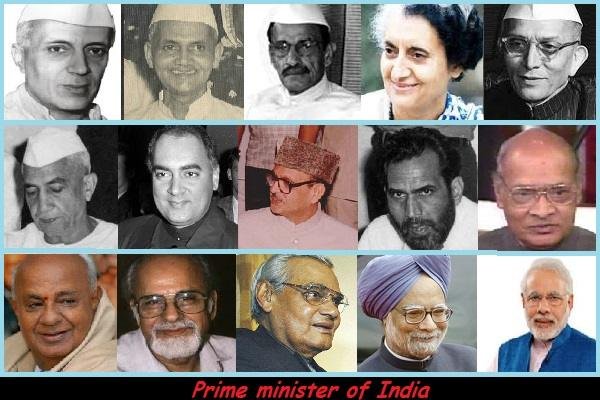
The Prime Minister (PM) is the central figure in India’s parliamentary system and the real executive authority of the Union Government. While the President functions as the constitutional (de jure) executive, the Prime Minister heads the Council of Ministers and exercises actual executive powers. The office provides political leadership, coordinates the functioning of the Union Government, and plays a central role in policy formulation and administration.
Constitutional Position, Appointment and Tenure
- The Constitution provides the basic framework for the office of the Prime Minister, while its practical functioning is largely governed by constitutional conventions. Under Article 75, the President appoints the Prime Minister, although the Constitution does not prescribe the method of selection. In practice, the President appoints the leader of the political party or coalition commanding a majority in the Lok Sabha.
- Where no party secures a clear majority, or when the office of the Prime Minister falls vacant unexpectedly, the President may exercise limited discretion by inviting the leader most likely to command the confidence of the House. Once the ruling party or coalition elects its leader, the President appoints that individual as the Prime Minister in accordance with established parliamentary convention.
- The Constitution also allows a person who is not a Member of Parliament to be appointed as Prime Minister, provided the individual becomes a member of either House of Parliament within six months. Failing to do so results in vacating the office. Unlike the British system, the Prime Minister of India may be a member of either House of Parliament.
- Although the Prime Minister formally holds office during the pleasure of the President, this principle operates within the framework of parliamentary democracy. In practice, continuation in office depends on retaining the confidence of the Lok Sabha. If majority support is lost, the Prime Minister must resign or may be dismissed by the President.
Oath and Emoluments
- Before assuming office, the Prime Minister takes the Oath of Office and the Oath of Secrecy, administered by the President of India. These oaths require the Prime Minister to uphold the Constitution, safeguard the sovereignty and integrity of India, faithfully discharge official duties, and maintain confidentiality regarding matters of government, except where disclosure is necessary for the proper discharge of official responsibilities.
- The salary and allowances of the Prime Minister are determined by Parliament. Besides receiving the salary payable to a Member of Parliament, the Prime Minister is entitled to an official residence, travelling allowance, medical facilities, sumptuary allowance, and other prescribed benefits.
Judicial Interpretation
Judicial decisions have clarified important constitutional issues relating to the appointment and tenure of the Prime Minister.
- Delhi High Court (1980): Held that a person need not establish majority support before being appointed Prime Minister. The President may appoint the individual first and require a floor test within a reasonable period.
- Supreme Court (1997): Held that a person who is not a Member of Parliament may serve as Prime Minister for a maximum of six months. If membership of either House is not secured within this period, the individual ceases to hold office.
Powers and Functions of the Prime Minister
The constitutional position of the Prime Minister finds practical expression through the wide range of executive, legislative, and administrative responsibilities attached to the office. As the head of the Union Government, the Prime Minister provides political leadership, coordinates the functioning of ministries and departments, and ensures coherence in policymaking and administration. In doing so, the office provides strategic direction to the Union executive and facilitates effective governance.
- Leadership of the Council of Ministers
As the head of the Council of Ministers, the Prime Minister determines its composition, allocates portfolios, and ensures the coordinated functioning of the executive. In this role, the Prime Minister provides policy direction to the Council and facilitates collective decision-making across ministries.
The Prime Minister:
- Recommends the appointment of ministers to the President and advises on their removal whenever necessary.
- Allocates and reshuffles ministerial portfolios to ensure efficient administration.
- Presides over meetings of the Council of Ministers and coordinates its decisions.
- Supervises the functioning of ministries and departments while ensuring policy coordination and collective responsibility.
The resignation or death of the Prime Minister results in the collapse of the entire Council of Ministers, underscoring the central importance of the office in India’s parliamentary system.
- Relationship with the President
The Prime Minister serves as the principal channel of communication between the President and the Council of Ministers, thereby ensuring effective coordination between the constitutional head and the real executive.
In this capacity, the Prime Minister:
- Communicates Cabinet decisions and important legislative matters to the President.
- Furnishes information relating to the administration of Union affairs whenever sought by the President and places before the Council of Ministers any matter that the President requires to be considered.
- Advises the President on appointments to key constitutional offices, including the Attorney General of India, Comptroller and Auditor General (CAG), Election Commissioners, and the Chairperson and Members of the Finance Commission.
- Role in Parliament
As the Leader of the Lok Sabha, the Prime Minister guides the government’s legislative agenda and provides political leadership in Parliament. The office also represents the government’s position on major national issues and ensures the smooth conduct of parliamentary business.
Key responsibilities include:
- Advising the President on the summoning and prorogation of Parliament, and recommending the dissolution of the Lok Sabha whenever necessary.
- Presenting major policies and programmes of the Union Government before Parliament.
- Leading discussions on issues of national importance and articulating the government’s position during parliamentary proceedings.
4. Other Important Responsibilities
Beyond its constitutional and parliamentary responsibilities, the Prime Minister performs several functions that strengthen governance and national policy coordination. These include:
- Serving as the Chairperson of NITI Aayog.
- Chairing the National Integration Council and the Inter-State Council.
- Providing leadership in shaping India’s foreign policy.
- Acting as the chief spokesperson of the Union Government.
- Leading the government’s response during national emergencies and other situations requiring coordinated executive action.
Constitutional Provisions Related to the Prime Minister
The Constitution defines the office of the Prime Minister through key provisions that regulate the relationship between the President, the Council of Ministers, and the Prime Minister, while laying down the principles governing the functioning of the Union executive.
| Article
|
|
|
||||
| Article 74 | Aid and Advice of the Council of Ministers | Provides for a Council of Ministers headed by the Prime Minister to aid and advise the President in the exercise of executive powers. The President may once require the Council of Ministers to reconsider its advice, but the reconsidered advice is binding | ||||
| Article 75(1) | Appointment of the Prime Minister and Ministers | Empowers the President to appoint the Prime Minister. Other ministers are appointed by the President on the advice of the Prime Minister. Although the Constitution identifies the appointing authority, the actual selection of the Prime Minister is guided by parliamentary conventions | ||||
| Article 75(2) |
|
Provides that ministers hold office during the pleasure of the President. In the parliamentary system, this principle operates so long as the Council of Ministers enjoys the confidence of the Lok Sabha. | ||||
| Article 75(3) | Collective Responsibility | Establishes that the Council of Ministers is collectively responsible to the Lok Sabha. Under this principle, all ministers function as a unified body and remain in office only so long as the Council of Ministers enjoys the confidence of the Lok Sabha | ||||
| Article 78 | Duties of the Prime Minister | Requires the Prime Minister to communicate decisions of the Council of Ministers to the President, furnish information sought by the President, and place before the Council of Ministers any matter that the President requires to be considered. |
Prime Minister’s Office (PMO)
The Prime Minister’s Office (PMO) serves as the institutional backbone of the Prime Minister’s functioning and occupies a central place in the Union executive. Initially established as a small secretarial unit, it has gradually evolved into the principal institution for policy coordination, executive support, and administrative management. By facilitating coordination among ministries, departments, constitutional authorities, and State Governments, the PMO enables the Prime Minister to discharge constitutional and executive responsibilities effectively.
Organisation and Key Functions
The PMO functions under the political leadership of the Prime Minister and is headed administratively by the Principal Secretary. Its administrative structure includes the Secretary, Additional Secretary, Joint Secretaries, Deputy Secretaries, and other officials who provide professional, policy, and administrative support, ensuring continuity in governance and effective executive coordination.
Beyond routine secretarial assistance, the PMO performs a wide range of functions that support the effective functioning of the Union executive. Its major responsibilities include:
- Assisting the Prime Minister in the discharge of official duties and responsibilities.
- Coordinating with Central Ministries, Departments, and State Governments to facilitate efficient governance.
- Providing secretarial support for the Prime Minister’s responsibilities in various councils, committees, and other official bodies.
- Processing matters assigned under the Government of India (Allocation of Business) Rules and the Transaction of Business Rules.
- Facilitating policy advice, inter-ministerial coordination, public communication, and liaison with the President, Governors, foreign representatives, and other constitutional authorities.
Evolution of the PMO
The growing complexity of governance has considerably expanded the role of the PMO. Beyond providing secretarial assistance, it now supports policy formulation, inter-ministerial coordination, programme monitoring, information management, and executive decision-making. This transformation has made the PMO one of the most important institutions supporting the effective functioning of the Union executive.
Conclusion
The Prime Minister occupies the central position in India’s parliamentary executive by providing political leadership and coordinating the functioning of the Union executive. The Prime Minister’s Office (PMO) complements this role by providing the administrative and institutional support necessary for effective governance. Together, they promote coordinated decision-making, policy continuity, and efficient administration within the constitutional framework
UPSC FAQs
Q1. What is the Prime Minister’s Office (PMO)?
Ans: The PMO is the principal secretarial organisation that assists the Prime Minister in policy coordination, administration, and the discharge of official responsibilities. It serves as the central institutional mechanism supporting the functioning of the Union executive.
Q2. Who heads the Prime Minister’s Office?
Ans: The PMO functions under the political leadership of the Prime Minister and is headed administratively by the Principal Secretary, who is assisted by the Secretary, Additional Secretary, Joint Secretaries, Deputy Secretaries, and other officials.
Q3. What are the major functions of the PMO?
Ans: The PMO provides administrative and secretarial support to the Prime Minister, coordinates with ministries and State Governments, processes official matters, facilitates policy advice, promotes inter-ministerial coordination, and maintains liaison with constitutional authorities.
Q4. How has the PMO evolved over time?
Ans: The PMO has evolved from a small secretarial office into a key institution supporting policy formulation, executive coordination, programme monitoring, information management, and administrative decision-making within the Union Government.
Q5. Why has the PMO become increasingly significant in contemporary governance?
Ans: The increasing complexity of governance has expanded the PMO’s role in policy coordination, administrative support, inter-ministerial cooperation, and monitoring of government programmes, making it an essential institution for effective governance.
Q6. How do the Prime Minister and the PMO complement each other?
Ans: The Prime Minister provides political leadership and strategic direction, while the PMO offers institutional, administrative, and coordination support. Together, they ensure effective governance, policy continuity, and efficient functioning of the Union executive.
Q7. How does the PMO contribute to effective governance in India?
Ans: The PMO facilitates coordination among Central Ministries, Departments, State Governments, and constitutional authorities, supports policy formulation and implementation, assists executive decision-making, and promotes administrative coherence, thereby enabling the Prime Minister to discharge responsibilities effectively.