Context
As part of efforts to strengthen marine ecosystems and support sustainable fisheries, Tamil Nadu will introduce India’s first 3D-printed artificial reef structures in the coastal waters off Ramanathapuram under the second phase of the Pradhan Mantri Matsya Sampada Yojana (PMMSY).
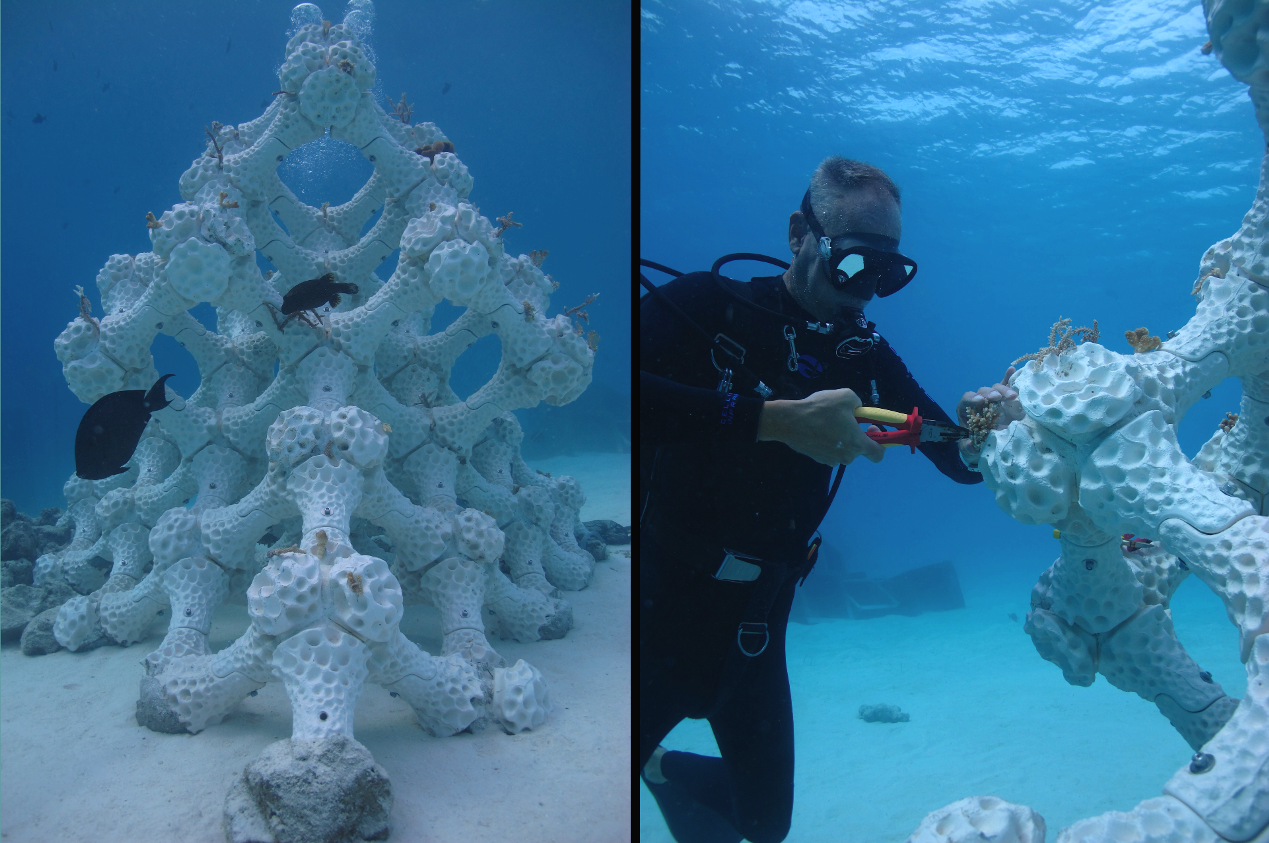
About India’s First 3D-Printed Artificial Reef Modules
- The initiative will function as a pilot project to assess six innovative reef designs created through 3D printing.
- Each reef structure weighs about one tonne and was developed by Tvasta, an IIT Madras-incubated startup, in collaboration with the ICAR–Central Marine Fisheries Research Institute (CMFRI).
- The structures will be installed approximately two nautical miles offshore to aid marine habitat restoration.
Key Features
- The reef structures contain complex cavities and textured surfaces that provide shelter and attachment sites for marine organisms.
- Unlike conventional artificial reefs, they are constructed without iron reinforcement and use materials designed to enhance porosity and biological colonisation.
- Their enhanced surface area and structural complexity facilitate the growth of corals, sponges, and other reef-associated organisms.
- The technology enables faster fabrication, lower labour requirements, and site-specific customisation, improving the efficiency of reef restoration efforts.
- The project is expected to enhance marine biodiversity, strengthen fish habitats, and support sustainable fisheries.