Context
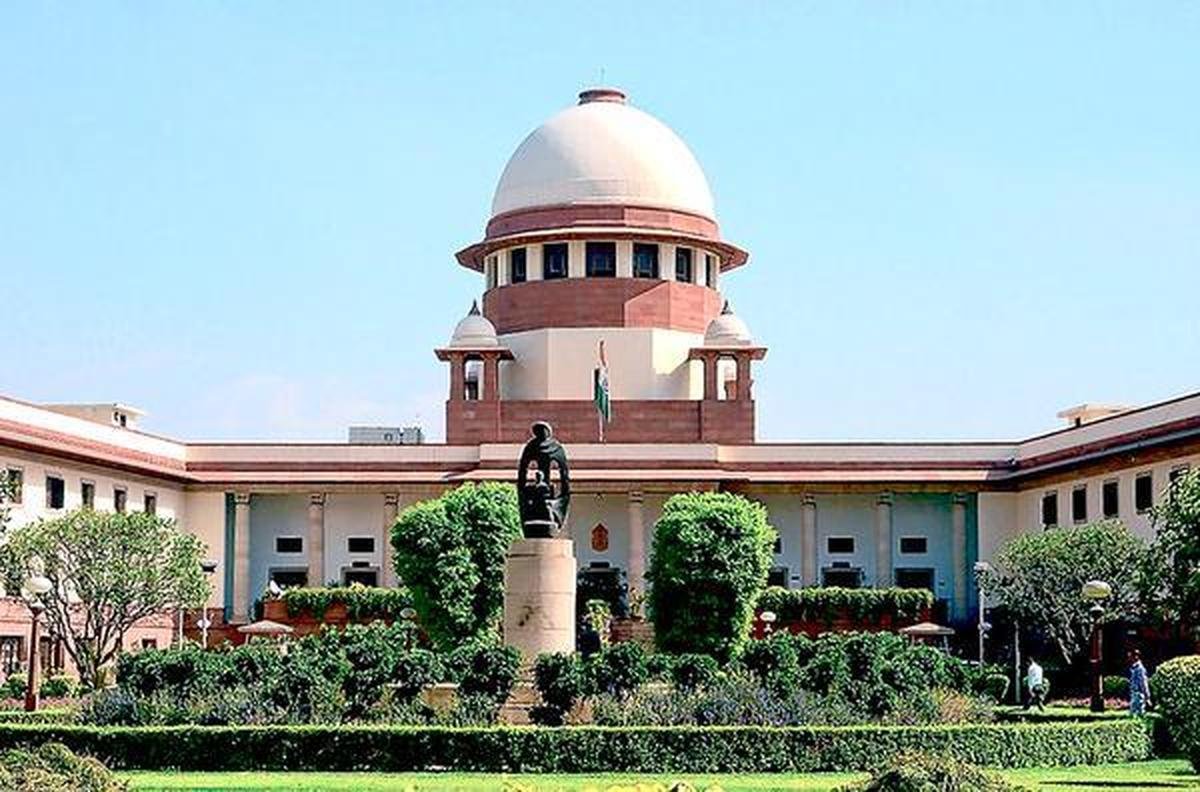
The Supreme Court has clarified that proceedings under Section 124A of the Indian Penal Code (IPC) may continue where the accused does not object to the continuation of the trial or appeal. The clarification creates a limited exception to the Court’s 2022 interim order that had suspended sedition proceedings across the country.
Sedition Law in India
- Section 124A of the IPC was introduced by the British colonial administration in 1890 to suppress political opposition and nationalist activities. The provision criminalised expressions considered disloyal or hostile towards the government established by law.
- The law became an important colonial instrument to curb dissent during the freedom struggle and was invoked against leaders such as Mahatma Gandhi and Bal Gangadhar Tilak.
Judicial Interpretation of Sedition
- After independence, the constitutional validity of Section 124A was challenged for violating freedom of speech and expression under Article 19(1)(a).
- In Kedar Nath Singh v. State of Bihar, the Supreme Court upheld the provision but significantly narrowed its scope. The Court held that sedition would apply only where speech or expression:
- Incites violence, or
- Has the tendency to create public disorder.
- The judgment distinguished legitimate criticism of the government from activities threatening public order, thereby balancing free expression with concerns of state security.
Concerns over Misuse
- Despite judicial safeguards, Section 124A continued to face criticism due to its vague and broad wording. Critics argued that the law was frequently invoked against journalists, activists, students, and political dissenters for speech or actions lacking any direct link to violence.
- The provision was criticised for:
- Discouraging democratic dissent,
- Creating a chilling effect on free expression,
- Enabling excessive executive discretion.
These concerns led to increasing demands for reconsideration of the sedition framework.
Supreme Court’s 2022 Interim Order
In May 2022, after the Union Government informed the Court that it intended to re-examine the sedition law, the Supreme Court passed an interim order keeping the operation of Section 124A in abeyance.
The Court directed that:
- No fresh FIRs should be registered under Section 124A,
- Pending investigations and trials should remain suspended,
- Persons already arrested under the provision could seek appropriate judicial relief.
The order was intended to safeguard civil liberties while the constitutional validity and necessity of the provision remained under review.
Sedition under the Bharatiya Nyaya Sanhita (BNS)
- With the replacement of the IPC by the Bharatiya Nyaya Sanhita (BNS), Section 152 introduced an offence relating to acts endangering the sovereignty, unity, and integrity of India.
- Petitioners before the Supreme Court have argued that Section 152 substantially resembles the earlier sedition law and may reproduce similar constitutional concerns. This has revived the debate on whether the new provision differs meaningfully from the earlier framework of Section 124A.
- The constitutional validity of Section 152 is presently under judicial scrutiny.
Supreme Court’s Recent Clarification
- Against this backdrop, the Supreme Court recently clarified that the 2022 interim order does not prevent courts from proceeding with sedition cases where the accused voluntarily seeks continuation of proceedings.
- The clarification was issued while hearing a plea involving a long-pending sedition appeal. The Court observed that where an accused has no objection to the continuation of proceedings under Section 124A, courts may decide such matters on merits and in accordance with law.
- Accordingly, the Court directed the concerned High Court to hear the pending appeal expeditiously.
Significance of the Clarification
The clarification introduces procedural flexibility into the 2022 interim arrangement by ensuring that accused persons seeking timely adjudication are not compelled to remain under indefinite suspension of proceedings.
The development is significant because it:
- Strengthens procedural fairness and access to justice,
- Preserves safeguards against arbitrary use of sedition law,
- Reflects judicial pragmatism pending final constitutional determination.
At the same time, the broader suspension on fresh sedition prosecutions continues, while the constitutional validity of sedition-related provisions under both the IPC and BNS remains unresolved.
Conclusion
The Supreme Court’s clarification reflects an attempt to balance civil liberties with legitimate state interests while retaining safeguards against misuse of sedition law. The final judicial determination on sedition-related provisions under the IPC and BNS is likely to shape the future contours of free speech, democratic dissent, and constitutional governance in India.