Context
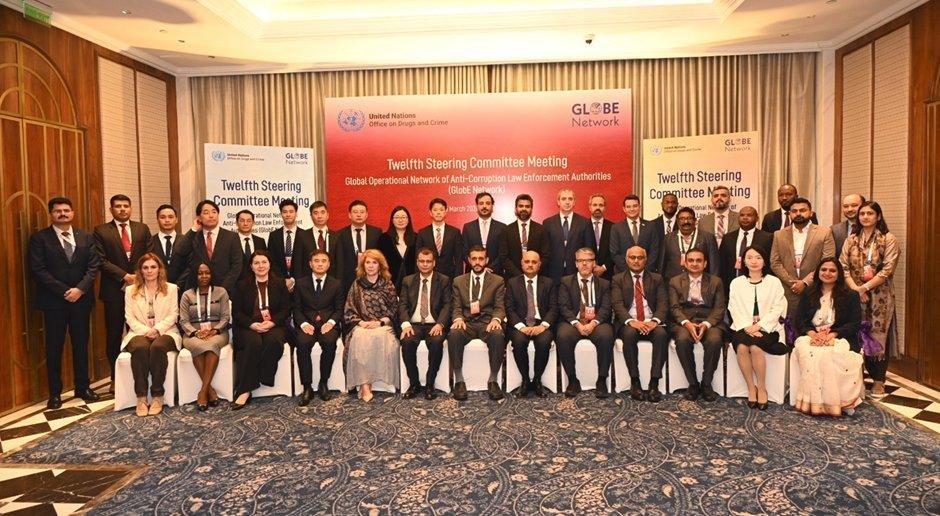
India recently hosted the 12th Steering Committee Meeting of the GlobE Network in New Delhi, highlighting its growing role in global anti-corruption cooperation.
Q1. What is the GlobE Network and under which framework does it operate?
- It is a global platform of anti-corruption law enforcement agencies.
- It was launched under the Riyadh Initiative during Saudi Arabia’s G20 Presidency.
- It operates under the United Nations Convention Against Corruption (UNCAC).
Q2. What is the composition and governance structure of the GlobE Network?
- Members: 135 countries and 250 law enforcement authorities.
- Observers: 18 organisations including: Europol, World Bank and International anti-corruption bodies.
- Governance: Led by a Steering Committee (1 Chair, 1 Vice-Chair and 13 members) which provides overall direction and leadership.
Q3. What is India’s role in the GlobE Network?
- India plays an active role in global anti-corruption enforcement cooperation.
- Nodal Ministry: Ministry of Home Affairs (MHA)
- Member agencies: Central Bureau of Investigation (CBI) and Enforcement Directorate (ED).
Q4. What are the key functions of the GlobE Network?
- Enables direct cooperation between enforcement agencies (not just through formal channels)
- Helps in investigation of corruption cases, prosecution of offenders & recovery of illegal assets.
- Provides faster and more flexible coordination and agency-to-agency communication.
- Supported by United Nations Office on Drugs and Crime (UNODC), which acts as its secretariat
Conclusion
The GlobE Network strengthens global coordination against corruption by enabling direct and efficient cooperation among enforcement agencies, making it a key tool in tackling cross-border financial crimes.