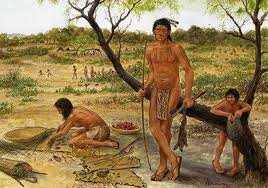
The Neolithic Age, or the New Stone Age, represents the final stage of the Stone Age, serving as a critical bridge between the hunter-gatherer existence of the Palaeolithic/Mesolithic eras and the rise of complex metal-using civilizations. This era is characterized by the Holocene epoch, starting around 10,000 BCE. It marked a “Cultural Revolution” where humans transitioned from being passive seekers of nature to its active masters through the invention of agriculture and animal domestication.
The Neolithic period in India is not a single uniform phase but a series of regional developments, with the earliest evidence emerging in the northwest (Mehrgarh) and the latest appearing in the northeast.
The Neolithic Revolution: A Paradigm Shift
British archaeologist V. Gordon Childe coined the term “Neolithic Revolution” to highlight the massive socio-economic changes that occurred during this time.
- Food Production: Humans began using artificial means to produce food. Instead of just gathering wild grains, they selectively bred crops like wheat, barley, and wild paddy.
- Sedentary Living: The requirement to tend to crops led to the emergence of permanent village settlements, replacing the nomadic lifestyle.
- Animal Domestication: Species like goats, sheep, and cattle were domesticated for milk, meat, and help in agricultural labor and transportation.
- Division of Labour: Permanent settlements allowed for specialized roles, often based on sex or skill, leading to the first structured social hierarchies.
- Technological Innovations: Inventions such as pottery (for storage), weaving, and spinning became widespread.
Neolithic Tool Technology
Unlike the chipped tools of the Palaeolithic, Neolithic tools were a result of intensive labor and durability.
- Pecked and Ground Industry: Tools were fashioned using pecking, grinding, and polishing techniques. Wet sandstone was often used as an abrasive.
- Polished Stone Axes: These are the diagnostic artifacts of the Neolithic age.
- Durability: The use of igneous rocks made tools more resilient and suitable for heavy tasks like clearing forests for cultivation.
- Bone Tools: Specialized bone tools, including needles and harpoons, have been found, notably at sites like Burzahom (Kashmir) and Chirand (Bihar).
Major Neolithic Regions and Sites in India
India’s Neolithic landscape is divided into distinct regional groups, each with unique features.
1. North-Western Region (Mehrgarh)
Located on the banks of the Bolan River in Balochistan (Pakistan), Mehrgarh is the earliest known Neolithic site in the subcontinent.
- Agriculture: Evidence of six-row barley and einkorn wheat.
- Housing: Mud-brick houses with multiple rooms.
- Trade: Discovery of Lapis Lazuli (from Afghanistan) and Turquoise (from Iran) suggests early long-distance trade.
- Ornaments: Use of sea shells, limestone, and semi-precious beads.
2. Kashmir Valley (Burzahom and Gufkral)
- Burzahom: Famous for pit-dwellings (circular pits dug into the ground) to protect inhabitants from the harsh cold.
- Burials: Unique evidence of dog burials alongside their masters.
- Gufkral: Known as the “cave of the potter,” showing a transition from aceramic (no pottery) to ceramic phases.
3. Vindhya-Ganga Valley (UP and Bihar)
- Koldihwa (UP): Provides perhaps the earliest evidence for domesticated rice in the world.
- Chirand (Bihar): Remarkable for a vast quantity of bone tools made from deer antlers.
- Lehuradeva (UP): Recent excavations suggest rice cultivation as far back as 7,000 BCE.
4. Southern India (Karnataka, AP, and Tamil Nadu)
The southern Neolithic is distinct for its Ashmounds—large heaps of burnt cattle dung.
- Key Sites: Brahmagiri, Maski, Piklihal (Karnataka); Nagarjunakonda (Andhra Pradesh).
- Lifestyle: Primarily pastoral with an emphasis on cattle rearing.
Social Organization and Belief Systems
- Concept of Property: Domestication led to the early concepts of land and animal ownership.
- Rituals: Burial practices within houses suggest the worship of ancestors. The presence of animal burials indicates a complex spiritual relationship with livestock.
- Fertility Cults: Terracotta figurines of humped bulls and “Mother Goddesses” point toward the worship of natural forces and fertility.
- Pottery Evolution: Initial pottery was handmade with “cord-impressed” designs, eventually evolving into wheel-made varieties.
FAQs: The Neolithic Age in India
WHAT DOES THE TERM “NEOLITHIC” MEAN?
It comes from the Greek words neos (new) and lithos (stone), signifying the “New Stone Age” characterized by polished stone tools.
WHAT IS THE “NEOLITHIC REVOLUTION”?
It refers to the transition from hunting-gathering to a settled life based on agriculture and animal domestication.
WHICH IS THE EARLIEST NEOLITHIC SITE IN THE INDIAN SUBCONTINENT?
Mehrgarh in Balochistan, Pakistan, is considered the earliest, dating back to approximately 7000 BCE.
WHERE HAVE PIT-DWELLINGS BEEN FOUND IN INDIA?
Pit-dwellings are a unique feature of the Kashmir Neolithic sites, specifically at Burzahom and Gufkral.
WHICH SITE PROVIDES THE EARLIEST EVIDENCE OF RICE CULTIVATION?
Koldihwa and Lehuradeva in the Belan Valley of Uttar Pradesh provide early evidence of domesticated rice.
WHAT ARE “ASHMOUNDS”?
Ashmounds are massive accumulations of burnt cattle dung found in South Indian Neolithic sites like Piklihal and Utnur.
DID NEOLITHIC PEOPLE USE METAL?
The core Neolithic period used only stone and bone. However, the late Neolithic often shows a transition into the Chalcolithic (Stone-Copper) age.
WHAT WAS THE PURPOSE OF “CORDED WARE”?
Corded ware was an early type of handmade pottery decorated with cord impressions, used primarily for grain storage.
WHY IS CHIRAND SIGNIFICANT?
Located in Bihar, Chirand is famous for the highest concentration of specialized bone tools found in the Indian Neolithic context.
WHAT WAS THE PRIMARY TOOL TYPE OF THIS AGE?
The primary tool was the Polished Celt (stone axe), made using grinding and polishing techniques.