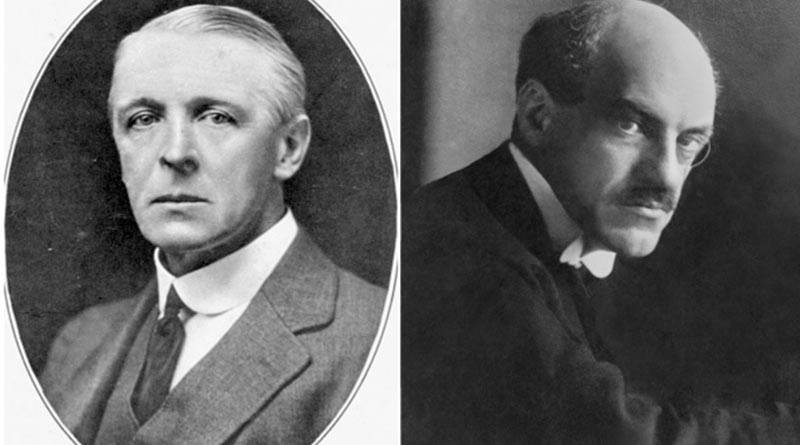
The Government of India Act 1919, popularly known as the Montagu-Chelmsford Reforms, was a landmark legislation enacted by the British Parliament. It was born out of the Montagu Declaration of 1917, which for the first time promised the “gradual development of self-governing institutions” in India. Named after Edwin Montagu (Secretary of State for India) and Lord Chelmsford (Viceroy), the Act sought to increase Indian participation in administration while ensuring the British Crown maintained ultimate sovereign control.
This Act is historically significant for introducing the concept of Dyarchy and Bicameralism, setting the stage for the federal structure that would eventually be expanded in the 1935 Act and the Constitution of Independent India.
Historical Background and Evolution
The aftermath of World War I saw a surge in Indian nationalism. The Indian National Congress and the Muslim League were increasingly vocal about self-rule (Swaraj).
- The August Declaration (1917): Edwin Montagu declared that the British objective was the substantial association of Indians in every branch of administration.
- Post-War Unrest: Economic distress and the repressive Rowlatt Act (1919) created a volatile atmosphere, necessitating a constitutional “peace offering” to moderate nationalists.
- The Report: The reforms were based on a 1918 report that proposed a dual structure of governance to test Indian administrative capabilities in “safe” sectors.
Key Provisions: Provincial Government and Dyarchy
The most revolutionary feature of the 1919 Act was the introduction of Dyarchy (double government) in the executive branch of the eight major provinces.
The Division of Subjects
Provincial subjects were divided into two distinct categories:
- Reserved Subjects: Included critical areas like Finance, Law and Order, Land Revenue, and Irrigation. These were administered by the Governor and his Executive Council, without any accountability to the provincial legislature.
- Transferred Subjects: Included Education, Public Health, Agriculture, and Local Self-Government. These were administered by the Governor with the aid of Indian Ministers who were responsible to the Legislative Council.
Provincial Legislature
- Expansion: The provincial councils were enlarged, and the principle of direct elections was introduced.
- Elected Majority: About 70% of the members were to be elected.
- Voting Rights: For the first time, women were granted the right to vote, although the franchise was highly restricted by property and education qualifications.
Central Government: Structure and Control
At the central level, the Act introduced Bicameralism and established a more representative legislature, though the executive remained non-responsible.
- Bicameral Legislature: The Indian Legislative Council was replaced by a bicameral structure consisting of an Upper House (Council of State) and a Lower House (Legislative Assembly).
- The Executive Council: The Viceroy’s Executive Council was to have eight members, of which three were required to be Indians. However, they handled less critical portfolios.
- Viceroy’s Powers: The Viceroy maintained the power to certify bills rejected by the legislature and could issue ordinances with the force of law during emergencies.
- Communal Electorates: The Act extended the principle of separate electorates to Sikhs, Indian Christians, Anglo-Indians, and Europeans.
Administrative and Institutional Change
- Secretary of State: The salary of the Secretary of State for India was shifted from the Indian exchequer to the British exchequer, addressing a long-standing grievance of the Congress.
- High Commissioner: A new office of the High Commissioner for India was established in London to handle certain functions previously performed by the Secretary of State.
- Public Service Commission: The Act provided for the establishment of a Central Public Service Commission for recruiting civil servants (eventually set up in 1926).
- Statutory Commission: It mandated the appointment of a commission after ten years to report on the working of the Act, which led to the Simon Commission (1927).
Drawbacks and Critical Assessment
Despite its intent to include Indians, the Act was widely criticized by nationalist leaders like Bal Gangadhar Tilak, who called it “a sunless dawn.”
- The “Reserved” Grip: By keeping Finance as a “Reserved” subject, the British ensured that Indian Ministers in charge of “Transferred” subjects (like Education) could not function effectively without British financial approval.
- Restricted Franchise: Only about 3% of the population had the right to vote, based on property, tax, or education.
- Governor’s Veto: The ultimate power of the Governor to override the legislature made the “responsible government” aspect largely illusory.
- Communalism: The extension of separate electorates further deepened the communal divide in Indian politics.
FAQs: Government of India Act 1919
WHAT DYARCHY WAS INTRODUCED IN THE 1919 ACT?
Dyarchy was a system of dual government in provinces where subjects were divided into “Reserved” (controlled by the British Governor) and “Transferred” (controlled by Indian
WERE THE ARCHITECTS OF THESE REFORMS?
The reforms were named after Edwin Montagu, the Secretary of State for India, and Lord Chelmsford, the then Viceroy of India.
WAS THE SYSTEM OF BICAMERALISM INTRODUCED AT THE CENTRE OR PROVINCES?
Bicameralism (two houses) was introduced at the Central level, consisting of the Council of State and the Legislative Assembly.
HOW MANY INDIANS WERE IN THE VICEROY’S EXECUTIVE COUNCIL POST-1919?
The Act mandated that three out of eight members of the Viceroy’s Executive Council should be Indians.
DID THE 1919 ACT PROVIDE VOTING RIGHTS TO WOMEN?
Yes, it was the first Act to grant limited voting rights to women, based on property and educational qualifications.
WHAT WAS THE SIGNIFICANCE OF THE HIGH COMMISSIONER FOR INDIA?
This new office in London was created to represent Indian interests and take over some of the agency functions of the Secretary of State.
WHAT WERE THE “RESERVED” SUBJECTS?
Reserved subjects included Finance, Law and Order, Justice, and Land Revenue, over which the Governor held absolute control.
HOW DID THE ACT IMPACT THE SALARY OF THE SECRETARY OF STATE?
It provided that the salary of the Secretary of State would be paid by the British Treasury rather than from Indian revenues.
WHICH COMMISSION WAS FORMED TO REVIEW THIS ACT?
The Simon Commission (1927) was appointed to review the working of the 1919 Act and suggest further constitutional reforms.
WHY DID THE CONGRESS CRITICIZE THE ACT?
The Congress found the reforms “disappointing and unsatisfactory” because real power (finance and law) remained with the British, and the franchise was extremely narrow.