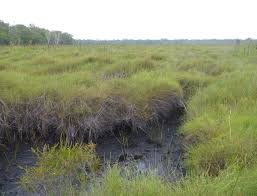
- What Are Peatlands: It is a type of wetland where thick layers of partially decomposed organic material (peat) accumulate over time. They are natural carbon storage systems formed by slow decay of plant matter in wet conditions.
- How Does Peat Form: Peat develops under waterlogged conditions where oxygen levels are low, plant remains do not fully decompose and organic matter gradually accumulates over thousands of years. Because decomposition is slow, carbon remains trapped in the soil instead of being released into the atmosphere. Thus, peatlands act as long-term carbon sinks.
- Why Are Congo Basin Peatlands Important: The peat swamps of the Congo Basin occupy just 0.3% of Earth’s land surface, yet they store nearly one-third of the carbon found in tropical peatlands worldwide.
- Recent reports indicate that Lake Mai Ndombe and Lake Tumba in the Democratic Republic of the Congo are releasing carbon that had remained locked in nearby peatlands for thousands of years.
- How Carbon Is Being Released: Carbon release happens mainly due to drainage of peatlands, deforestation, peat fires or climate-induced drying. When peat dries, the oxygen enters the soil which speeds up decomposition and the stored carbon dioxide is released.
- Climate Change Link: Peatland drainage and fires are estimated to contribute at least 5% of global greenhouse gas emissions, significantly adding to climate change.
- The situation in Congo shows a dangerous cycle: Peatlands dry → carbon released → atmosphere warms → further drying → more carbon release. This creates a positive feedback loop, worsening climate change.
FAQs
Q1. What are peatlands?
Peatlands are wetlands where thick layers of partially decomposed organic material (peat) accumulate over time, acting as natural carbon storage systems.
Q2. How does peat form?
Peat develops under waterlogged conditions with low oxygen, where plant remains decompose slowly. Carbon stays trapped in the soil for thousands of years, making peatlands long-term carbon sinks.
Q3. Why are Congo Basin peatlands important?
The Congo Basin peatlands cover just 0.3% of Earth’s land surface but store nearly one-third of tropical peatland carbon. Recent reports show carbon release near Lake Mai Ndombe and Lake Tumba.
Q4. How is carbon released from peatlands?
Carbon release occurs due to drainage, deforestation, peat fires, or climate-induced drying. Oxygen enters dried peat, speeding decomposition and releasing stored carbon dioxide.
Q5. How is climate change and Peatland degradation related?
Peatland degradation contributes at least 5% of global greenhouse gas emissions. Drying peatlands create a positive feedback loop: drying → carbon release → warming → further drying → more carbon release, worsening climate change.