Context
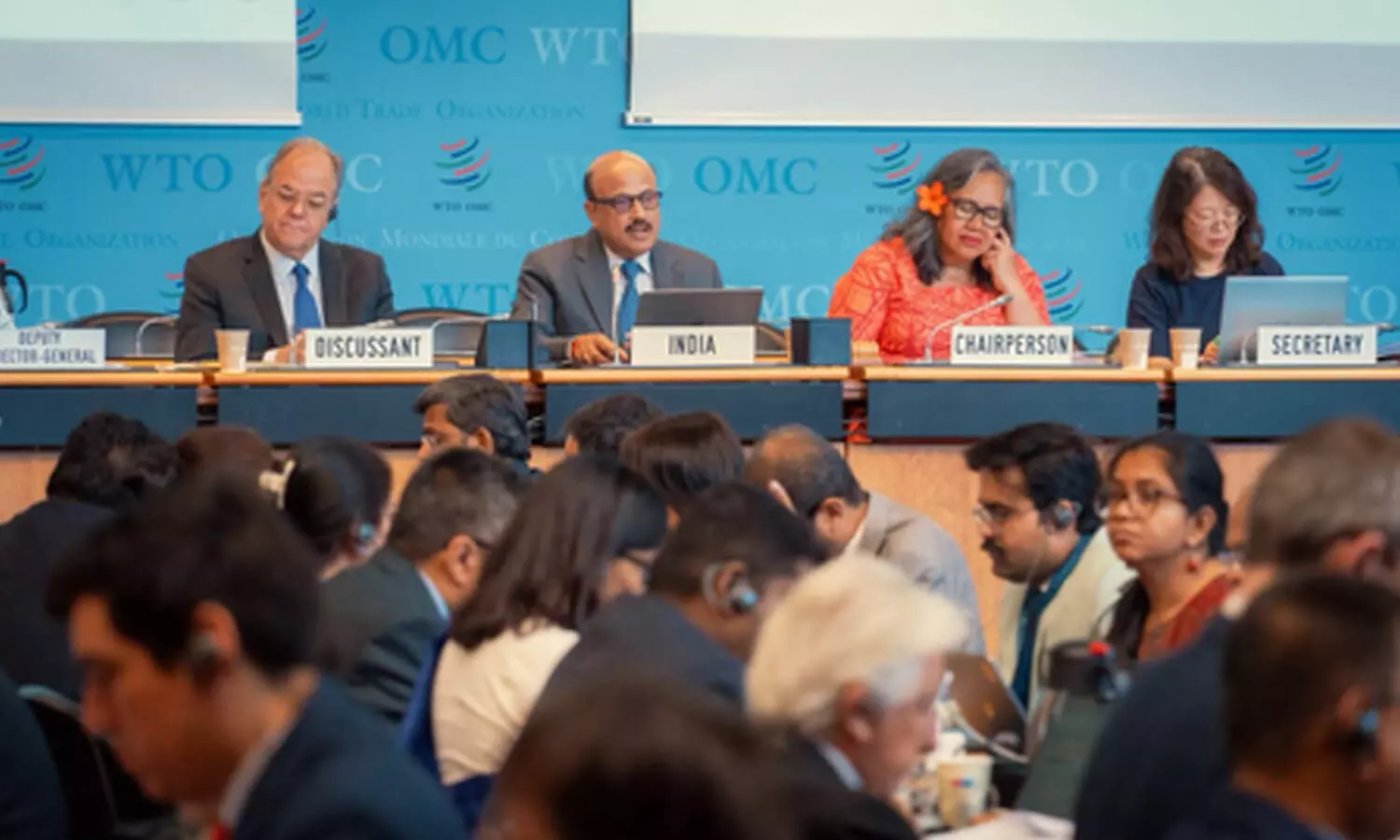
India’s seventh Trade Policy Review (TPR) was recently conducted by the World Trade Organization (WTO) in Geneva.
About the Trade Policy Review Mechanism (TPRM)
- The Trade Policy Review Mechanism (TPRM) is a WTO transparency mechanism that periodically reviews the trade policies and practices of member countries.
- It aims to promote transparency, predictability, and accountability in the multilateral trading system.
- The mechanism is a peer-review process and does not enforce WTO rules or settle trade disputes.
- It encourages policy dialogue and helps members better understand each other’s trade measures.
India’s Economic and Trade Performance
Despite global challenges such as geopolitical tensions, supply-chain disruptions, and rising protectionism, India recorded strong economic performance.
Key Highlights
- Achieved an average annual GDP growth of nearly 8% during 2021–2025.
- Recorded exports worth USD 863.1 billion in 2025–26, the highest so far.
- Continued pursuing the vision of Viksit Bharat @2047 while addressing the development aspirations of nearly one-fifth of the world’s population.
Major Trade and Economic Reforms
India highlighted several reforms aimed at improving competitiveness and strengthening integration with the global economy.
- Aatmanirbhar Bharat: Promotes domestic manufacturing while integrating India into Global Value Chains (GVCs)—international production networks where different stages of manufacturing take place across multiple countries.
- Jan Vishwas Initiative: Simplifies regulations and improves the ease of doing business.
- Expansion of Digital Public Infrastructure (DPI) to support financial inclusion, digital commerce, and efficient service delivery.
- Modernisation of customs, logistics, and quality infrastructure to facilitate trade.
- Promotion of Artificial Intelligence (AI), innovation, and startups.
- Greater emphasis on sustainability, agricultural resilience, and inclusive development.
- Expansion of Regional Trade Agreements (RTAs).
- Continued support to developing countries through South-South Cooperation and the Indian Technical and Economic Cooperation (ITEC) Programme.
- Reiterated support for balanced WTO reforms that safeguard the interests of developing countries while strengthening the multilateral trading system.
Recognition by WTO Members
WTO Trade Policy Review Body (TPRB)
- Recognised India as one of the fastest-growing major economies.
- Appreciated India’s leadership in digitally delivered services exports.
- Commended reforms in Digital Public Infrastructure (DPI), financial inclusion, and trade facilitation.
- Welcomed India’s acceptance of the WTO Agreement on Fisheries Subsidies following the deposit of its Instrument of Acceptance.
- Appreciated India’s timely and transparent responses during the review process.
Brazil’s Observations
- Highlighted the success of the Goods and Services Tax (GST) in creating a unified domestic market.
- Appreciated India’s digital trade reforms and expanding export strategy.
- Recognised the importance of India’s recent Regional Trade Agreements (RTAs).
- Praised the Duty-Free Tariff Preference (DFTP) Scheme for Least Developed Countries (LDCs).
- Described India’s Digital Public Infrastructure (DPI) as a model for developing countries.
India’s Stand on the WTO Electronic Commerce Agreement
- India opposed the attempt to operationalise the 66-member Agreement on Electronic Commerce (ECA) without the approval of all WTO members.
- India argues that, under the Marrakesh Agreement, adding a new Annex 4 plurilateral agreement requires the consensus of all WTO members.
- The proposal failed to secure consensus during the 2025 WTO General Council meetings.
- Despite the deadlock, participating members adopted an interim arrangement to implement the agreement.
- India questioned the legal and institutional validity of this approach.
Competing Approaches to WTO Reform
- Supporting countries argue that Joint Statement Initiatives (JSIs) are necessary to develop new trade rules when consensus among all WTO members is difficult.
- India maintains that allowing a group of members to implement unapproved agreements weakens the WTO’s multilateral and consensus-based framework.
- The issue reflects the broader debate between consensus-based multilateralism and plurilateral agreements in global trade governance.
Conclusion
As global trade evolves, effective WTO reforms will require balancing consensus, inclusiveness, and flexibility to ensure a stable and equitable trading system.
FAQs
What is the objective of the WTO’s Trade Policy Review Mechanism (TPRM)?
The TPRM periodically reviews the trade policies of WTO members to promote transparency, predictability, and accountability. It is a peer-review mechanism and does not enforce WTO rules.
How does Aatmanirbhar Bharat complement India’s trade policy?
It aims to strengthen domestic manufacturing while integrating Indian industries into Global Value Chains (GVCs), thereby improving competitiveness and exports.
Why is the Agreement on Electronic Commerce (ECA) controversial?
India argues that adding a new Annex 4 plurilateral agreement requires the consensus of all WTO members, whereas participating countries support implementing the agreement through an interim arrangement.
What role does Digital Public Infrastructure (DPI) play in India’s trade policy?
DPI strengthens financial inclusion, digital payments, trade facilitation, and digital commerce, improving overall economic efficiency and competitiveness.
Why is India’s acceptance of the WTO Agreement on Fisheries Subsidies important?
It reflects India’s commitment to sustainable fisheries and its constructive role in strengthening the multilateral trading system.
What is the difference between multilateral and plurilateral agreements in the WTO?
Multilateral agreements apply to all WTO members, whereas plurilateral agreements bind only those members that voluntarily join them. India maintains that adding a new Annex 4 plurilateral agreement requires the consensus of all WTO members.
Why is India’s Trade Policy Review significant?
The review highlights India’s economic resilience, structural reforms, digital transformation, and growing influence in shaping inclusive and development-oriented global trade governance.