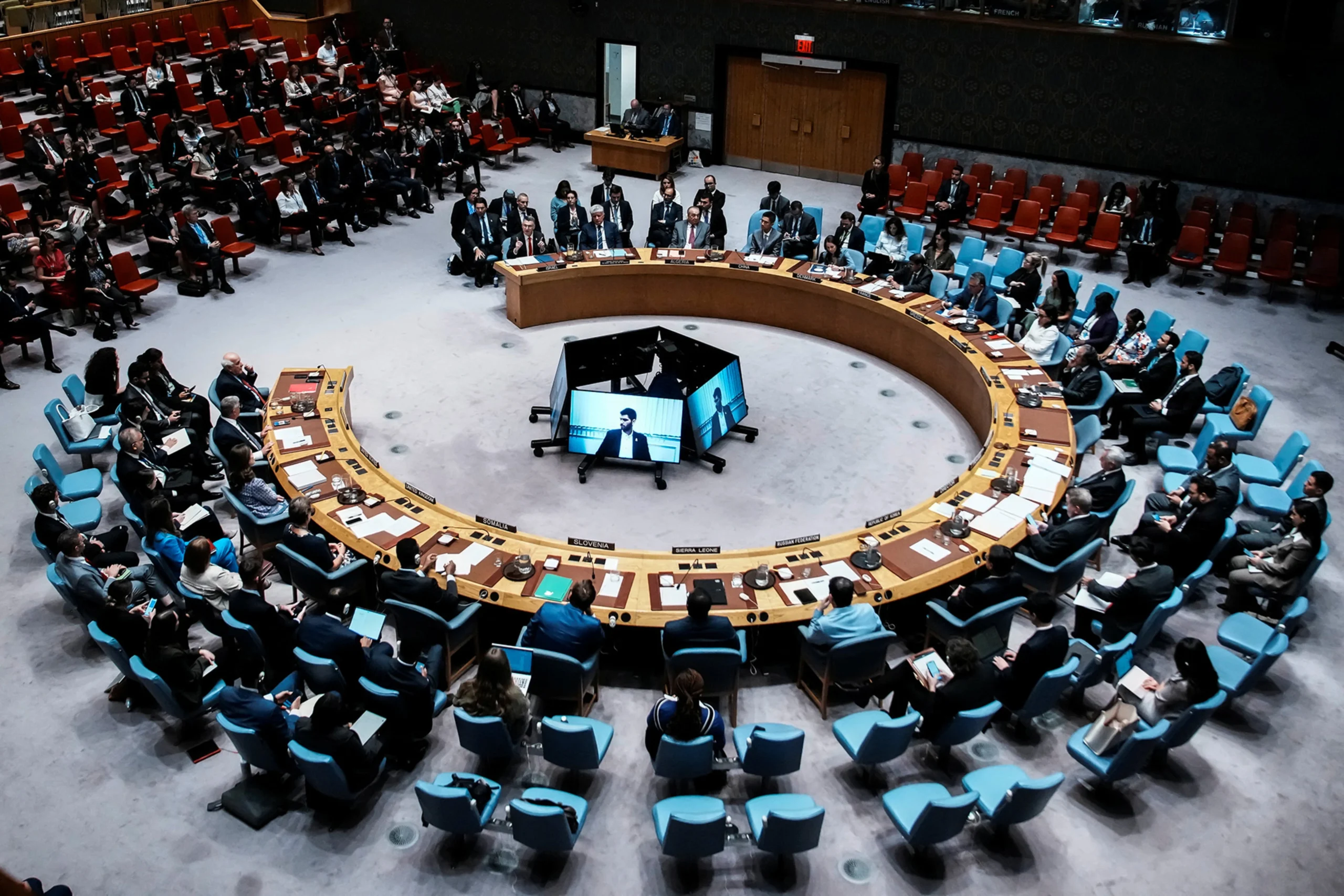
- The UN has 190+ members and the UN Security Council (UNSC) has 15 member countries.
- UNSC can put binding sanctions on member countries for peace and security.
- They are identified by resolution numbers (e.g., Resolution 1718 on North Korea, Resolution 1373 on terrorism) and are monitored by a dedicated sanctions committee, each having all 15 UNSC members.
- As of 2025, the UNSC maintains around 14–15 active sanctions regimes.
- All UN member states are legally obligated to implement UN Security Council sanctions adopted under Chapter VII of the UN Charter through their domestic legal frameworks.
- If a UN member state does NOT implement UNSC sanctions:
- It means that the country violates international law and this damages the country’s legal credibility and standing in the UN system.
- The country faces political and economic pressure like diplomatic isolation, loss of international trust, and unilateral or secondary sanctions by powerful countries.
- Types of Sanctions
- Non Military vs Military Sanctions: It may adopt non‑military measures (arms embargoes, asset freezes, travel bans, and economic/trade restrictions) or military measures (force if needed).
- Comprehensive (against a whole country) or Targeted (against some sections) sanctions: UNSC has shifted towards targeted sanctions to avoid unintended harm to others.
- UNSC pressures both states or non‑state actors to change behaviour (e.g., stop nuclear tests or stop supporting terrorism) while minimizing harm to civilians.
- Main active UNSC sanctions committees:
- 1267/1989/2253 – ISIL & Al‑Qaida Sanctions Committee
- 1988 – Taliban Sanctions Committee
- 1718 – DPRK (North Korea) Sanctions Committee
- 1591 – Sudan Sanctions Committee
- 1533 – DRC Congo Sanctions Committee
- 751 – Somalia Sanctions Committee
- 2140 – Yemen Sanctions Committee
- 1970 – Libya Sanctions Committee
- 2127 – Central African Republic (CAR) Sanctions Committee
- 2048 – Guinea‑Bissau Sanctions Committee
- 1907 – Eritrea Sanctions Committee
- Other almost dormant committees: Côte d’Ivoire, Lebanon, Iraq, Liberia, and others, mostly focused on residual issues like delisting.
- Each committee monitors implementation, maintains a consolidated sanctions list, and can add or remove names by consensus.