Context
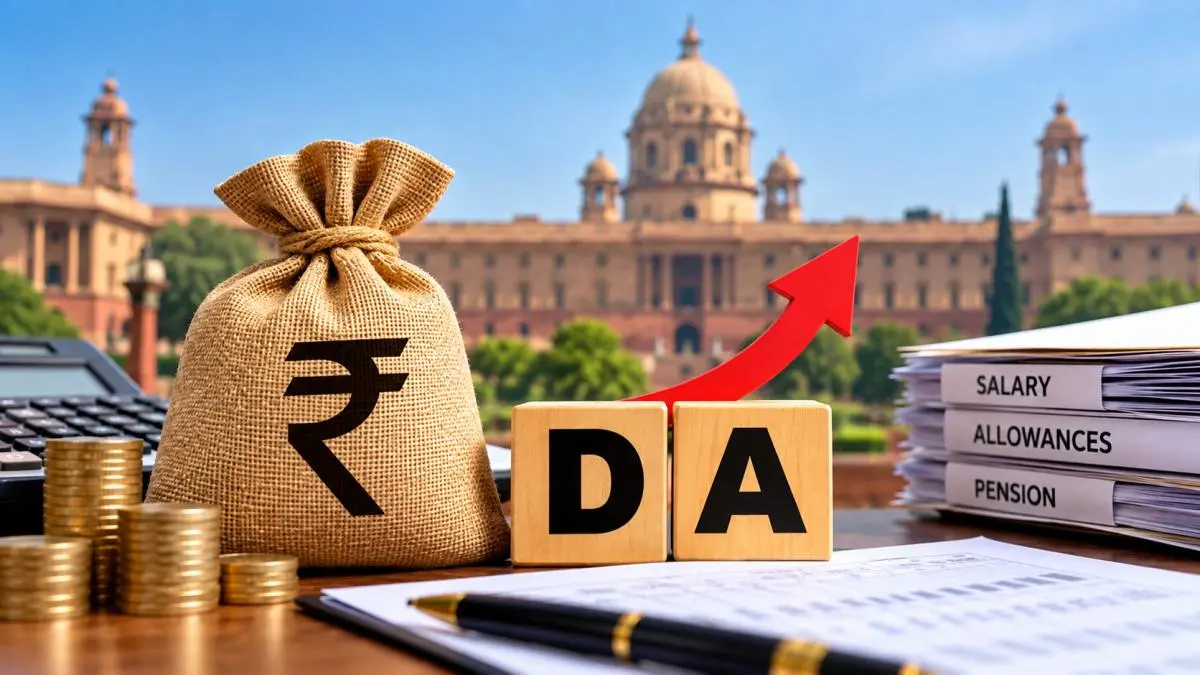
The Union Cabinet has recently approved a 3% increase in Dearness Allowance (DA) and Dearness Relief (DR) for Central Government employees and pensioners. The revision is expected to benefit over 1.17 crore employees and pensioners.
Why was Dearness Allowance introduced?
Inflation reduces the purchasing power of money. As prices of essential goods and services increase, people need more money to maintain the same standard of living.
- Rising cost of living: Increasing prices of food, housing, transport, healthcare and other essential goods raise the financial burden on employees.
- Declining purchasing power: When salaries remain unchanged despite rising prices, employees can purchase fewer goods and services with the same income.
- Need to protect real income: An increase in salary through DA helps employees partly compensate for the loss of purchasing power caused by inflation.
- Financial security of pensioners: Retired government employees also face the impact of inflation. Dearness Relief (DR) helps protect the real value of their pensions.
- Need for periodic salary adjustments: Since inflation changes over time, there is a need to periodically revise the inflation-linked component of employees’ compensation.
Thus, DA was introduced as an inflation-compensation mechanism to help employees and pensioners maintain their purchasing power despite rising prices. DA helps compensate for inflation, but it does not necessarily cover the entire increase in an individual’s actual cost of living.
What is Dearness Allowance (DA)?
- Dearness Allowance (DA) is an additional amount paid by the government to its employees to compensate for the increase in the cost of living due to inflation.
- It is calculated as a percentage of an employee’s basic pay.
- It is added to the basic salary along with other applicable salary components such as House Rent Allowance (HRA) and other allowances.
- For pensioners, a similar benefit is provided through Dearness Relief (DR), which is calculated on the basic pension.
- Who receives DA: Central Government employees, State Government employees, according to their respective government rules and Employees of Public Sector Undertakings (PSUs), depending on their applicable pay structure and service conditions.
- Private-sector employees do not automatically receive DA as it depends upon company policies and employment contracts.
| Dearness Allowance (DA) | Dearness Relief (DR) |
| Given to serving government employees. | Given to eligible government pensioners. |
| Calculated on basic pay. | Calculated on basic pension. |
| Helps compensate employees for inflation. | Helps pensioners maintain their purchasing power. |
Types of Dearness Allowance
Dearness Allowance is broadly classified into two types:
- Industrial Dearness Allowance (IDA)
- Applicable to employees of Central Public Sector Enterprises (CPSEs).
- Generally revised quarterly based on changes in the Consumer Price Index (CPI).
- Aims to compensate public sector employees for rising living costs.
- Significance: Adjusts salaries according to inflation.
- Variable Dearness Allowance (VDA)
- Mainly applicable to workers covered under the Central Government’s minimum wage framework in scheduled employments.
- Generally revised twice a year (1 April and 1 October), based on changes in the Consumer Price Index for Industrial Workers (CPI-IW).
- Added to basic minimum wages to compensate for rising prices.
- Has 3 Important Components
- Fixed Component: Basic component that remains unchanged until minimum wages are revised.
- CPI Component: Changes in the Consumer Price Index influence VDA calculation.
- Variable Component: Inflation-linked amount calculated based on changes in the relevant price index.
| Understanding CPI-IW
1. Meaning: Measures changes in retail prices of goods & services consumed by industrial workers. 2. Coverage: Includes food, clothing, housing, transport and other essential items. 3. Indication: A rise in CPI-IW indicates an increase in the cost of living. 4. Application: Serves as an important basis for calculating DA of Central Government employees. |
Tax Treatment of Dearness Allowance
- Fully taxable: DA is generally fully taxable as part of salary income under the Income-tax Act.
- Tax calculation: It is included in taxable salary and taxed according to the applicable income-tax provisions and tax regime.
- Taxable income: Employees must include DA while calculating their total taxable salary.
- Retirement benefits: DA may also be considered for certain retirement-related calculations, depending on applicable employment rules.
- Significance: Although DA provides financial relief against inflation, the actual increase in take-home salary may be lower due to taxes and other deductions.
Impact of Dearness Allowance
| Positive Impacts | Negative Impacts |
| 1. Protection of purchasing power: Helps employees maintain purchasing capacity despite rising prices.
2. Improved standard of living: Provides additional income to meet expenses on food, healthcare, education and housing. 3. Financial security for pensioners: Dearness Relief (DR) protects pensioners against inflation. 4. Boost to consumption demand: Higher disposable income increases spending and supports economic activity. 5. Improved employee satisfaction: Periodic revisions improve employee morale and financial security. 6. Support to local economies: Increased spending by employees and pensioners boosts demand in rural and urban markets. |
1. Higher fiscal burden: Regular DA revisions increase government expenditure on salaries and pensions.
2. Limited coverage: Private-sector & informal workers do not automatically receive DA benefits. 3. Incomplete inflation compensation: CPI-based DA may not fully reflect individual household consumption patterns. 4. Wage-price spiral: Higher wages may increase production costs, leading to further price rises. 5. Regional disparities: Differences in living costs across rural, urban and metropolitan areas may not be adequately reflected. 6. Pressure on development expenditure: Rising salary & pension commitments may reduce funds available for infrastructure, health and education. 7. Delayed revisions: Delays in announcing or implementing DA revisions may affect employees’ financial planning. |
Way Forward
- Fiscal prudence: Balance employee welfare with sustainable government expenditure through proper fiscal planning.
- Strengthen wage protection: Improve minimum wage implementation and fair wage revision mechanisms for private and informal workers.
- Review price indices: Regularly update CPI consumption baskets to reflect changing consumption patterns.
- Context-sensitive wage policies: Consider regional variations in the cost of living while framing compensation policies.
- Strengthen supply-side measures: Improve agricultural productivity, storage, logistics and manufacturing to control inflationary pressure.
- Inclusive social protection: Expand minimum wages, social security and welfare measures for vulnerable workers.
- Timely DA revisions: Ensure predictable, transparent and timely revision and payment of DA and DR.
Conclusion
Dearness Allowance is an important instrument of inflation protection and employee welfare. However, its effectiveness requires a balance between purchasing power protection, fiscal sustainability and inclusive social security.
Frequently Asked Questions (FAQs)
Q1. What is the main difference between Dearness Allowance (DA) and Dearness Relief (DR)?
Dearness Allowance (DA) is an inflation-compensation component added to the basic pay of active government employees, whereas Dearness Relief (DR) is provided to retired government pensioners on their basic pension.
Q2. Is the Dearness Allowance amount received by employees exempt from income tax?
No, DA is fully taxable under the Income-tax Act and must be included in the total salary income when calculating an individual’s tax liability.
Q3. Do private-sector employees also get Dearness Allowance automatically?
No, DA is an inflation-linked benefit primarily meant for government and PSU sectors; private-sector workers do not get it automatically unless specified in their employment contracts or company policies.
Q4. What is Industrial Dearness Allowance (IDA) and who gets it?
IDA is a specific type of DA applicable to employees of Central Public Sector Enterprises (CPSEs), and its rates are generally revised on a quarterly basis to tackle inflation.