Context
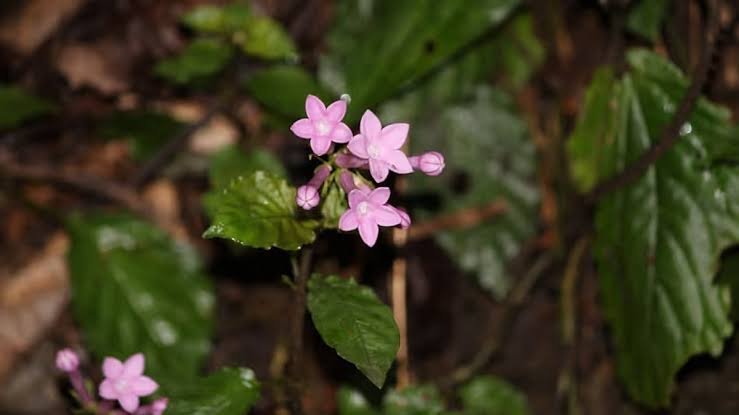
Two new flowering plant species, Ophiorrhiza shidiensis and Ophiorrhiza pemae, have been discovered in Vijoynagar, Changlang district, Arunachal Pradesh.
About the Discovery
- Taxonomic Classification: Belongs to the Rubiaceae family (coffee family) and the genus Ophiorrhiza (commonly known as snake-root plants).
- Location: Discovered in Vijoynagar, Arunachal Pradesh (near the Indo-Myanmar border), located within the Indo-Burma Biodiversity Hotspot.
- Identification: Confirmed through morphological studies (physical structure analysis) and comparative species mapping.
Key Features of the Species
- Ophiorrhiza shidiensis
- Plant Type: Erect perennial herb (grows up to 1 metre) featuring pale-green leaf undersides.
- Floral Traits: Tubular flowers displaying white, pale-pink, and rose-pink
- Habitat: Inhabits moist, shaded forest floors at altitudes of 1,100–2,000 metres.
- Etymology (Naming): Named after “Shidi”, the local Lisu (Yobin) tribal name for Gandhigram (its collection site).
- Ophiorrhiza pemae
- Plant Type: Taller herb with larger leaves, distinct leaf margins, and light-pink to purplish flowers (differentiated by its unique stipules and stigma structure).
- Habitat: High-altitude temperate montane forests at 2,100–2,600 metres.
- Etymology (Naming): Named in honour of Pema Khandu, the Chief Minister of Arunachal Pradesh.
Significance & Conservation Status
- Biodiversity Hotspot Richness: Expands the known native plant life of the Eastern Himalayas and highlights the ecological importance of the Indo-Burma Biodiversity Hotspot.
- Medicinal Potential: The genus Ophiorrhiza is an essential natural source of camptothecin, a vital chemical compound used in cancer treatment research.
- Field Survey Value: Emphasizes the need for ongoing plant diversity surveys anchored by the BSI (Botanical Survey of India) regional center in Itanagar.
- Threat Status: Provisionally classified under IUCN standards as Endangered (O. shidiensis) and Vulnerable (O. pemae) due to small habitat ranges (~12 km² and ~4 km²).
FAQs
Q1. To which family do the new species belong?
Ans. They belong to the Rubiaceae family, also known as the coffee family.
Q2. How did O. shidiensis get its name?
Ans. It is named after “Shidi”, the Lisu (Yobin) name for Gandhigram, its collection site.
Q3. Why are Ophiorrhiza species scientifically important?
Ans. Some produce camptothecin, a compound used in anticancer drug development.