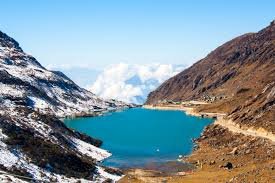
- More than 2,700 tourists, stranded due to heavy snowfall near Tsomgo Lake in East Sikkim, were recently rescued.
- About the Tsomgo Lake (Tsongmo Lake / Changu Lake):
- Location: It is a high altitude glacial lake (elevation = 3753 m or 12,313 ft) situated in East Sikkim in the Eastern Himalayas.
- It is formed by glacial processes (receive water from melting snow of the surrounding mountains) and remains frozen in winters.
- Flora: After mid-May, the lake surroundings bloom with flower species like Rhododendron (State tree of Sikkim), Primulas, Irises & Blue and yellow poppies.
- Important Fauna: Birds (Brahminy duck), Wildlife (Red panda)
- Cultural Significance: The lake’s surface reflects different colours in different seasons. Historically, Buddhist monks studied these changes to make predictions. The lake is still held in great reverence by local Sikkimese communities.
FAQs
Q1. Where is Tsomgo Lake located?
Tsomgo Lake is a high-altitude glacial lake at 3,753 m (12,313 ft) in East Sikkim, nestled in the Eastern Himalayas.
Q2. How was the Tsomgo lake formed?
It is formed by glacial processes, receiving water from melting snow of surrounding mountains, and remains frozen during winters.
Q3. What flora surrounds the Tsomgo lake?
From mid-May, the area blooms with Rhododendron (state tree of Sikkim), primulas, irises, and blue & yellow poppies.
Q4. What fauna is found at Tsomgo lake?
Wildlife includes the Red panda and birds like the Brahminy duck.
Q5. What is the cultural significance of Tsomgo lake?
The lake’s surface reflects different colours in different seasons. Historically, Buddhist monks studied these changes to make predictions, and it continues to be revered by local Sikkimese communities.