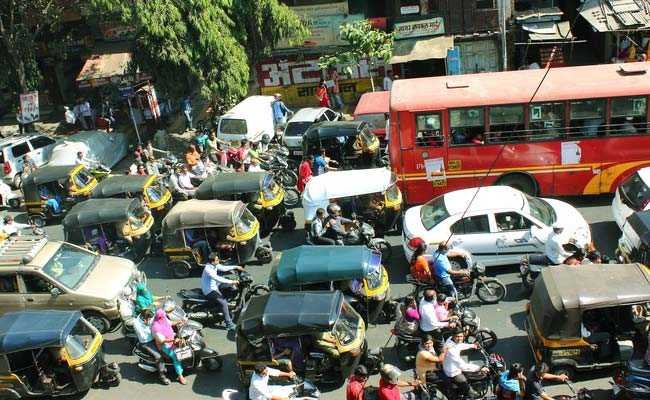
Why in the News?
- Recent studies and media reports highlight that urban noise levels in India consistently exceed safe limits, affecting millions of residents.
- Despite being legally recognized as an air pollutant since 1981, noise pollution remains largely unmonitored and poorly enforced.
- Growing urbanization, traffic congestion, construction activities, and cultural events have intensified public health concerns related to noise.
Key Highlights
- Recognition and Health Impact
- Legal Status: Noise is officially categorized as an air pollutant under the Air (Prevention and Control of Pollution) Act, 1981.
- Health Consequences: Prolonged exposure contributes to hypertension, stress disorders, sleep disruption, and cognitive decline.
- Population Impact: Vulnerable groups such as street vendors, traffic police, and residents of informal settlements face higher exposure and risk.
- Current Exposure Levels
- Safe Limits: WHO recommends ≤55 dB(A) during the day; Indian rules set 55 dB (day) and 45 dB (night).
- Reality in Cities: Busy traffic corridors often exceed 70 dB(A), a ten-fold increase in intensity compared to safe levels.
- Urban Burden: Noise is not occasional but a constant occupational and environmental hazard.
- Systemic Failures
- Inadequate Monitoring: Noise data are sporadic and reactive, unlike air pollution which uses satellites and low-cost sensors.
- Cultural and Structural Barriers: Citizens often tolerate noisy practices due to lack of awareness about health risks.
- Fragmented Governance: Pollution boards, municipalities, and police share partial responsibility, leading to weak enforcement.
- Proposed Interventions
- Evidence-Based Policy: Treat noise pollution on par with air and water pollution; design interventions guided by public-health data.
- Technological Solutions: Deploy real-time sensors and machine-learning tools to map sources like traffic, construction, and industry.
- Urban Planning: Integrate green buffers, zoning, and noise-sensitive planning near schools, hospitals, and residential areas.
- Community Engagement and Equity
- Cultural Sensitivity: Partner with community and religious leaders to reduce noise without alienating local practices.
- Equity Focus: Ensure the right to quiet is accessible to low-income communities, not a luxury for the affluent.
- Public Awareness: Conduct campaigns to educate citizens about health risks and promote behavioral changes like honking reduction.
About Air (Prevention and Control of Pollution) Act, 1981
- Air pollution refers to the presence of liquid or gaseous substances in the atmosphere at concentrations that can be harmful to humans, animals, plants, or the environment.
- The Air Act was enacted under Article 253 of the Indian Constitution and in line with the decisions taken at the Stockholm Conference. Its primary objective is to prevent, control, and reduce air pollution and to maintain air quality.
- Key Features of the Act:
- Definitions: The Act defines essential terms, including air pollution, air pollutants, vehicular emissions, industrial plants, and related concepts.
- Coverage: It applies to various sources of pollution, including automobiles, diesel vehicles, railways, transport systems, and domestic fuels.
- High Pollution Areas: Certain heavily polluted regions can be declared as Air Pollution Control Areas. No industrial unit can operate in these areas without prior approval from the State Pollution Control Board.
- Responsibilities of Pollution Control Boards: Both Central and State Pollution Control Boards are responsible for preventing and controlling air pollution. State boards are specifically tasked with establishing and enforcing air quality standards.
- Emission Control: The State Government and Boards may direct authorities responsible for vehicle registration under the Motor Vehicles Act, 1939 to ensure compliance with emission standards. Non-compliance can result in fines and imprisonment.
- Penalties for Polluters: State Boards have the authority to initiate legal action against polluters. The cost of legal action or mitigation measures can be recovered from the polluter.
- Noise as Pollution: Since 1987, the Act has also recognized noise as a type of air pollutant and subject to regulation.
Implications
- Public Health
- Chronic exposure leads to cardiovascular, neurological, and mental health problems.
- Early intervention can reduce premature mortality associated with noise.
- Urban Livability
- Excessive noise lowers quality of life and productivity.
- Reducing noise can enhance well-being and urban aesthetics.
- Governance and Policy
- Stronger regulations require inter-agency coordination and transparent monitoring.
- Encourages evidence-driven decision-making for urban management.
- Environmental Sustainability
- Incorporating green belts and noise-absorbing infrastructure supports ecological balance.
- Promotes sustainable mobility solutions like walking, cycling, and electric transport.
- Social Equity
- Protecting vulnerable groups ensures fair access to a healthy environment.
- Prevents inequities where only the wealthy can afford quieter living spaces.
Challenges and Way Forward
| Challenges | Way Forward |
| Sparse monitoring and data gaps | Deploy real-time sensors and develop integrated sound maps |
| Weak enforcement and fragmented governance | Strengthen inter-agency coordination and accountability mechanisms |
| Cultural tolerance of noise | Awareness campaigns with community and religious leaders |
| Urban planning neglect | Incorporate zoning, green buffers, and noise-sensitive infrastructure |
| Inequitable exposure | Focus on protecting low-income populations through policy and planning |
Conclusion
Noise pollution in Indian cities is a silent public health crisis. Despite legal recognition, systemic gaps in monitoring, governance, and awareness have allowed it to grow unchecked. Prioritizing noise reduction through evidence-based policy, urban planning, community engagement, and equity-focused interventions can safeguard health and quality of life. The right to quiet must become a basic public health standard, not a privilege.
| Ensure IAS Mains Question
Q. Discuss the challenges of noise pollution in Indian cities and suggest evidence-based strategies for mitigation, keeping in view public health, urban planning, and social equity. (250 words) |
| Ensure IAS Prelims Question
Q. Consider the following statements regarding noise pollution in India: 1. Noise pollution is legally recognized under the Air (Prevention and Control of Pollution) Act, 1981. 2. WHO recommends residential daytime noise exposure not exceed 70 dB(A). 3. Noise exposure disproportionately affects low-income and occupationally exposed populations. Which of the above statements are correct? a) 1 only b) 1 and 3 only c) 2 and 3 only d) All of the above Answer: b) 1 and 3 only Explanation: Statement 1 is correct: Noise pollution is legally recognized under the Air (Prevention and Control of Pollution) Act, 1981, which classifies it as an air pollutant. This legal recognition provides a structured framework for monitoring, regulation, and enforcement. It acknowledges the significant health impacts of excessive noise and allows policymakers to address it alongside air and water pollution. Statement 2 is incorrect: The World Health Organization (WHO) recommends that residential daytime noise exposure should not exceed 55 dB(A), which is significantly lower than 70 dB(A). Exposure beyond this safe threshold can lead to serious health issues including hypertension, sleep disturbances, stress-related disorders, and cognitive impairments. Therefore, 70 dB(A) is above the recommended safe limit. Statement 3 is correct: Noise exposure disproportionately affects low-income and occupationally exposed populations, such as street vendors, traffic police, and residents of informal settlements. These groups have limited means to protect themselves from urban noise, making them more vulnerable to long-term health impacts and highlighting environmental inequities in urban areas. |
|
Also Read |
|
| UPSC Foundation Course | UPSC Daily Current Affairs |
| UPSC Monthly Magazine | CSAT Foundation Course |
| Free MCQs for UPSC Prelims | UPSC Test Series |
| ENSURE IAS NOTES | Our Booklist |