Context
A recent study has put forward new evidence indicating that the Rongorongo script of Easter Island may have developed independently and existed even before Europeans arrived on the island, offering fresh insights into its origins.
About Easter Island
- Easter Island, also known as Rapa Nui, is a territory of Chile located in the southeastern Pacific Ocean.
- It is considered the easternmost extension of the Polynesian islands and is among the most remote inhabited places on Earth.
- The island got its popular name after Dutch explorer Jacob Roggeveen arrived there on Easter Sunday in 1722.
Geography and Environment
- The island covers about 163.6 sq km and lies roughly 3,540 km west of Chile and about 1,900 km east of Pitcairn Island.
- It has a triangular shape and is of volcanic origin.
- The landscape includes three extinct volcanoes—Terevaka, Poike, and Rano Kau.
- There are no permanent rivers, but water is found in crater lakes such as Rano Aroi, Rano Raraku, and Rano Kau.
- The island experiences a tropical climate.
Historical Developments
- After European contact, the indigenous population declined sharply due to slave raids and diseases like smallpox and tuberculosis.
- The island was later annexed by Chile.
Cultural Importance
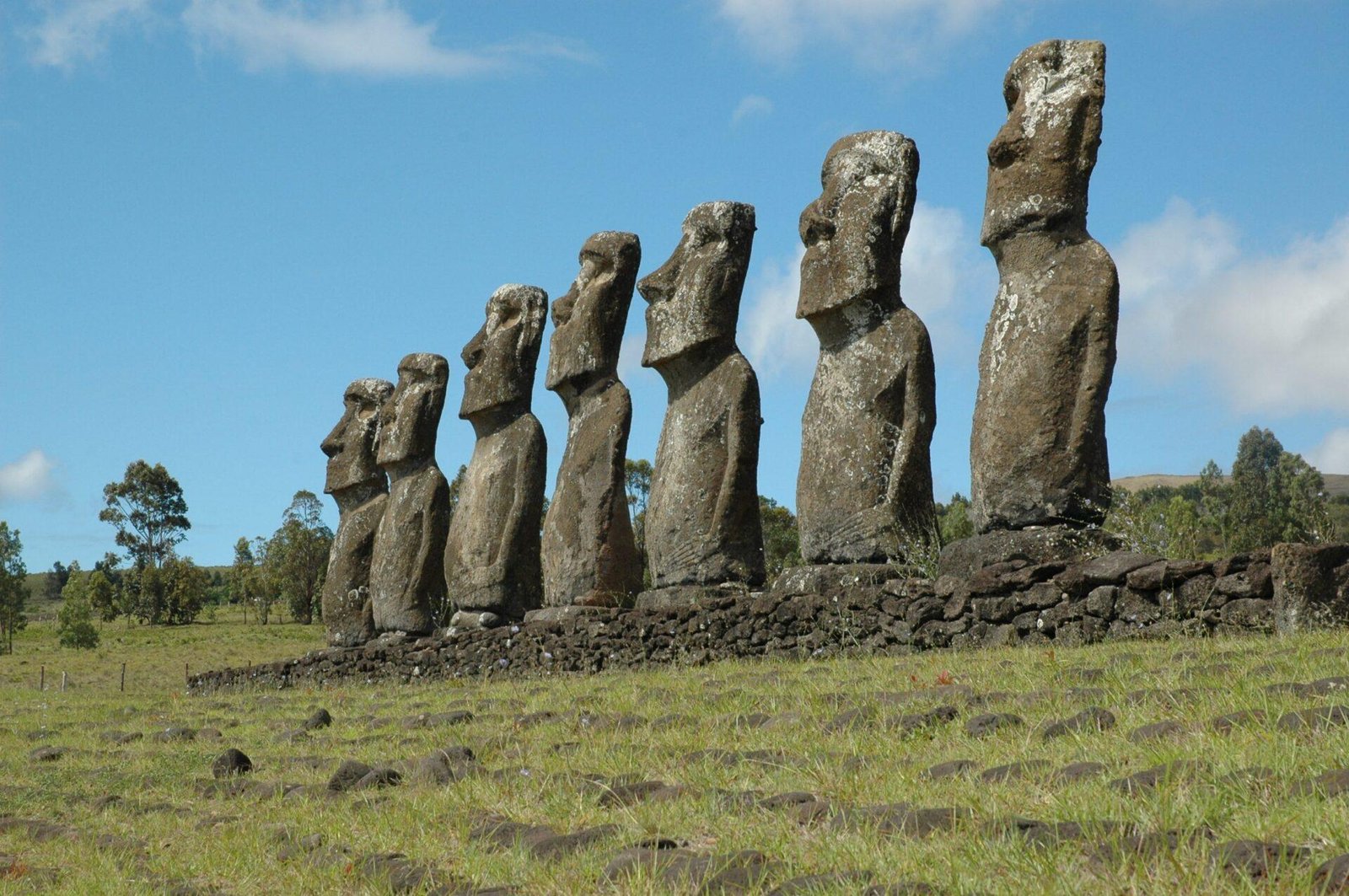
- The island is globally known for its massive stone statues called moai, created by the native Rapa Nui people.
- In 1996, UNESCO recognized the island as a World Heritage Site, with much of it protected under Rapa Nui National Park.
Moai Statues
- Moai are large stone figures representing human forms, mostly featuring oversized heads.
- Many statues include a red stone topknot known as “”
- Some of these structures reach heights of about 40 feet and can weigh up to 75 tonnes.
- They were carved from volcanic rock in quarries and later transported to different parts of the island.
- These statues are believed to have been built between the 13th and 16th centuries to honour ancestors.
- More than 900 moai have been identified so far.
Rongorongo Script
- Rongorongo is a system of symbols carved on wooden objects found on the island.
- The script consists of glyphs but remains undeciphered to this day.
- It was first documented by Europeans in the 19th century.
- Its structure is very different from known writing systems, leading some scholars to suggest it may have originated independently on the island.