Context
The Ministry of Home Affairs (MHA) introduced PRAHAAR – the National Counter-Terrorism Policy & Strategy. It provides a national framework for countering terrorism and radicalisation and reflects India’s zero-tolerance approach to terrorism.
Evolution of India’s Counter-Terrorism Response
India’s counter-terrorism response has evolved through major security challenges:
- 1991: Assassination of Rajiv Gandhi highlighted transnational terrorism and suicide attacks.
- 1993: Mumbai serial blasts demonstrated the scale of coordinated urban terrorism.
- 1998: Coimbatore blasts highlighted ideologically motivated violence.
- 1999: IC-814 hijacking exposed challenges in hostage-taking and aviation security.
- 2001: Parliament attack led to Operation Parakram and large-scale military mobilisation.
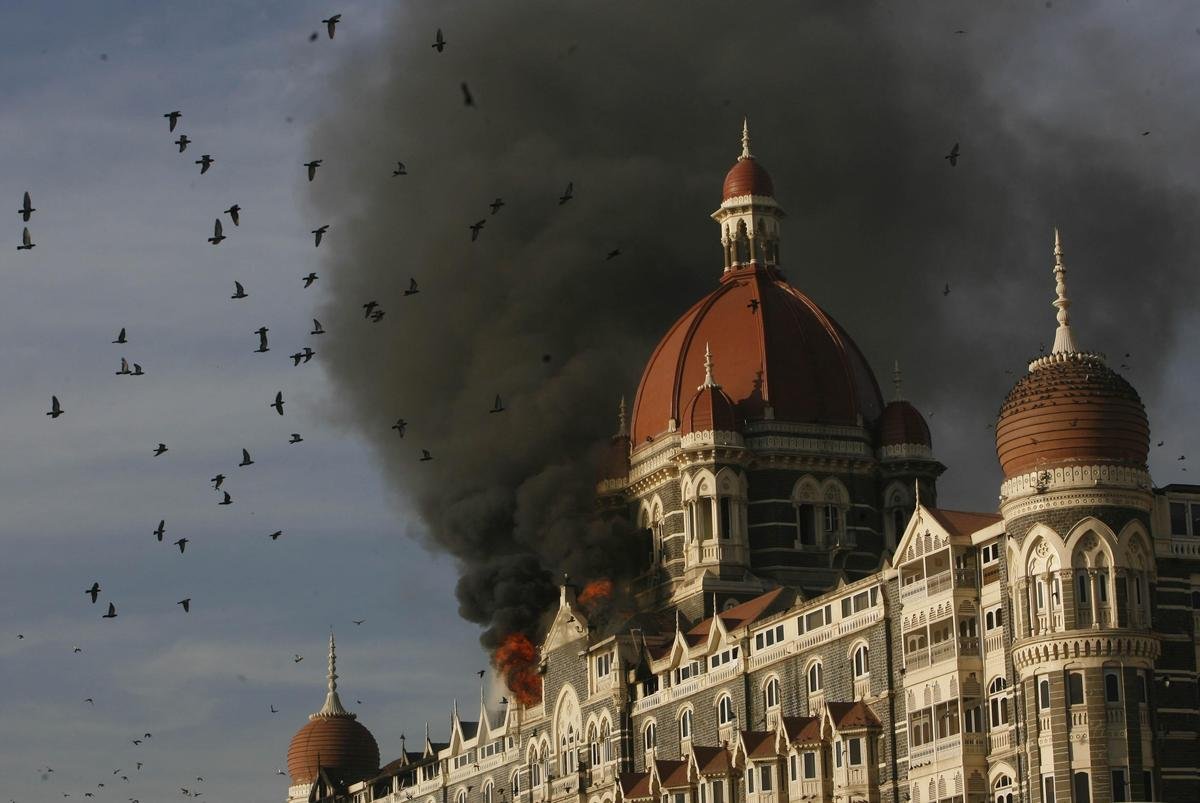
- 2008: 26/11 exposed vulnerabilities in coastal security, intelligence coordination and urban preparedness.
- 2016: Uri attack was followed by surgical strikes across the Line of Control (LoC).
- 2019: Pulwama attack was followed by the Balakot air strike.
- 2025: Following the Pahalgam terrorist attack, India launched Operation Sindoor on 7 May 2025, targeting terrorist infrastructure in Pakistan and Pakistan-occupied Jammu and Kashmir.
This trajectory reflects a gradual shift towards prevention, intelligence-led disruption and deterrence.
PRAHAAR: Objectives and Guiding Principles
PRAHAAR seeks to:
- Prevent terrorist attacks through intelligence-led action.
- Disrupt terror financing, logistics and support networks.
- Target financiers, facilitators and other enablers.
- Address radicalisation and conditions conducive to terrorism.
- Strengthen coordination among Central and State agencies.
- Improve technological and investigative capabilities.
- Strengthen international counter-terrorism cooperation.
Its guiding principles include zero tolerance towards terrorism, support for victims, rejection of religious or ethnic attribution of terrorism, and adherence to human rights and the rule of law.
Seven Pillars of PRAHAAR
| Pillar | Focus |
| P – Prevention of Terror Attacks | Proactive measures to prevent terrorist attacks and disrupt threats. |
| R – Responses | Swift and proportionate responses to terrorist threats. |
| A – Aggregating Internal Capacities | Greater synergy through a whole-of-government approach. |
| H – Human Rights and Rule of Law | Threat mitigation through lawful and rights-based processes. |
| A – Attenuating the Conditions Enabling Terrorism | Addressing radicalisation and other enabling conditions. |
| A – Aligning and Shaping International Efforts | Coordinated international action against terrorism. |
| R – Recovery and Resilience | Recovery and whole-of-society resilience after terrorist incidents. |
Emerging Threat Profile
- Cross-Border and Foreign-Based Terrorism
Threats include foreign-based terrorist actors, handlers, sleeper cells and proxy networks, as well as the use of drones for illicit activities.
- Technology-Enabled Terrorism
Terrorist actors increasingly exploit social media, instant messaging, encryption, dark-web networks, crypto wallets, AI, drones, robotics and cyber capabilities.
- CBRNED Threats
PRAHAAR recognises risks involving Chemical, Biological, Radiological, Nuclear, Explosive and Digital (CBRNED) capabilities.
- Terror–Organised Crime Nexus
Terrorist organisations can exploit criminal networks, illicit finance and illegal arms channels to support their activities.
Institutional and Administrative Implications
Effective implementation requires:
- Stronger intelligence and investigative coordination.
- Capacity-building of State/UT counter-terrorism units and Anti-Terrorist Squads (ATSs).
- Greater uniformity in structures, resources, training and investigation methods.
- Improved technological and cyber-forensic capabilities.
- Greater use of legal expertise during investigation and prosecution.
- Periodic review and updating of the counter-terrorism legal framework.
Challenges and Way Forward
| Challenge | Way Forward |
| Lone actors and decentralised networks may leave limited conventional intelligence trails. | Strengthen intelligence fusion, real-time information sharing and local intelligence. |
| Rapid technological change creates new operational vulnerabilities. | Invest in cyber security, digital forensics, counter-drone systems and specialised expertise. |
| Online radicalisation can accelerate extremist mobilisation. | Combine technological capabilities with counter-radicalisation, youth engagement and community participation. |
| Terror–crime and financial linkages complicate detection and investigation. | Strengthen financial intelligence, coordinated investigation and international legal cooperation. |
| Uneven State/UT capabilities can affect implementation. | Promote common standards, training, resources and investigation methodologies. |
| Counter-terrorism measures may raise rights concerns. | Ensure proportionality, due process, legal scrutiny and accountability. |
Conclusion
PRAHAAR seeks to institutionalise a coordinated national approach to counter-terrorism suited to a changing security environment. Its success will depend on effective implementation, institutional capacity and accountable coordination across levels of government.
FAQs
- What is intelligence fusion?
It is the integration of information from multiple agencies and sources to identify threats, patterns and linkages. - What is a proportionate response?
It means calibrating state action according to the nature and severity of the threat. - What does CBRNED stand for?
It stands for Chemical, Biological, Radiological, Nuclear, Explosive and Digital threats. - What is the Multi Agency Centre (MAC)?
MAC is an institutional mechanism for real-time sharing of intelligence among relevant security agencies. - What are Mutual Legal Assistance Treaties (MLATs)?
MLATs provide a framework for cross-border assistance in criminal investigations and evidence-sharing. - What is a whole-of-government approach?
It involves coordinated action by multiple government institutions so that counter-terrorism capabilities operate in synergy rather than isolation. - Why is recovery included in PRAHAAR?
It recognises the need for victim support, community recovery and restoration of resilience after terrorist incidents.