Context
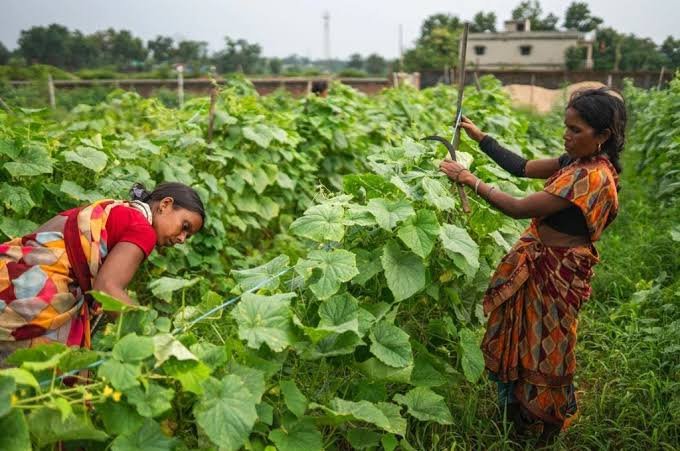
Small and marginal farmers account for about 86% of India’s operational holdings and often face low productivity, limited irrigation, poor access to formal credit and unstable incomes. Government initiatives seek to improve their income, productivity, credit access and market opportunities.
Rural Poverty and Smallholder Agriculture
- About 65–66% of India’s population lives in rural areas, where many depend on agriculture and allied activities.
- The World Bank estimates that 5.3% of India’s population lives in extreme poverty, defined as living on less than $3 per day, with rural areas accounting for a significant share.
- NABARD estimates average rural monthly income at around ₹10,000, highlighting the need for stable and diversified livelihoods.
Major Government Initiatives
- Pradhan Mantri Kisan Samman Nidhi (PM-KISAN)
- Ministry: Ministry of Agriculture and Farmers Welfare.
- Type: Central Sector Scheme.
- Provides ₹6,000 annually to eligible landholding farmer families in three instalments of ₹2,000.
- A farmer family includes husband, wife and minor children.
- Kisan Credit Card (KCC) facilitates access to institutional agricultural credit.
- Over 11 crore farmer families have benefited.
- Pradhan Mantri Dhan-Dhaanya Krishi Yojana
- A mission-mode scheme (2025–26 to 2030–31) covering 100 low-performing agricultural districts.
- Ministry: Ministry of Agriculture and Farmers Welfare.
- Type: Central Sector Scheme.
- Based on the Aspirational Districts Programme approach of NITI Aayog.
- Targets districts with low productivity, low cropping intensity, inadequate irrigation and limited institutional credit.
- Aims to improve agricultural productivity and benefit around 7 crore farmers.
Significance
- Income security: Direct transfers provide immediate financial support to vulnerable farmers.
- Higher productivity: Better irrigation, cropping intensity and other targeted interventions can raise farm output.
- Better credit access: Institutional credit reduces dependence on informal borrowing.
- Market opportunities: FPOs, women’s groups and rural enterprises help farmers access markets, reduce costs and diversify income.
- Poverty reduction: Higher productivity and diversified livelihoods can support a shift from subsistence to sustainable rural incomes.
Challenges
- Fragmented Holdings: Small landholdings limit mechanisation and economies of scale.
- Income Instability: Weather risks and price fluctuations make farm incomes uncertain.
- Limited Access: Unequal access to irrigation, quality inputs, technology and formal credit affects productivity.
- Structural Gaps: Income support alone cannot replace long-term improvements in productivity and markets.
Way Forward
- Strengthen FPOs: Improve farmers’ bargaining power and market access.
- Improve Farm Productivity: Expand irrigation, quality seeds, technology and institutional credit.
- Diversify Rural Incomes: Promote crop diversification, allied activities and rural enterprises.
- Adopt an Integrated Approach: Combine income support with productivity, infrastructure and market reforms for sustainable rural incomes.
FAQs
Q1. What is PM-KISAN?
Ans. PM-KISAN is a Central Sector Scheme providing ₹6,000 annually to eligible landholding farmer families in three instalments.
Q2. Why are FPOs important for small farmers?
Ans. FPOs aggregate farmers’ production and resources, helping them improve input procurement, bargaining power, processing and market access.
Q3. Why is rural income diversification important?
Ans. Dependence on agriculture alone exposes households to weather and price risks. Allied activities and rural enterprises can provide additional and more stable income.