Context
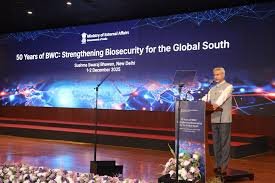
India is being urged to strengthen its biosecurity system because experts believe biological threats are increasing. New biotechnologies, the growing abilities of non‑state actors, and weaknesses in India’s current systems make the country more vulnerable.
What is Biosecurity?
- Biosecurity means protecting people, animals, and plants from the intentional misuse of biological agents, toxins, or technologies. It includes:
- Keeping labs with dangerous pathogens secure
- Stopping deliberate outbreaks
- Protecting health across humans, animals, and plants
- Biosecurity is different from biosafety. Biosafety prevents accidental leaks, but strong biosafety helps support biosecurity.
How Global Biosecurity Evolved?
- The Biological Weapons Convention (BWC) of 1975 was the first global treaty banning biological weapons and requiring countries to destroy existing stockpiles.
- Although bioweapon use has reduced, new technologies and global tensions have increased risks again.
Why India Needs Stronger Biosecurity?
- Geographic and Ecological Risks: India’s large borders, rich biodiversity, and dense population make it easy for natural or engineered outbreaks to spread quickly.
- Dependence on Agriculture: Since agriculture supports millions of people, any biological attack on crops or livestock can damage food security and the economy.
- Threat from Non‑State Actors: A recent case involving the alleged preparation of Ricin toxin shows that terror groups may be exploring biological weapons.
- Fast‑Growing Biotechnology: Modern biotech tools allow easy manipulation of biological systems. While useful, they can also be misused to create engineered threats.
India’s Current Biosecurity System
- Department of Biotechnology: Oversees lab safety and biotech research.
- National Centre for Disease Control: Handles disease surveillance and public health response.
- Department of Animal Husbandry & Dairying: Tracks livestock diseases.
- Plant Quarantine Organisation: Protects crops and regulates agricultural imports.
- Key Laws and Policies:
- Environment Protection Act (1986): Regulates hazardous microorganisms and GMOs.
- WMD Act (2005): Criminalises biological weapons.
- Biosafety Rules (1989) & rDNA Guidelines (2017): Govern lab safety and genetic research.
- NDMA Guidelines: Cover biological disaster management.
- International Role: India is part of the BWC and the Australia Group, which controls export of dual‑use technologies.
Gaps in India’s Biosecurity System
- India lacks a single, unified national biosecurity framework. The system is scattered across many agencies, causing weak coordination and slow response.
- India ranks 66th on the Global Health Security Index, showing declining ability to respond to threats.
- Major Weaknesses:
- Old laws that don’t match modern biotech developments
- Poor coordination between human, animal, and environmental health sectors
- Not enough high‑containment labs
- Weak surveillance for engineered biological threats
Global Best Practices India Can Learn From
- United States: National Biodefense Strategy integrates health, defence, and biotech.
- US DNA Screening Guidelines (2024): Gene synthesis companies must screen DNA orders.
- European Union: One Health‑based Health Security Framework.
- China: Biosecurity Law treats biotech and genetic data as national security assets.
- Australia: Biosecurity Act covers synthetic biology.
- United Kingdom: Focuses on surveillance and rapid response.
These examples show the value of unified oversight, modern laws, and early detection systems.
Challenges and Way Forward
| Challenges | Way Forward |
| Fragmented biosecurity system | Create a National Biosecurity Framework to coordinate all sectors |
| Outdated laws not suited for new biotechnologies | Update laws to cover synthetic biology, gene editing, and dual‑use research |
| Weak surveillance and limited high‑containment labs | Invest in biosurveillance tools, genomic sequencing, and BSL‑3/BSL‑4 labs |
| Poor coordination between human, animal, and environmental health | Adopt One Health approach across ministries |
| Rising threat from non‑state actors | Strengthen lab security, monitoring, and intelligence sharing |
| Limited ability to detect engineered threats | Use AI‑based detection, microbial forensics, and digital surveillance |
| Need for stronger global cooperation | Participate more in international data‑sharing, crisis simulations, and global norms |
Conclusion
India faces growing biological risks due to new technologies, ecological vulnerabilities, and non‑state actors. Strengthening laws, surveillance, coordination, and global cooperation is essential to build a modern, unified biosecurity system capable of preventing and responding to future threats.
| EnsureIAS Mains Question
Q. Discuss the need for a stronger biosecurity framework in India in the context of emerging biothreats. (250 Words) |
| EnsureIAS Prelims Question
Q. Consider the following statements regarding Biosecurity: 1. Biosecurity deals with preventing both accidental and deliberate release of harmful biological agents. 2. The Biological Weapons Convention (BWC) prohibits the development and stockpiling of biological weapons. 3. India is a member of the Australia Group, which regulates export of dual‑use biological technologies. Which of the statements given above is/are correct? A. 1 and 2 only B. 2 and 3 only C. 1 and 3 only D. 1, 2 and 3 Answer: B Explanation: Statement 1 is incorrect: Biosecurity focuses on preventing the intentional misuse of biological agents, toxins, or technologies. Examples: ● Preventing bioterrorism ● Securing dangerous pathogens from theft ● Monitoring suspicious biological activities Biosafety, on the other hand, deals with preventing accidental leaks, lab mishaps, or unintentional exposure. Examples: ● Lab safety protocols ● Proper handling of pathogens ● Preventing accidental contamination Statement 2 is correct: The Biological Weapons Convention (1975) is the world’s first treaty banning biological weapons. It requires member countries to: ● Not develop biological weapons ● Not produce or stockpile them ● Destroy any existing biological weapon stockpiles India is a signatory to the BWC. Statement 3 is correct: The Australia Group is a multilateral export‑control regime that regulates the export of: ● Dual‑use biological materials ● Chemicals ● Technologies that could be used for weapons India joined the Australia Group in 2018. Membership helps India strengthen its biosecurity and export‑control systems. |