Context
The Pune Municipal Corporation (PMC) has proposed installing a 100-foot saffron flag near Sinhagad Fort to symbolise Chhatrapati Shivaji Maharaj, Swarajya and the Maratha martial tradition.
About Sinhagad Fort
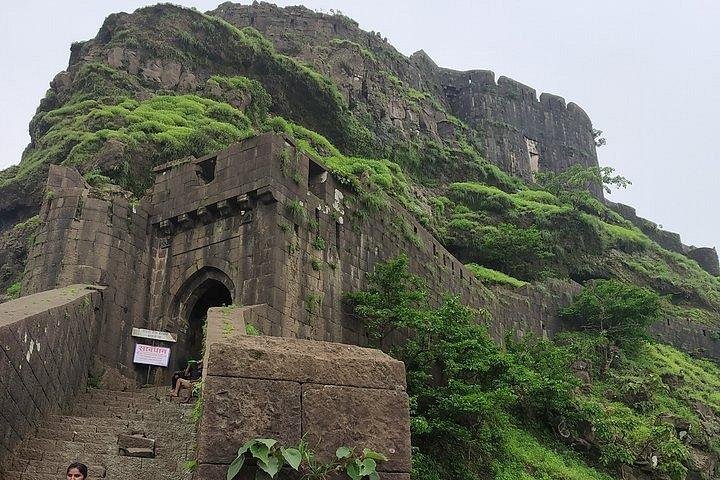
- Geographical Location: Located ~25 km south-west of Pune, Maharashtra, on an isolated cliff of the Bhuleshwar Range, a spur of the Sahyadris (Western Ghats).
- Elevation: Stands at roughly 1,300 metres above sea level.
- Historical Identity: Formerly named Kondhana, believed to be named after sage Kaundinya; estimated to be around 2,000 years old.
- Strategic Value: Controlled access routes to Pune and the Konkan region, positioned near Maratha forts like Torna, Rajgad, and Purandar.
- UNESCO World Heritage Status: Popular trekking site; excluded from the 12 forts under UNESCO’s Maratha Military Landscapes of India inscription in 2025.
Historical Timeline
- Early Control: Held by Koli chieftain Nag Naik until captured by Muhammad bin Tughlaq in the 14th century; later came under the Nizam Shahi Sultanate of Ahmadnagar.
- Bhonsle Era: Controlled by Shahaji Bhonsle before Chhatrapati Shivaji Maharaj captured it in 1647.
- Treaty of Purandar (1665): Ceded by Shivaji along with 23 other forts to the Mughal Empire under Mirza Raja Jai Singh I.
- Battle of Sinhagad (4 February 1670): Maratha commander Tanaji Malusare led the scaling of the fort to recapture it from Mughal commander Udaybhan Rathod; Tanaji died in battle.
- Renaming: Shivaji remarked, “Gad ala, pan Sinha gela” (The fort is won, but the lion is lost), renaming Kondhana to Sinhagad (Lion’s Fort) in Tanaji’s memory.
- Later Maratha Period: Served as a strategic retreat and jail; Rajaram Maharaj (Shivaji’s younger son) passed away here in 1700.
- British Conquest (1818): Captured by the British during the Third Anglo-Maratha War, marking the end of Peshwa rule; later used as a summer retreat.
- Freedom Movement Connection: Served as a retreat for Lokmanya Bal Gangadhar Tilak, who hosted Mahatma Gandhi here in 1915.
Architecture & Strategic Significance
- Fortifications: Built on steep natural cliffs using strong defense walls, bastions, and ramparts for high-altitude protection.
- Main Entrances: Features two entry gates—Pune Darwaza (North-east towards Pune) and Kalyan Darwaza (South-east towards Konkan).
- Water Management: Uses rock-cut tanks and natural reservoirs to collect and store rainwater during sieges.
- Key Memorials & Structures: Houses a Kali temple, horse stables, military sheds, Tanaji Malusare’s memorial, and Rajaram Maharaj’s tomb (samadhi).
- Modern Addition: Site of a Doordarshan (national public broadcaster) relay tower erected in 1973.
- Military Strategy: Exemplifies Shivaji’s use of strategic hill forts and Ganimi Kava (Guerrilla Warfare) tactics.
- Symbol of Swarajya: Stands as a major symbol of Maratha resistance against the Mughal Empire.
- Heritage & Tourism: Active trekking site; proposed flag installation is a symbolic addition, not a structural conservation measure.
FAQs
Q1. What was Sinhagad earlier called?
Ans. Kondhana, traditionally named after sage Kaundinya.
Q2. Who led the Battle of Sinhagad in 1670?
Ans. Tanaji Malusare, Shivaji’s trusted commander.
Q3. Why was Kondhana renamed Sinhagad?
Ans. In honour of Tanaji Malusare, who died recapturing it; Sinhagad means “Lion’s Fort”.
Q4. When did the British gain Sinhagad?
Ans. In 1818, during the Third Anglo-Maratha War.