Why in the News?
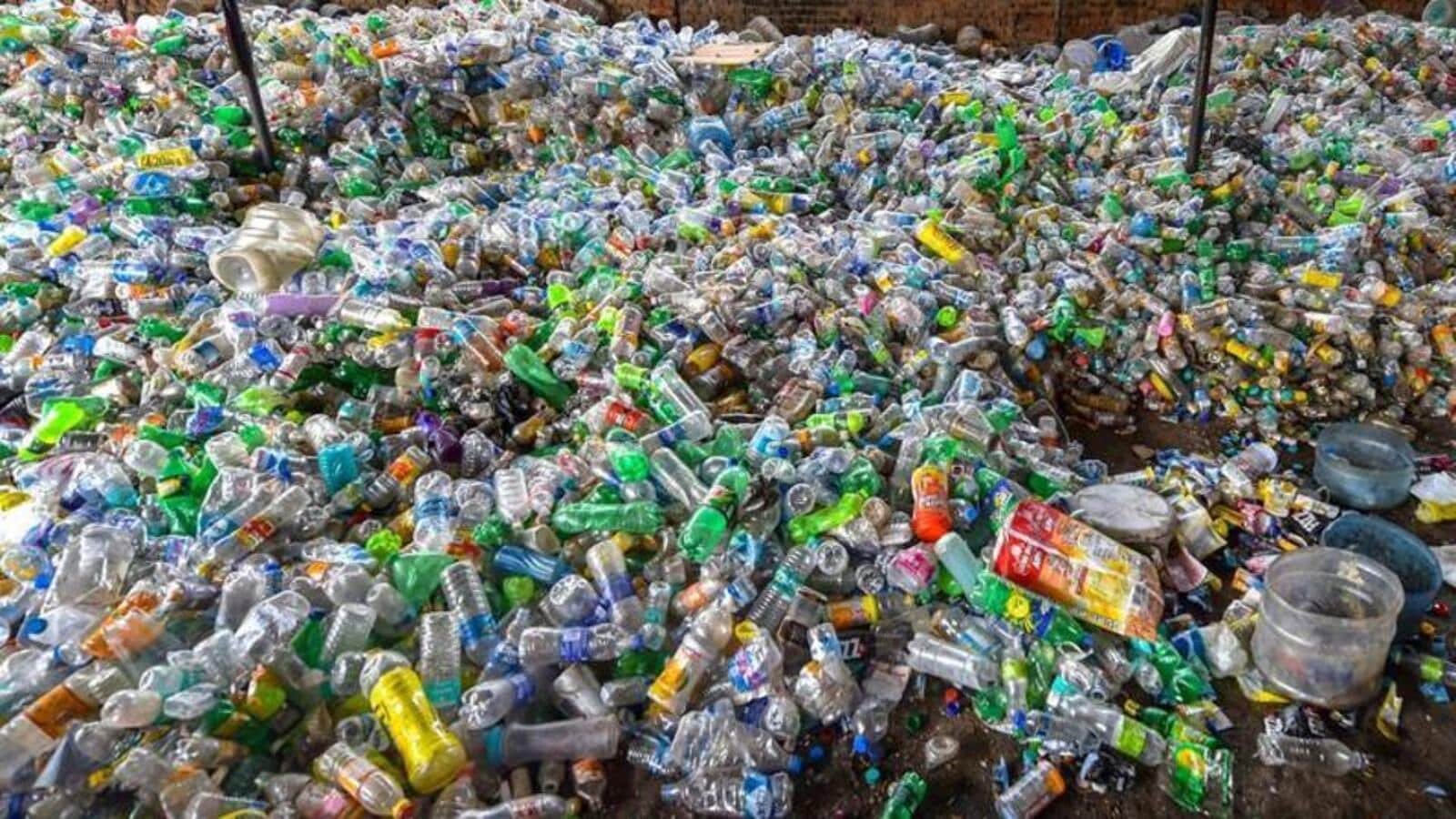
- Despite a statutory ban, single-use plastics (SUPs) are still widely used in Karnataka, especially in Bengaluru, in everyday items like carry bags, disposable cutlery, and tea cups.
- Illegal manufacturing and distribution networks have flourished, undermining the ban and exposing gaps in governance and enforcement.
Key Highlights
- Early Legal Framework
- Karnataka became the first State in India to ban single-use plastics in 2016 under the Environment (Protection) Act, 1986.
- This ban prohibited items like carry bags, banners, straws, cutlery, cling films, thermocol, and balloons.
- Later, in 2021, the Union Government imposed a nationwide ban, reinforcing Karnataka’s precedent.
- Plastic Waste Generation in Karnataka
- Karnataka generates around 6 lakh tonnes annually, translating to 1,000 tonnes daily.
- Between 2021 and 2024, plastic production rose to 28 lakh tonnes annually in peak years.
- In Bengaluru alone, 500 tonnes of SUP are used daily, but only 200 tonnes reach recycling units; the rest goes to landfills or becomes microplastics.
- Health and Environmental Hazards
- Microplastics (<5 mm) are formed when SUPs break down in landfills, water bodies, and air.
- These enter soil, water, plants, and ultimately the human body
- A 2021 study found microplastics in the human placenta, proving deep infiltration into biological systems.
- Health risks include hypothyroidism, respiratory issues, inflammation, and chronic illnesses.
- Ecosystem impacts: microplastics damage microbial communities, destabilise ecological balance, and harm cattle and other animals that consume plastics.
- Illegal Manufacturing and Shadow Market
- Despite the ban, over 300 illegal units operate in Bengaluru, especially in Peenya Industrial Area, Dasarahalli, Kamakshipalya, and J.C. Road.
- SUP production requires minimal infrastructure (small space, basic machine, electricity).
- Profit economics drive demand: SUP costs ₹50–₹80/kg to produce but sells at ₹300/kg.
- Raw materials (virgin granules, colourants, chemicals) are easily available, fuelling the shadow economy.
- Weak Enforcement and Policy Gaps
- Enforcement peaked in 2022–23 immediately after the central ban, with 25 lakh raids.
- Later years saw a sharp decline: only 22,000 raids in 2023–24 and 18,000 in 2024–25.
- Shortage of staff and poor coordination weakened efforts, especially in rural areas.
- Many citizens and small vendors are unaware of the ban, confusing policy intent.
- Recycling units exist but often operate below capacity; only 129 registered recyclers against the huge demand.
- Informal waste pickers (ragpickers) remain underutilised in waste segregation.
Key Terms
- Single-Use Plastics (SUPs):
- Single-use plastics, also known as disposable plastics, are designed for one-time use and are discarded or recycled immediately after use.
- They are most commonly used in packaging and everyday items.
- Common Uses: Items such as grocery bags, food wrappers, bottles, straws, cups, containers, and cutlery fall under this category, intended for short-term convenience.
- Advantages: These plastics are preferred because they are lightweight, durable, cost-effective, and maintain hygiene, making them a practical choice for transporting and storing goods.
- Environmental Consequences:
- Despite their advantages, SUPs are highly polluting.
- They can remain in the environment for hundreds or even thousands of years, contaminating soil and water.
- They also present serious threats to wildlife, including accidental ingestion, choking, and entanglement, both on land and in marine ecosystems.
- Microplastics
- Microplastics are extremely small plastic fragments, generally less than 5 millimetres in size.
- They are highly persistent, mobile, and difficult to remove from natural environments.
- Types of Microplastics:
- Primary Microplastics: These are intentionally manufactured for commercial purposes, such as microbeads in cosmetics or microfibers released from textiles, including clothing and fishing nets. They enter the environment through direct use, accidental spills during production or transport, and washing or abrasion.
- Secondary Microplastics: These form when larger plastic items break down, such as bottles or packaging materials. The degradation occurs due to environmental factors like sunlight, heat, and wave action in oceans.
- Environmental and Biological Impacts:
- Microplastics do not biodegrade and accumulate over time in soil, water, and sediments.
- They are ingested by aquatic organisms, which can harm their health and lead to bioaccumulation in the food chain, eventually affecting humans.
- Microplastics can also adsorb toxic chemicals and pollutants, increasing ecological and health risks.
- Extended Producer Responsibility (EPR)
- Definition: EPR is a policy that makes producers, importers, and brand owners (PIBOs) responsible for the entire lifecycle of their plastic products, including collection, recycling, and safe disposal of post-consumer waste.
- Objectives: It aims to reduce environmental pollution, promote recycling and sustainable waste management, and encourage eco-friendly product design.
- Mechanism: Producers must register on a centralised EPR platform and ensure that their plastic waste is collected and sent to authorised recycling facilities, shifting responsibility from municipalities to producers.
- Benefits: EPR supports a circular economy, reduces the burden on municipal bodies, and incentivises innovation in biodegradable or recyclable packaging.
- Challenges: Enforcement is difficult due to non-compliance and underreporting, while recycling infrastructure remains inadequate, limiting the effectiveness of EPR in managing plastic waste.
Environment Protection Act, 1986
- Genesis and Background
- The Environment Protection Act (EPA), 1986 was enacted under Article 253 of the Constitution, allowing Parliament to implement international treaties and agreements.
- Its origin is linked to India’s participation in the UN Conference on the Human Environment, Stockholm, 1972, which emphasized the need to tackle environmental degradation globally.
- Prior to EPA, environmental regulation in India was fragmented, with laws like the Indian Penal Code, Factories Act, Indian Forest Act, Water Act (1974), and Air Act (1981) addressing specific issues but lacking a comprehensive approach.
- Recognizing these gaps, Parliament passed the EPA as an umbrella legislation to cover all aspects of environmental protection.
- Constitutional Framework
- Directive Principle – Article 48-A: Directs the State to protect and improve the environment and safeguard forests and wildlife.
- Fundamental Duty – Article 51-A(g): Obligates every citizen to protect and enhance the natural environment, including forests, rivers, lakes, and wildlife, and to show compassion toward living beings.
- The Act aligns national environmental laws with India’s international commitments and emphasizes constitutional obligations for both State and citizens.
- Scope and Definitions
- Territorial Scope: EPA applies to the entire country, including all states and union territories.
- Environment: Includes air, water, land, and their interactions, as well as all forms of life (humans, plants, animals, microorganisms) and property.
- Environmental Pollutants: Substances (solid, liquid, or gas) that harm humans, animals, or ecosystems.
- Environmental Pollution: Occurs when pollutants enter the environment, reducing its quality and threatening health and biodiversity.
- Hazardous Substances: Materials or chemicals capable of causing harm to living beings or property.
- Handling: Covers manufacturing, processing, storage, transport, sale, or use of hazardous substances.
- Occupier: Person responsible for controlling operations at a factory or facility, ensuring compliance with environmental laws.
- Objectives of the Act
- Empower Authorities: Central and state governments can take measures to protect and improve environmental quality.
- Coordination: Facilitate better coordination among regulatory bodies handling air, water, and other environmental issues.
- Pollution Regulation: Control the discharge of pollutants and the handling of hazardous substances.
- Accident Management: Provide quick-response mechanisms for accidents involving toxic or hazardous materials.
- Deterrence: Impose penalties and punishments, including fines and imprisonment, to prevent violations.
- Key Features and Provisions
- Central Government Powers: Wide authority to protect and improve environmental quality and control pollution.
- Standard Setting: Ability to set national environmental standards, emission limits, and effluent discharge regulations.
- Industrial Regulation: Control the location of industries to prevent environmental harm.
- Hazardous Substances: Establish procedures for safe handling and accident prevention.
- Enforcement: Inspect, test, and collect air, water, soil, and substance samples.
- Legal Recourse: Any individual can approach a court for environmental violations.
- Penalties: Violators may face up to 5 years imprisonment, fines up to ₹1 lakh, or both; continuous violations can lead to 7 years imprisonment.
- Parliamentary Oversight: All rules framed under EPA are presented before both Houses of Parliament.
- Effectiveness and Challenges
- Despite wide powers, many rivers remain polluted, and urban air quality remains dangerously poor, indicating enforcement gaps.
- Data and Awareness Gaps: The Act mandates pollution data collection and public dissemination, but these are often not effectively implemented, leaving communities unaware of hazardous industries nearby.
- Legal Limitations: Only government officials can collect legal evidence, limiting public participation in holding polluters accountable.
- Coordination Issues: Weak coordination among authorities and inadequate monitoring reduces effectiveness.
- Strong laws alone are insufficient; robust implementation, accountability, and public involvement are crucial.
- Proposed Amendments
- Decriminalisation: Replace imprisonment with higher monetary penalties, ranging from ₹5 lakh to ₹5 crore, depending on the severity of the violation.
- Serious Offences: Violations causing injury or death will remain under IPC Section 24 + EPA.
- Adjudication Officer: Appointment of officers to assess and impose penalties for non-compliance.
- Environmental Protection Fund: All collected fines to be deposited in a dedicated fund for future environmental projects.
- Air and Water Acts: Similar reforms proposed for these laws, streamlining enforcement through financial penalties.
Implications
- Environmental Consequences
- Plastics enter water, soil, and food chains, creating irreversible ecological damage.
- Loss of soil fertility, aquatic biodiversity, and disruption of microbial ecosystems.
- Public Health Concerns
- Microplastics infiltrate human organs, leading to long-term chronic diseases.
- Contamination of vegetables, water, and air creates an invisible public health crisis.
- Governance and Enforcement Weaknesses
- A gap exists between laws on paper and ground-level implementation.
- Decline in raids reflects waning political will and administrative fatigue.
- Economic Incentives and Market Dynamics
- SUPs dominate due to cheap cost and convenience compared to alternatives.
- Retailers prefer SUP to maintain competitiveness and cater to customer demand.
- Policy and Social Dimensions
- Absence of mass awareness campaigns sustains public indifference.
- Without effective segregation policies, recycling units remain underutilised.
- Ragpickers and local communities are not integrated into waste governance models.
Challenges and Way Forward
| Challenges | Way Forward |
| Illegal SUP units flourishing due to profits and weak monitoring | Strict crackdowns with inter-state coordination; regulate raw material supply chains |
| Low awareness among vendors and citizens | Mass campaigns, school-level education, and behavioural nudges to reduce plastic use |
| Underutilised recycling capacity | Incentivise recycling units, improve logistics of segregation and waste supply |
| Decline in enforcement efforts | Strengthen monitoring with digital tracking, GPS-based raids, and citizen reporting apps |
| Economic dominance of SUPs | Subsidise eco-friendly alternatives (cloth, jute, biodegradable materials); impose deterrent penalties on illegal SUP use |
Conclusion
The persistence of single-use plastics in Karnataka reveals a structural governance challenge: enforcement alone is not enough when economic incentives, public behaviour, and awareness gaps are ignored. A long-term solution requires integrating enforcement with economic alternatives, recycling efficiency, and citizen participation, ensuring that sustainability becomes both affordable and habitual.
| Ensure IAS Mains Question
Q. “The persistence of single-use plastics in India reflects a governance challenge rather than just an environmental problem.” Critically analyse. (250 words) |
| Ensure IAS Prelims Question
Q. Consider the following statements regarding Single-Use Plastics (SUPs): 1. Karnataka was the first State to impose a statutory ban on SUPs under the Environment (Protection) Act, 1986. 2. Microplastics are defined as plastic particles smaller than 5 millimetres that accumulate in ecosystems and food chains. 3. Under Extended Producer Responsibility (EPR), producers and importers are exempted from registering with regulatory authorities. Which of the above statements is/are correct? a) 1 and 2 only b) 2 and 3 only c) 1 and 3 only d) 1, 2, and 3 Answer: a) 1 and 2 only Explanation: Statement 1 is correct: Karnataka was the first State to impose a complete ban on Single-Use Plastics (SUPs) in 2016 under the Environment (Protection) Act, 1986. The Union Government imposed a nationwide ban later in 2021. Statement 2 is correct: Microplastics are defined as plastic particles smaller than 5 millimetres. They infiltrate ecosystems, accumulate in food chains, and even reach human organs such as the lungs and placenta. Statement 3 is incorrect: Under Extended Producer Responsibility (EPR), Producers, Importers, and Brand Owners (PIBOs) are mandatorily required to register with regulatory authorities and manage post-consumer waste. They are not exempted. |
|
Also Read |
|
| UPSC Foundation Course | UPSC Daily Current Affairs |
| UPSC Monthly Magazine | CSAT Foundation Course |
| Free MCQs for UPSC Prelims | UPSC Test Series |
| ENSURE IAS NOTES | Our Booklist |