Context
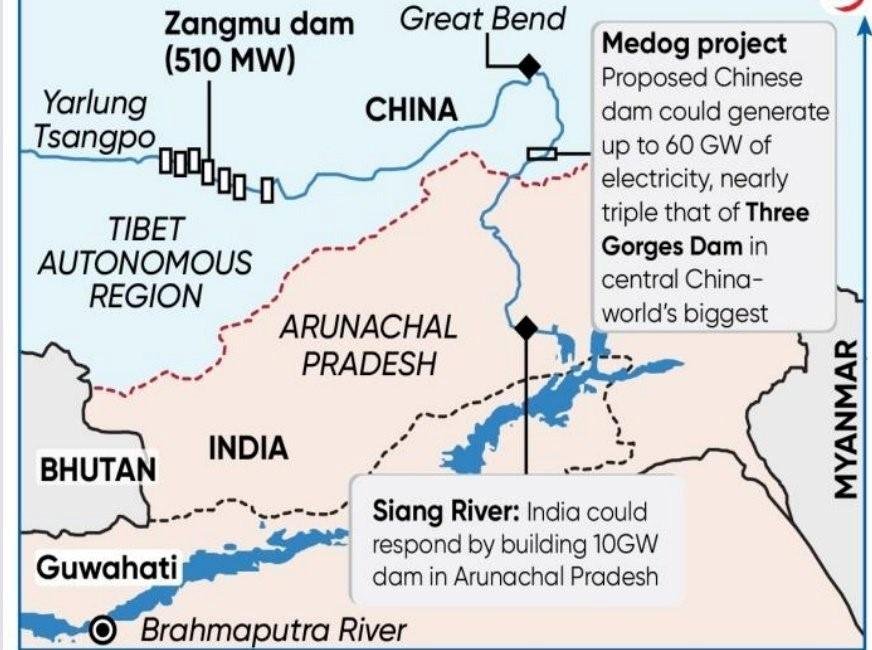
The Siang Upper Multipurpose Project (SUMP) is in the news as India advances its Pre-Feasibility Report (PFR) amid China’s hydropower development on the Yarlung Tsangpo, which enters India as the Siang.
About the Project
- Location: Near Geku village, Upper Siang district, Arunachal Pradesh.
- River: Siang River, which forms the upper course of the Brahmaputra.
- Capacity: Proposed ~11,000 MW hydropower generation.
- Status: At the Pre-Feasibility Report (PFR) stage; local communities have given consent for field studies.
- National Project: Granted National Project status in 2008.
Multipurpose Objectives
- Hydropower: Harness the Siang River’s hydropower potential to strengthen energy security.
- Water management: Regulate river flows through water storage and controlled release.
- Flood moderation: Reduce downstream flood risks in the Brahmaputra basin.
- Regional development: Support infrastructure, connectivity and local economic activity.
Strategic Significance
- Transboundary River: The Yarlung Tsangpo–Siang–Brahmaputra system flows through China, India and Bangladesh, making upstream activities important for downstream water security.
- China’s Hydropower Development: China’s projects on the Yarlung Tsangpo raise concerns over possible impacts on river flows, floods and sediment movement.
- Water Security: The project can strengthen India’s capacity for flow regulation and flood management, subject to technical assessment.
- Border Region: Development in Upper Siang, a frontier area, can improve infrastructure and connectivity in the eastern Himalayas.
Concerns and Challenges
- Transboundary risks: Upstream projects may affect river flows, sediment movement and downstream flooding. Limited data on China’s projects can make risk assessment difficult.
- Transboundary uncertainty: Limited hydrological data and information on upstream projects can make it difficult to assess downstream impacts and flood risks.
- Environmental impacts: The large project may affect forests, biodiversity, river ecology and sediment regimes in the fragile Eastern Himalayas.
- Geological risks: Seismic activity and unstable terrain require detailed geological studies and strong dam-safety measures.
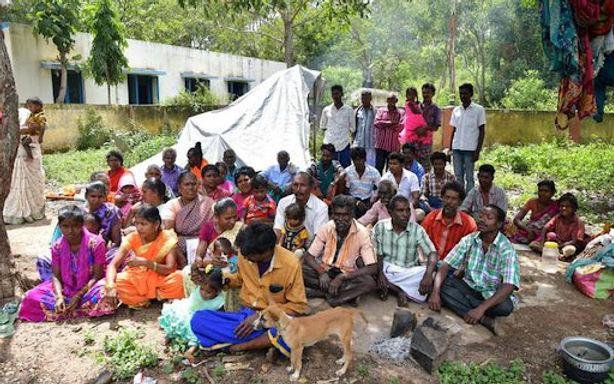
- Social challenges: Land acquisition, displacement and livelihood loss may create local concerns, requiring fair compensation, rehabilitation and resettlement (R&R).
Way Forward
- Scientific Assessment: Complete PFR, environmental and geological studies before implementation.
- Community Participation: Ensure local consultation on land, livelihoods and cultural concerns.
- Data Sharing: Strengthen India–China hydrological data sharing and dialogue on the Brahmaputra.
- Integrated Planning: Link the project with basin-level flood management, disaster preparedness and ecological safeguards.
- Balanced Development: Balance energy and water security with environmental protection and local development.
FAQs
Q1. What is the Siang Upper Multipurpose Project (SUMP)?
Ans. A proposed ~11,000 MW multipurpose project on the Siang River in Arunachal Pradesh.
Q2. Where is SUMP located?
Ans. It is proposed near Geku village in Upper Siang district, Arunachal Pradesh.
Q3. Why is SUMP strategically important?
Ans. It can strengthen water and flood management amid China’s upstream hydropower development on the Yarlung Tsangpo.