Context
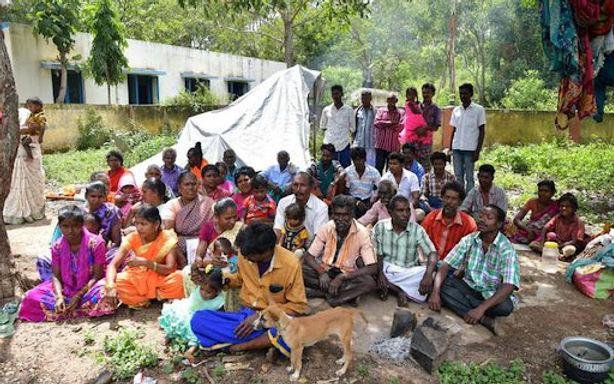
- 18 Paliyar families at Nochiodai, a remote settlement located about 32 km inside the Srivilliputhur-Megamalai Tiger Reserve (SMTR) in Tamil Nadu, recently received solar electricity.
- A ₹25-lakh solar mini-grid, established by the Forest Department with NABARD funding, provides electricity without requiring conventional grid infrastructure deep inside the protected forest.
- The initiative demonstrates how decentralised renewable energy can support tribal welfare while reducing infrastructure pressure on ecologically sensitive landscapes.
About the Paliyar Tribe
- Identity: The Paliyars are a Scheduled Tribe belonging to the Dravidian ethnolinguistic-cultural tradition of southern India.
- Distribution: They mainly inhabit the southern Western Ghats of Tamil Nadu and eastern Kerala.
- Other names: They are also known as Paliyan, Palaiyar, Pazhaiyar and Panaiyar.
- Language: They primarily speak a dialect related to Tamil.
- Traditional livelihood: Traditionally hunter-gatherers, many now depend on forest produce collection, small-scale cultivation, beekeeping, plantation work and wage labour.
- Food: Yams have traditionally formed an important part of their diet.
- Traditional knowledge: They possess considerable knowledge of medicinal plants and forest resources, developed through generations of interaction with the Western Ghats ecosystem.
- Settlement: Their small traditional settlements are known as kudis.
- Culture: Their customs include nature-based rituals, music and dance, reflecting close cultural association with forests.
Why Is the Solar Initiative Significant?
- Last-mile connectivity: Off-grid solar can provide electricity where difficult terrain makes conventional grid extension costly and impractical.
- Tribal welfare: Reliable electricity can improve lighting, education, communication and household safety in isolated settlements.
- Ecological sensitivity: Localised generation reduces the need for extensive transmission infrastructure inside a protected wildlife landscape.
- Inclusive conservation: It demonstrates that conservation and community welfare need not be treated as competing objectives; low-impact infrastructure can address basic needs while limiting habitat disturbance.
About Srivilliputhur-Megamalai Tiger Reserve
- Location: Situated in the Western Ghats of Tamil Nadu.
- Formation: Created in 2021 by combining the Srivilliputhur Grizzled Squirrel Wildlife Sanctuary and Megamalai Wildlife Sanctuary.
- Landscape significance: It strengthens ecological connectivity across the southern Western Ghats, including landscapes adjoining Kerala’s Periyar Tiger Reserve.
- Rivers: The landscape is associated with important river systems including the Vaigai, Suruliyar and Shanmuganathi.
- Climate: It receives rainfall from both the southwest and northeast monsoons.
- Vegetation: It contains evergreen, semi-evergreen, moist and dry deciduous forests and grasslands.
- Fauna: Major species include tiger, Asian elephant, gaur, Nilgiri tahr, lion-tailed macaque, Nilgiri langur and grizzled giant squirrel.
- Conservation importance: The landscape is an important habitat of the grizzled giant squirrel (Ratufa macroura), a threatened arboreal squirrel of southern India and Sri Lanka.
FAQs
Q1. Where are the Paliyars mainly found?
They are primarily found in the southern Western Ghats of Tamil Nadu and eastern Kerala.
Q2. What are Paliyar settlements traditionally called?
Their small settlements are known as kudis.
Q3. When was Srivilliputhur-Megamalai Tiger Reserve created?
It was created in 2021.
Q4. Which two protected areas were combined to form SMTR?
The Srivilliputhur Grizzled Squirrel Wildlife Sanctuary and Megamalai Wildlife Sanctuary.
Q5. Why is the grizzled giant squirrel important for SMTR?
SMTR contains important habitat for the grizzled giant squirrel (Ratufa macroura), a threatened species of the southern Indian–Sri Lankan region.