Context
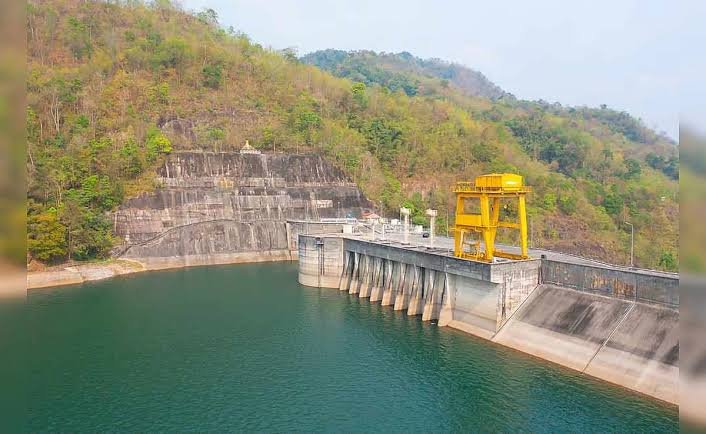
India is planning the Siang Multi-Purpose Storage-cum-Hydropower Project in Arunachal Pradesh. It is being considered in the backdrop of China’s proposed large hydropower project on the Yarlung Tsangpo River in Tibet. The project is important for India’s energy security, flood management and strategic interests in the Siang-Brahmaputra river basin.
Siang River Basin: Course and Names
- The same river is known by different names as it flows through different regions. It is known as Yarlung Tsangpo in Tibet (China), Siang or Dihang in Arunachal Pradesh (India), Brahmaputra in Assam (India) and Jamuna in Bangladesh.
- Course of the River:
- The river flows through Tibet before entering Arunachal Pradesh.
- It takes a sharp horseshoe-shaped turn around Namcha Barwa Peak in Tibet. This is known as the Great Bend (Syntaxial Bend).
- It then enters Arunachal Pradesh and flows into Assam, where it becomes the Brahmaputra after joining major tributaries.
About the Siang Hydropower Project
- Location: Siang River basin, Arunachal Pradesh.
- Proposed capacity: Approximately 11.2 GW.
- Implementing agency: NHPC (National Hydroelectric Power Corporation).
- Major Objectives:
- Hydroelectricity generation: Generate electricity using flowing water of Siang River.
- Water storage and flow regulation: Store water in reservoirs and regulate its release according to requirements.
- Flood moderation: Store excess monsoon water and regulate downstream flows to reduce flood risks.
- Water security: Help manage water availability through controlled storage & release.
- Strategic importance: Act as a response to China’s upstream hydropower infrastructure on the Yarlung Tsangpo River.
China’s Proposed Hydropower Project
- China is developing a massive hydropower project on the Yarlung Tsangpo River in Tibet.
- The proposed project has an estimated capacity of around 60 GW.
- It is planned as a series of cascading hydropower stations.
- Cascading Hydropower Projects involve constructing multiple hydropower stations along the same river.
- Water released after passing through the turbines of one station flows downstream to another station.
- The same water is therefore used repeatedly to generate electricity at different locations.
- Yarlung Tsangpo’s high hydropower potential: The river passes through a mountainous region near the Great Bend. It experiences an elevation drop of more than 2,000 metres over a stretch of approximately 50 km. This steep descent gives the river high hydropower potential because of the large amount of potential energy available in the falling water.
Important Associated Communities and Institutions
- Adi Community: An indigenous tribal community of Arunachal Pradesh. Their lives and livelihoods are closely connected with local forests, wildlife and the surrounding ecosystem. Therefore, large hydropower projects may affect their traditional livelihoods and ecological surroundings.
- Brahmaputra Board: It is a statutory body established under the Brahmaputra Board Act, 1980. It is responsible for planning and coordinating flood-control measures in the Brahmaputra Valley. Its work is important because monsoon flooding causes riverbank erosion and affects surrounding areas.
Frequently Asked Questions (FAQs)
Q1. What is the Siang Multi-Purpose Storage-cum-Hydropower Project?
It is a proposed 11.2 GW hydropower project on the Siang River in Arunachal Pradesh. Implemented by NHPC, it aims to generate electricity, store water and regulate downstream river flows.
Q2. What are the different names of the Siang-Brahmaputra River?
The river is called Yarlung Tsangpo in Tibet, Siang or Dihang in Arunachal Pradesh, Brahmaputra in Assam and Jamuna in Bangladesh as it flows through different regions.
Q3. What is the Great Bend of the Yarlung Tsangpo River?
The Great Bend, also called the Syntaxial Bend, is a horseshoe-shaped turn taken by the Yarlung Tsangpo around Namcha Barwa Peak in Tibet before entering Arunachal Pradesh.
Q4. Why is the Siang Project strategically important for India?
The project can strengthen India’s energy and water security, moderate floods and regulate river flows. It is also strategically important in the backdrop of China’s upstream hydropower development in Tibet.