Why in the News?
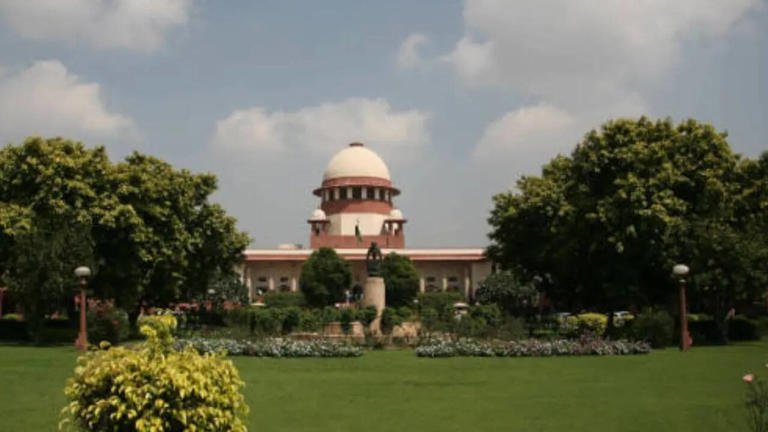
- The Supreme Court asked whether the “potentiality of abuse” of Section 152, Bharatiya Nyaya Sanhita (BNS); which penalises acts endangering sovereignty, unity and integrity- can be a ground to strike the provision as unconstitutional.
- The Court protected Siddharth Varadarajan (Founding Editor, The Wire) and members of the Foundation of Independent Journalism from coercive police action in an FIR registered in Morigaon, Assam.
- Notices were issued to the Union government and the State of Assam; the matter raises core questions on free speech, vagueness in penal law, and press freedom.
Key Highlights
- Case Posture & Interim Protection
- Petitioners apprehended imminent arrest under Section 152 BNS and other offences for a published article.
- Bench granted interim protection against coercive steps.
- Challenge to Section 152 BNS
- Petitioners argued Section 152 is “in essence” the colonial sedition (IPC Section 124A) in new language.
- Core claim: the provision is vaguely worded, creating a chilling effect on speech, especially for journalists.
- Judicial Observations on Vagueness & Incitement
- Justice Bagchi acknowledged vagueness in a penal statute is a valid ground to challenge it.
- Bench recalled Kedar Nath Singh: sedition (and by analogy Section 152) requires clear incitement to violence or threat to public order/sovereignty; mere political dissent is not enough.
- Scope of ‘Acts Endangering Sovereignty’
- Justice Kant noted no exhaustive list can be pre-set; it must be case-specific.
- Emphasised that political dissent per se cannot be treated as endangering sovereignty.
- Procedural Issues Raised by the State
- Solicitor-General questioned using a constitutional challenge to seek anticipatory bail/quashing under CrPC Section 438.
- Court queried the necessity of custodial interrogation of journalists, while SG argued journalists are not a separate class under law.
Kedarnath Singh Case
- In 1962, the Supreme Court in ‘Kedarnath Singh v State of Bihar’ upheld the constitutional validity of IPC Section 124A.
- However, the court attempted to restrict its scope for misuse.
- The court held that unless accompanied by an incitement or call for violence, criticism of the government cannot be labelled sedition.
Implications
- Constitutional Doctrine & Free Speech
- Outcome may clarify whether vagueness and misuse-risk alone can invalidate penal provisions.
- Could reaffirm or refine the Kedar Nath incitement standard for national-security speech offences.
- Press Freedom & Chilling Effect
- Interim protection signals judicial sensitivity to press freedom in national-security cases.
- A narrow reading/downstream guidelines could reduce overbroad policing of journalistic work.
- Criminal Justice & Police Powers
- Court’s stance on custodial interrogation in speech-related offences could curb coercive tactics.
- May encourage prior scrutiny by police/prosecutors before invoking Section 152.
- Legislative Drafting & Penal Clarity
- A ruling against overbreadth may push for clearer statutory language, mens rea thresholds, and incitement tests in BNS offences.
- Could set drafting benchmarks for future national-security provisions.
- Federalism & Venue Choices
- FIRs in distant jurisdictions (here, Assam) raise access-to-justice issues for national media.
- The Court may shape venue, transfer, or consolidation norms for speech offences with nationwide impact.
Challenges and Way Forward
| Challenge | Way Forward (Practical Steps) |
| Vagueness/overbreadth of Section 152 | Read down the provision to explicit incitement to violence or imminent lawless action; incorporate clear mens rea and foreseeability standards. |
| Chilling effect on journalists and dissenters | Issue SC guidelines requiring prior DGP/Law Officer sanction before registering FIRs in speech cases under Section 152; mandate reasoned orders. |
| Inconsistent police application across States | Create uniform SOPs under MHA advisories; periodic training on constitutional speech standards and Kedar Nath ratio. |
| Overuse of custodial interrogation | Presume no custodial interrogation in speech-only offences absent specific, recorded necessity tied to evidence tampering or flight risk. |
| Forum shopping & distant FIRs | Encourage transfer/consolidation to the place of publication/residence; allow virtual appearances; fix expedited quash/anticipatory bail timelines. |
| Lack of oversight in registration of national-security FIRs | Require post-registration judicial review (e.g., within 7–14 days) to assess prima facie incitement/intent before coercive steps. |
| Balancing security with civil liberties | Periodic Legislative/Standing Committee review of Section 152 usage data; sunset/renewal clauses or mandatory reporting to Parliament. |
Conclusion
This case squarely tests how India balances sovereignty and security with free speech and press freedom. By probing the vagueness and misuse-risk of Section 152 BNS, and by invoking Kedar Nath Singh, the Supreme Court signals that political dissent cannot be criminalised absent incitement to violence. The eventual ruling—whether by reading down, guidelines, or striking down—will shape the contours of national security speech offences, policing practices, and the constitutional protection of journalism in India.
| EnsureIAS Mains Question
Q. Section 152 of the Bharatiya Nyaya Sanhita (BNS) is being criticized as a reincarnation of colonial sedition law, raising concerns over its potential misuse and impact on free speech. Critically examine the constitutional validity of such provisions in light of Supreme Court precedents. Suggest measures to strike a balance between national security and freedom of expression. (250 Words) |
| EnsureIAS Prelims Question Q. Which of the following statements about Section 152 of the Bharatiya Nyaya Sanhita (BNS) is/are correct?1. It deals with acts endangering the sovereignty, unity, and integrity of India. 2. It retains the exact terminology of the colonial-era sedition law under Section 124A of the IPC. 3. The Supreme Court has referred to the Kedar Nath Singh case while examining the validity of this section. a. 1 only Answer: c. 1 and 3 only |