Context
The Ministry of Defence has signed a contract with Bharat Dynamics Limited (BDL) for the procurement of 160 Satellite Smart Anti-Airfield Weapons (SAT-SAAW) and associated equipment for the Indian Air Force (IAF).
About SAT-SAAW
- SAT-SAAW is an air-to-ground precision-guided glide bomb designed to engage stationary targets from a stand-off range.
- It has been indigenously designed and developed by the Defence Research and Development Organisation (DRDO).
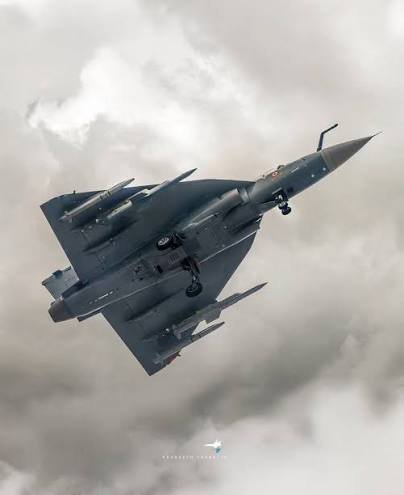
- It can be launched from platforms such as the Jaguar, Hawk and Su-30MKI.
Key Features
- Target Set: It is designed to destroy runways, taxiways, aircraft hangars, reinforced bunkers and radar installations.
- Navigation: The SAT variant combines GPS/NavIC-based satellite navigation with an onboard Inertial Navigation System (INS).
- Accuracy: It is stated to achieve accuracy of about 7 metres against stationary targets, including during day or night and under varying weather conditions.
- Indigenous Content: The system will have approximately 60% indigenous content.
- Subsystem Indigenisation: The Initial Measurement Unit, Long Impact Delay Fuse and Twin Store Carrier are among the subsystems being indigenised.
- Delivery: The weapons are scheduled for delivery during 2027–28 and 2028–29.
FAQs
Q1. What is the primary role of SAT-SAAW?
SAT-SAAW is designed for precision engagement of stationary targets associated with airfields, including runways, taxiways, hangars, bunkers and radar installations.
Q2. What makes the SAT-SAAW programme relevant to defence indigenisation?
The system is planned to have about 60% indigenous content, while selected subsystems are also being indigenised.
Q3. What is the significance of the SAT variant?
The SAT variant uses satellite navigation integrated with an onboard INS to support accurate engagement of stationary targets.