| Important questions for UPSC Pre/ Mains/ Interview:
1. What is Sahyadri Tiger Reserve (STR)? 2. Why is STR ecologically important in the Western Ghats? 3. What are the key physical and habitat features of STR? 4. What type of vegetation is found in STR? 5. Which flora species are notable in the reserve? 6. What fauna does Sahyadri Tiger Reserve support? 7. Why was the recent tigress release significant? 8. What conservation challenges does STR face? 9. What safeguards and management measures are critical? |
Context
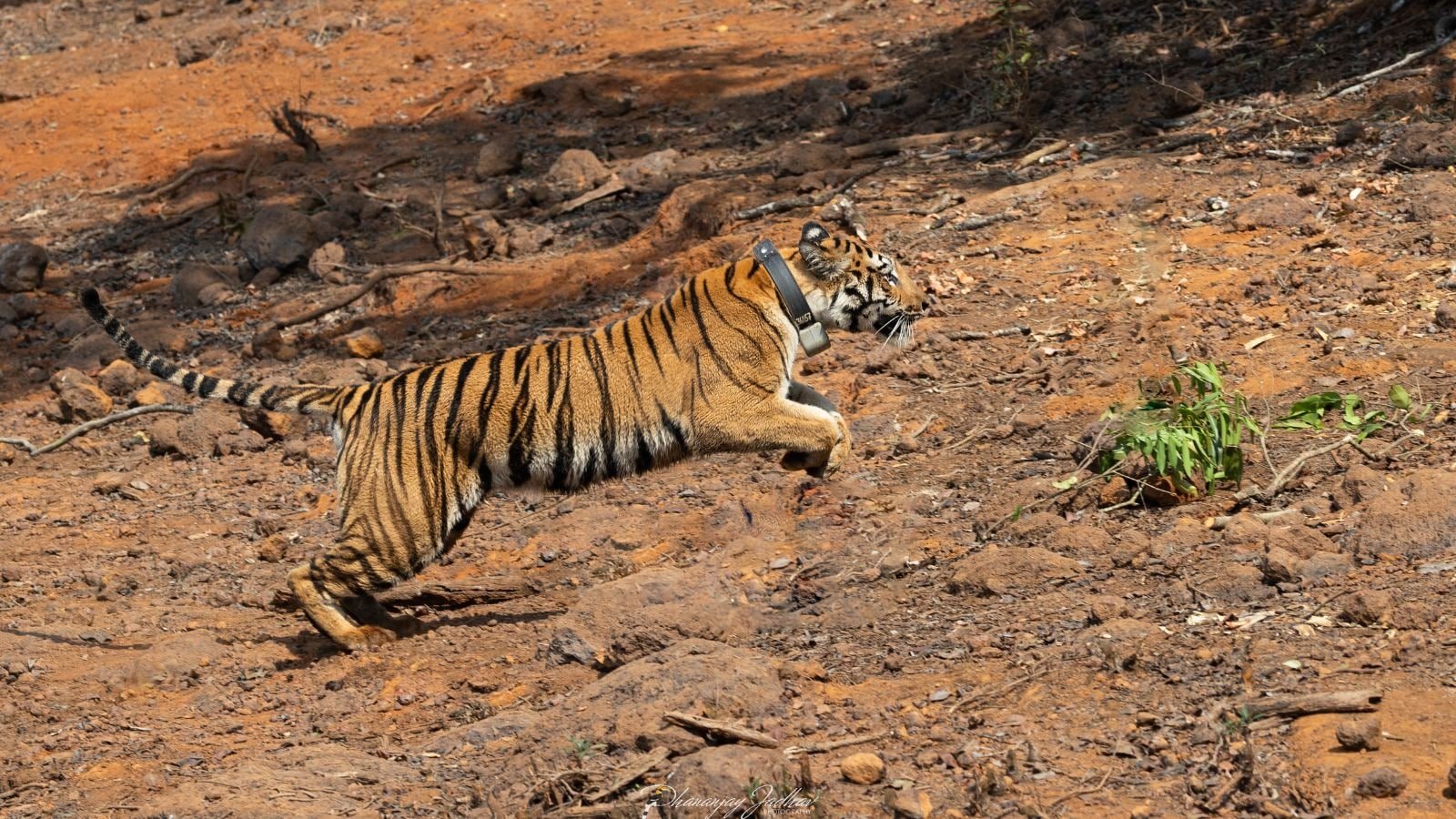
A third tigress was recently released into the wild at the Sahyadri Tiger Reserve, marking a renewed push to revive tiger populations in the northern Western Ghats and strengthen landscape-level conservation in western Maharashtra.
Q1. What is Sahyadri Tiger Reserve (STR)?
- A notified tiger reserve located in the Western Ghats of Maharashtra.
- Northernmost tiger habitat within the Western Ghats.
- First tiger reserve of Western Maharashtra and the fourth in the state.
- Formed by integrating:
- Koyana Wildlife Sanctuary
- Chandoli National Park
Q2. Why is STR ecologically important in the Western Ghats?
- Acts as a critical northern corridor for tiger dispersal in the Western Ghats.
- Supports landscape continuity between fragmented forest patches.
- Lies in a global biodiversity hotspot with high endemism.
- Low future risk of large-scale anthropogenic pressure compared to other reserves.
Q3. What are the key physical and habitat features of STR?
- Central zone dominated by large reservoirs:
- Shivsagar Reservoir on the Koyana River.
- Vasant Sagar Reservoir on the Warana River.
- Habitat mosaic includes:
- Woodlands
- Grasslands
- Lateritic plateaus locally known as “Sadaa”, with high ecological value.
- These varied habitats support diverse prey and predator species.
Q4. What type of vegetation is found in STR?
- Forest types include:
- Moist evergreen
- Semi-evergreen
- Moist deciduous
- Dry deciduous
- One of the few regions with climax and near-climax vegetation
- Vegetation structure enhances prey availability and habitat stability.
Q5. Which flora species are notable in the reserve?
- Dominant tree species:
- Teak
- Bamboo
- Indian laurel
- Jamun
- Abundant medicinal plants:
- Asparagus racemosus
- Aegle marmelos
- Hosts rare Western Ghats endemics, including orchids and shrubs adapted to humid microclimates.
Q6. What fauna does Sahyadri Tiger Reserve support?
- Apex carnivores:
- Tiger
- Leopard
- Wild dog (Dhole)
- Herbivores:
- Gaur
- Sambar
- Four-horned antelope
- Mouse deer
- Giant squirrel
- Rich avifauna, including hornbills and other endemic bird species.
Q7. Why was the recent tigress release significant?
- Reinforces reintroduction and population recovery efforts in a low-density tiger landscape.
- Improves genetic viability through enhanced breeding potential.
- Signals improved habitat readiness and protection measures.
- Strengthens STR’s role in Western Ghats tiger conservation planning.
Q8. What conservation challenges does STR face?
- Fragmentation at the periphery due to human settlements.
- Limited natural tiger inflow from neighbouring landscapes.
anaging reservoir-dominated core areas. - Need for long-term prey base augmentation.
Q9. What safeguards and management measures are critical?
- Intensive monitoring through radio-collaring and camera traps.
- Protection of corridors linking STR with adjoining forest divisions.
- Minimising human–wildlife conflict through community engagement.
- Habitat improvement and prey population management.
- Inter-state and landscape-level coordination for tiger dispersal.
Conclusion
The Sahyadri Tiger Reserve represents a strategically vital but ecologically fragile frontier of tiger conservation in the Western Ghats. The recent tigress release underscores a calibrated shift from mere protection to active population revival, balancing ecological integrity with long-term landscape sustainability.