| Important questions for UPSC Pre/ Mains/ Interview:
1. What are the historical and civilisational foundations of India–Malaysia relations? 2. How have political and diplomatic relations evolved in recent years? 3. What is the current status of trade and economic cooperation? 4. Why is Malaysia strategically important for India’s Act East and maritime strategy? 5. What is the scope of defence and security cooperation? 6. How do diaspora and people-to-people ties strengthen relations? 7. Which regional and global platforms anchor cooperation? 8. What were the key outcomes of PM Modi’s February 2026 visit? 9. How is counter-terrorism cooperation being strengthened? 10.What are the strategic benefits of the partnership? 11.What concerns and challenges remain? 12.What safeguards and institutional mechanisms support cooperation? |
Context
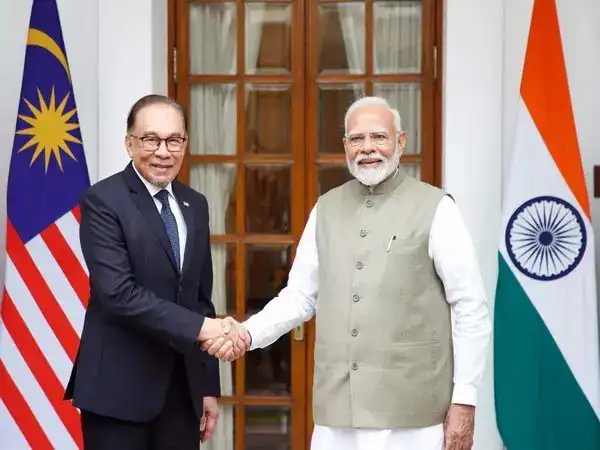
Prime Minister Narendra Modi’s visit to Kuala Lumpur in February 2026 marked a strategic deepening of India–Malaysia ties through multiple agreements spanning trade, defence, technology, and counter-terrorism—signalling convergence in the Indo-Pacific.
Q1. What are the historical and civilisational foundations of India–Malaysia relations?
- Ancient Indian Ocean trade links shaped cultural exchanges over two millennia.
- Sanskrit, Hindu-Buddhist traditions, and linguistic influences are embedded in Malaysia’s history.
- Modern diplomatic relations began soon after India’s independence, with sustained political engagement since.
Q2. How have political and diplomatic relations evolved in recent years?
- Relationship elevated to a Comprehensive Strategic Partnership (2024), reflecting higher trust.
- Regular high-level visits and foreign office consultations institutionalise engagement.
- Convergence at multilateral forums, including support from Malaysia for India’s UNSC reform bid.
Q3. What is the current status of trade and economic cooperation?
- Malaysia is India’s 3rd largest trading partner within ASEAN.
- Bilateral trade reached US$ 19.86 billion (2024–25):
- Indian exports: US$ 7.32 billion
- Indian imports: US$ 12.54 billion
- Malaysian investments in India (Apr 2000–Mar 2025): ~US$ 1.27 billion.
- Key exports/imports:
- India → petroleum products, engineering goods, organic chemicals, meat & dairy.
- Malaysia → vegetable oils, machinery, electrical equipment, minerals.
Q4. Why is Malaysia strategically important for India’s Act East and maritime strategy?
- Location astride the Strait of Malacca and proximity to the South China Sea.
- Critical node for maritime connectivity and sea-lane security.
- Supports India’s Act East Policy and broader Indo-Pacific engagement.
Q5. What is the scope of defence and security cooperation?
- Expanding joint exercises, maritime cooperation, and capacity building.
- Shared concerns: freedom of navigation, piracy, terrorism, non-traditional threats.
- Growing emphasis on intelligence sharing and counter-terrorism coordination.
Q6. How do diaspora and people-to-people ties strengthen relations?
- Indian diaspora in Malaysia exceeds 2 million.
- Active participation of Persons of Indian Origin in politics, business, education, and culture.
- Educational exchanges, tourism, and cultural diplomacy deepen societal bonds.
Q7. Which regional and global platforms anchor cooperation?
- Strong engagement through Association of Southeast Asian Nations-led mechanisms.
- Participation in East Asia Summit and IORA.
- India recognises ASEAN centrality; Malaysia backs India’s Act East Policy—creating strategic alignment.
Q8. What were the key outcomes of PM Modi’s February 2026 visit?
- Signing of 11 agreements/MoUs across defence, semiconductors, digital tech, health, and energy.
- Framework agreement on semiconductor collaboration to integrate into global value chains.
- Invitation for Malaysian investment in electronics, AI, renewables, and healthcare.
- Decision to promote local-currency trade settlement (INR–Ringgit) to cut transaction costs.
- Announcement of a new Indian Consulate General to strengthen consular and diaspora engagement.
Q9. How is counter-terrorism cooperation being strengthened?
- Joint reaffirmation of zero tolerance for terrorism.
- Explicit condemnation of cross-border terrorism and terror financing.
- Cooperation in multilateral fora, including the Financial Action Task Force.
- Emphasis on tackling radicalisation and misuse of emerging technologies.
Q10. What are the strategic benefits of the partnership?
- Enhanced maritime security and Indo-Pacific stability.
- Diversified supply chains (semiconductors, advanced manufacturing).
- Reduced dependence on third-country currencies in trade.
- Stronger coordination on global governance reform, including UNSC.
Q11. What concerns and challenges remain?
- Trade imbalance and limited diversification in some sectors.
- Geopolitical pressures in the South China Sea affecting regional stability.
- Need to translate MoUs into time-bound implementation.
- Managing diaspora issues and consular capacity as engagement expands.
Q12. What safeguards and institutional mechanisms support cooperation?
- Regular review through joint commissions and working groups.
- Defence and security dialogues with information-sharing protocols.
- Trade facilitation via local-currency settlement frameworks.
- Consular expansion to improve citizen services and diaspora outreach.
Conclusion
India–Malaysia relations are entering a results-oriented phase, anchored in strategic trust, economic complementarity, and shared Indo-Pacific priorities. The February 2026 agreements expand cooperation while balancing security imperatives and economic integration. Sustained implementation will determine long-term impact.