Context
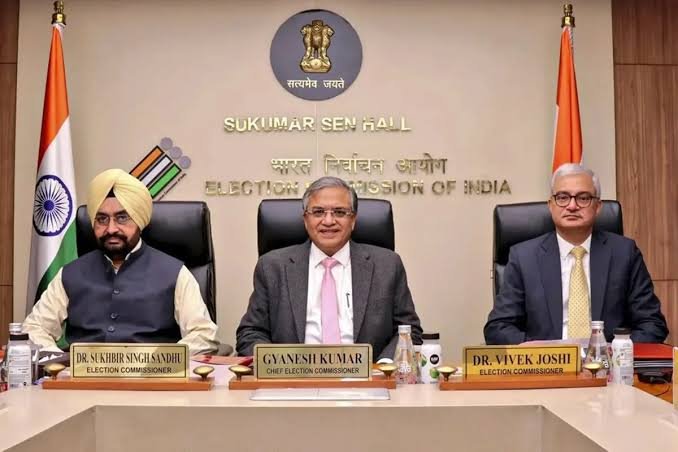
- Recent concerns over electoral-roll management and the functioning of the Election Commission of India (ECI) have renewed debate over the legal status and protection of the franchise.
- The issue gained attention after the reported exclusion of 97 eligible voters in Goa, despite repeated requests from Electoral Registration Officers for their inclusion.
- The broader question is whether voting should continue as a statutory right or receive the stronger protection of a Fundamental Right.
Universal Adult Suffrage in India
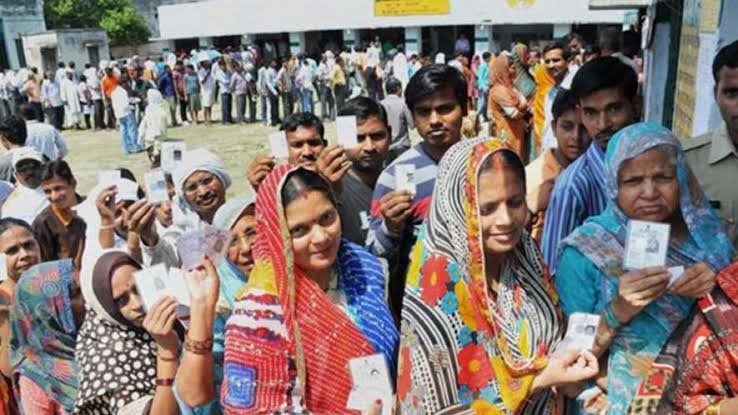
- India adopted universal adult suffrage from the beginning of the Republic. Adult citizens could participate in elections without discrimination based on gender, caste, religion, education or property.
- Article 326 of the Constitution of India provides for elections to the Lok Sabha and State Legislative Assemblies on the basis of adult suffrage.
- The electoral framework is mainly governed by:
-
- Representation of the People Act, 1950: preparation and revision of electoral rolls.
- Representation of the People Act, 1951: conduct of elections, candidature and electoral offences.
- India’s first general election involved around 173 million voters, many of whom were illiterate. Sukumar Sen, the first Chief Election Commissioner, introduced election symbols to facilitate participation across literacy levels.
Legal Status of the Right to Vote
- The Constituent Assembly considered whether voting should form part of the Fundamental Rights chapter, but the proposal was not adopted.
- In Kuldip Nayar v. Union of India (2006), a five-judge Constitution Bench held that the “right to elect” is a statutory right, derived from Section 62 of the Representation of the People Act, 1951.
- In Rajbala v. State of Haryana (2015), a two-judge Bench referred to voting as a constitutional right in the context of Article 326.
- The larger Constitution Bench decision in Kuldip Nayar remains the controlling position.
- In Anoop Baranwal v. Union of India (2023), the Supreme Court did not reopen the classification of the right to vote.
- A dissenting view by Justice Ajay Rastogi connected the franchise with Article 19(1)(a) and Article 21.
- Thus, the right to elect is treated as a statutory right, while its importance to democratic participation has been recognised by the judiciary.
Electoral Rolls and Democratic Participation
- The practical exercise of the franchise depends on an accurate electoral roll.
- Under Section 19 of the Representation of the People Act, 1950, a citizen who is at least 18 years old, ordinarily resident in a constituency and not otherwise disqualified is eligible for registration.
- Section 21 of the Representation of the People Act, 1950 empowers the ECI to direct the preparation and revision of electoral rolls.
- Revision seeks to address:
- omission of eligible voters;
- inclusion of ineligible persons;
- duplicate entries; and
- incorrect voter particulars.
- These safeguards support electoral integrity and the principle of “one person, one vote.”
Special Intensive Revision and Administrative Concerns
- The Special Intensive Revision (SIR) has sharpened the tension between electoral accuracy and protection against wrongful exclusion.
- The reported Goa case illustrates why even an individual deletion can matter: the exclusion of 97 eligible voters may not alter an election result, but it can still affect their ability to vote.
- The issue has also raised concerns over centralised electoral databases and the allocation of responsibilities between the ECI and Electoral Registration Officers.
- Greater dependence on digital systems therefore increases the importance of transparency, accountability and review mechanisms.
- In Lakshmi Charan Sain v. A.K.M. Hassan Usman (1985), political parties were expected to assist in ensuring inclusion of eligible voters and removal of ineligible entries from electoral rolls.
Case for Greater Constitutional Protection
- The proposal to make voting a Fundamental Right seeks stronger protection against wrongful exclusion from the electoral process.
- Supporters argue that such a change could enable heightened judicial scrutiny where administrative action improperly affects electoral participation.
- Fundamental Right status would not remove the ECI’s responsibility for electoral-roll administration. It would instead potentially strengthen judicial oversight of decisions affecting the franchise.
- The debate therefore involves balancing electoral integrity, administrative regulation, democratic participation and judicial oversight.
- The Kesavananda Bharati judgment provides a wider constitutional context by recognising democracy as part of the Basic Structure of the Constitution.
Way Forward
- Electoral-roll revision should simultaneously prevent ineligible entries and protect eligible citizens from wrongful exclusion.
- Responsibilities for additions, deletions and corrections should be clearly defined among electoral authorities.
- Digital electoral systems should be supported by transparent procedures, institutional accountability and accessible review mechanisms.
- Reforms should strengthen public confidence while preserving the integrity of the electoral process.
Conclusion
India’s electoral framework combines universal adult suffrage, statutory regulation and constitutional oversight. The continuing debate over the franchise ultimately concerns how electoral administration can preserve electoral integrity without weakening inclusive democratic participation.
UPSC-Oriented FAQs
- Why was universal adult suffrage especially significant during India’s first general election?
India had to extend electoral participation to a very large and diverse electorate at the outset of the Republic. Election symbols helped overcome literacy-related barriers and enabled wider participation.
- What does “ordinarily resident” mean in electoral law?
It refers to a person having a genuine and continuing residence in a constituency rather than merely staying there temporarily. This criterion is relevant to electoral registration.
- Why can an isolated electoral-roll error still raise a democratic concern?
Even when it has no material effect on the overall election result, an erroneous deletion may prevent an eligible individual from exercising the franchise.
- What institutional concern arises from centralised electoral databases?
Centralisation can raise questions about the distribution of statutory responsibility and accountability between Electoral Registration Officers and the central election machinery, especially when individual voter entries are affected.
- Would granting Fundamental Right status eliminate the ECI’s electoral-roll functions?
No. Electoral authorities would continue to prepare and revise the rolls. The proposed change would primarily concern the level of constitutional and judicial protection available against wrongful administrative action.