Context
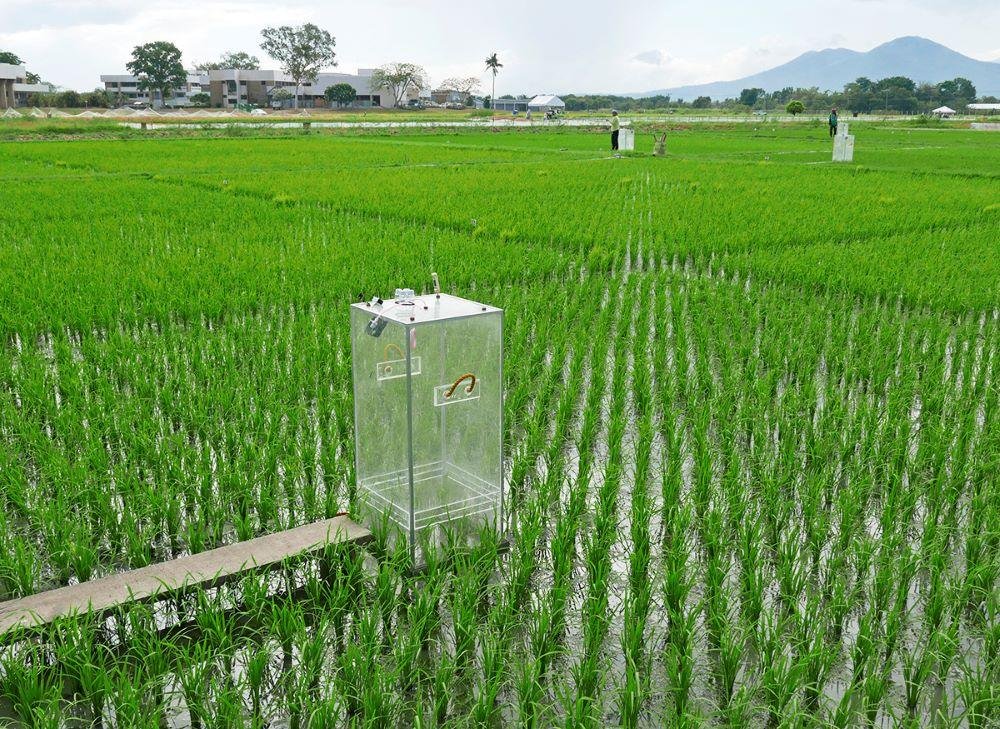
A recent study published in Nature Food reported that greenhouse gas (GHG) emissions from global paddy fields have nearly doubled since the 1960s, with eastern India’s rice-growing regions identified among the world’s major methane hotspots.
Methane Emissions in Rice Cultivation
- Methane (CH₄) is a potent greenhouse gas with a global warming potential about 25 times greater than carbon dioxide (CO₂) over a 100-year period.
- Agriculture is one of the largest anthropogenic (human-induced) sources of methane, with rice cultivation being the largest agricultural contributor.
- Rice is generally cultivated in flooded fields, which create anaerobic (low-oxygen) conditions in the soil.
- Under these conditions, methanogenic microorganisms (methanogens) decompose organic matter and produce methane.
- Methane reaches the atmosphere through diffusion across floodwater, ebullition (bubbling) from the soil, and transport through rice plants.
- Continuous flooding prolongs anaerobic conditions, resulting in higher methane emissions.
Factors Contributing to Methane Emissions
- Crop residue incorporation supplies organic matter that serves as a substrate for methane-producing microorganisms.
- Excessive nitrogen fertiliser application stimulates microbial activity and indirectly increases methane production.
- Loss of soil organic carbon reduces the soil’s capacity to store carbon, converting paddy fields from carbon sinks into carbon sources.
- Expansion of irrigated paddy cultivation, coupled with intensive farming practices, has further increased methane emissions.
Key Findings
- Global Emissions
- During 2011–2020, global paddy fields emitted approximately 1.1 billion tonnes of CO₂-equivalent (CO₂-e) annually.
- This represents a 90.4% increase compared to 1961–1980, indicating that emissions have nearly doubled over the past six decades.
- Loss of Soil Organic Carbon
- Around half of the increase in emissions resulted from the depletion of soil organic carbon.
- During 1961–1980, paddy fields removed nearly 289 million tonnes of CO₂-equivalent annually.
- By the 2010s, more than one-third of global paddy fields had become net carbon emitters.
- India’s Position
- Eastern India has emerged as one of the world’s major methane hotspots.
- Irrigated paddy fields in India emit approximately 3.9 million tonnes of methane annually, slightly exceeding Germany’s annual methane emissions.
- India is the world’s largest rice producer, and paddy cultivation occupies nearly 55% of the country’s rainfed harvested area, making it a major contributor to agricultural methane emissions.
- Future Outlook
- Between 2031 and 2050, annual methane emissions from rice cultivation are projected to increase by about 25%.
- Global warming, erratic rainfall, and intensive agricultural practices are expected to further increase methane emissions from rice cultivation.
Study Methodology
The study estimated greenhouse gas emissions from rice cultivation by integrating:
- Meta-analysis of more than 1,200 field experiments.
- Process-based ecosystem modelling.
- Artificial Intelligence (AI) for large-scale estimation and analysis.
- Mitigation Measures
System for Rice Intensification (SRI)
The National Innovations in Climate Resilient Agriculture (NICRA) promotes the System for Rice Intensification (SRI), which involves:
- Transplanting young seedlings.
- Avoiding continuous flooding through controlled irrigation.
- Improving water-use efficiency while reducing methane emissions.
- Other Recommended Measures
- Adoption of Alternate Wetting and Drying (AWD) irrigation.
- Balanced application of nitrogen fertilisers.
- Scientific crop residue management.
- Reduced tillage to conserve soil organic carbon.
These measures could reduce global rice-related greenhouse gas emissions by around 10% by the middle of the century, even under a warming climate.
- KERA-AWD Project
The International Rice Research Institute (IRRI) is implementing the KERA-AWD Project in Kerala’s Thrissur Kole lands and Palakkad Malampuzha canal command area.
The project focuses on:
- Enhancing soil organic carbon.
- Improving water management and irrigation scheduling.
- Optimising fertiliser use and crop residue management.
- Studying soil microbial communities and farmers’ preferences.
- Using phosphogypsum as a partial substitute for lime to reduce emissions from acidic soils.
Challenges and Way Forward
| Challenges
|
Way Forward |
| Labour-intensive cultivation practices limit the large-scale adoption of improved methods such as SRI. | Promote farm mechanisation and provide financial incentives to encourage the adoption of climate-smart farming practices. |
| Limited awareness and technical knowledge among farmers hinder the implementation of low-emission technologies. | Strengthen agricultural extension services, farmer training programmes, and digital advisory platforms. |
| Erratic rainfall and increasing climate variability reduce the effectiveness of water-management practices. | Develop climate-resilient irrigation systems and promote efficient water-management techniques such as AWD. |
| Excessive fertiliser use and improper crop residue management increase methane emissions | Encourage balanced nutrient management and scientific crop residue management practices. |
| Regional variations in soil, climate, irrigation, and farming practices affect the effectiveness of mitigation measures. | Formulate region-specific policies based on local agro-climatic conditions and scientific evidence. |
| Dependence on water-intensive paddy cultivation increases environmental pressure and groundwater stress. | Promote crop diversification wherever agro-climatically suitable while safeguarding farmers’ livelihoods and incomes. |
| Limited research, innovation, and adoption of low-emission technologies slow mitigation efforts. | Invest in research, technological innovation, and climate-smart agriculture to improve sustainable rice production. |
Conclusion
Reducing methane emissions from rice cultivation is essential for achieving climate-resilient agriculture while ensuring food security. This requires the widespread adoption of scientific farming practices, efficient water management, technological innovation, and region-specific policy interventions to promote sustainable and low-emission rice production.