Context
The Pacific island nation of Nauru has officially adopted the name Republic of Naoero, restoring its traditional name to strengthen its national identity and reaffirm its cultural heritage.
About
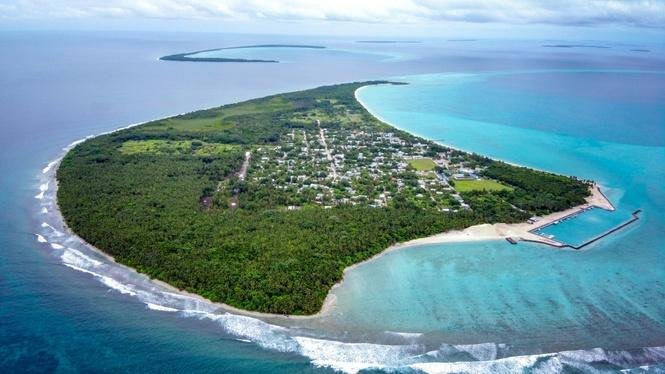
The Republic of Naoero is an island republic located in the southwestern Pacific Ocean in southeastern Micronesia, about 40 km south of the Equator. It is a raised coral island with a land area of 21 sq. km and a population of approximately 12,000, making it the world’s smallest independent republic by land area.
The island lies about 1,300 km northeast of the Solomon Islands, while Banaba Island (Kiribati) is its nearest neighbour, about 300 km to the east. It has no rivers or lakes and no official capital, although government offices are located in the Yaren district. Nauruan is the national language, and the Australian dollar is the official currency.
Economic Profile
Phosphate mining was historically the backbone of the economy and once made the country one of the wealthiest nations in the world on a per capita basis. However, the depletion of phosphate reserves has created significant economic challenges.
- Agriculture (mainly coffee and copra plantations), fishing, manufacturing, and tourism contribute only modestly to the economy.
- The country possesses an Exclusive Economic Zone (EEZ) extending 200 nautical miles (about 320 km) offshore.
- Since the 1990s, revenue from the sale of commercial fishing licences has become an important source of national income.
Frequently Asked Questions (FAQs)
Q1. Why did Nauru adopt the name Republic of Naoero?
Ans: The country restored its traditional name to strengthen its national identity and reaffirm its cultural heritage.
Q2. Where is the Republic of Naoero located?
Ans: It is situated in the southwestern Pacific Ocean in southeastern Micronesia, approximately 40 km south of the Equator.
Q3. What makes the Republic of Naoero unique among sovereign states?
Ans: Covering only 21 sq. km with a population of around 12,000, it is the world’s smallest independent republic by land area.
Q4. What are the main features of the Republic of Naoero’s political system?
Ans: It follows a Westminster-style parliamentary system. The President, elected by the unicameral Parliament, serves as both the Head of State and the Head of Government, while all MPs contest elections as independents.
Q5. Why is the Exclusive Economic Zone (EEZ) important for the Republic of Naoero?
Ans: The country’s 200-nautical-mile EEZ supports marine resource management and generates revenue through the sale of commercial fishing licences.
Q6. How has the economy of the Republic of Naoero changed over time?
Ans: The economy was once dominated by phosphate mining. Following the depletion of phosphate reserves, income from commercial fishing licences and other sectors has gained greater importance.