Context
Scientists have developed a novel Metal–Organic Framework (MOF) material integrated with metallic nanowires that uses a broad spectrum of light to break down persistent environmental pollutants such as pyrene.
About Pyrene
- Classification: A persistent PAH (Polycyclic Aromatic Hydrocarbon) with the molecular formula .
- Structure: Composed of four fused benzene rings arranged in a flat aromatic (ring-shaped, stable carbon) structure.
- How It Forms: Generated mainly through incomplete combustion (burning) of coal, petroleum, biomass (wood/crop waste), and tobacco.
- Where It Occurs: Present in coal tar, industrial exhaust/emissions, and combustion ash/residues.
Key Properties and Applications
- Physical Traits: Appears as a pale-yellow, flammable crystalline solid with very low solubility in water but good solubility in organic solvents.
- Chemical & Electronic Traits: Shows thermal stability, fluorescence (glowing under light), and charge-carrier mobility (ability to move electrical charges).
- Industrial Uses: Utilised in organic chemical synthesis, dyes, synthetic resins, and engineering plastics (and used as a fluorescent probe in chemical/biological studies).
About PAHs (Polycyclic Aromatic Hydrocarbons)
- Definition: A broad class of organic compounds made of two or more fused aromatic rings of carbon and hydrogen.
- Major Sources: Released by vehicle exhaust, factories/industrial processes, forest fires, biomass burning, and fossil fuel combustion.
- Health Impact of Other PAHs: While pyrene itself has limited carcinogen evidence, several other PAHs are carcinogenic (cancer-causing) and mutagenic (DNA-damaging)—most notably benzo[a]pyrene.
Environmental and Health Concerns
- Persistence in Nature: Low water solubility causes pyrene to resist quick breakdown and accumulate in soil, river/lake sediments, and airborne particulate matter.
- Health Risks: Can trigger cellular toxicity, oxidative stress (cell damage from unstable molecules), and tissue irritation; not conclusively proven as a human carcinogen on its own.
- Harm to Ecosystems: Long-term buildup in soil and water bodies can harm aquatic life and land organisms through bioaccumulation and habitat contamination.
About MOFs (Metal–Organic Frameworks) & Pollutant Remediation
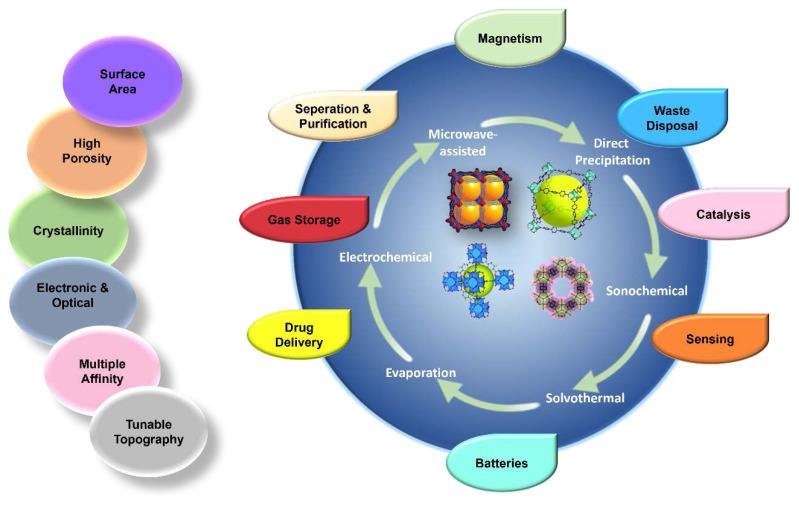
- Structure: Highly porous crystalline materials built by linking metal ions or clusters with organic (carbon-based) linker molecules into cage-like networks.
- Key Features: Offer exceptionally large internal surface area, tunable/adjustable pore sizes, and strong adsorption (surface trapping) capacity.
- Photocatalysis: Certain MOFs act as photocatalysts, using light energy to drive chemical reactions that break down harmful pollutants (including organic contaminants like PAHs and dyes).
- Major Applications: Used in water purification, carbon capture, gas storage, chemical separation, and environmental cleanup/remediation.
- Nobel Prize 2025: The 2025 Nobel Prize in Chemistry was awarded to Susumu Kitagawa, Richard Robson, and Omar M. Yaghi for pioneering metal–organic frameworks.
FAQs
Q1. How is pyrene formed?
Ans. Through incomplete combustion of organic materials such as coal, petroleum and biomass.
Q2. What is photocatalysis?
Ans. A process in which light activates a catalyst to accelerate chemical reactions, including pollutant degradation.
Q3. Why does pyrene persist in the environment?
Ans. Its low water solubility and chemical stability promote accumulation in soil, sediments and airborne particles.