Context
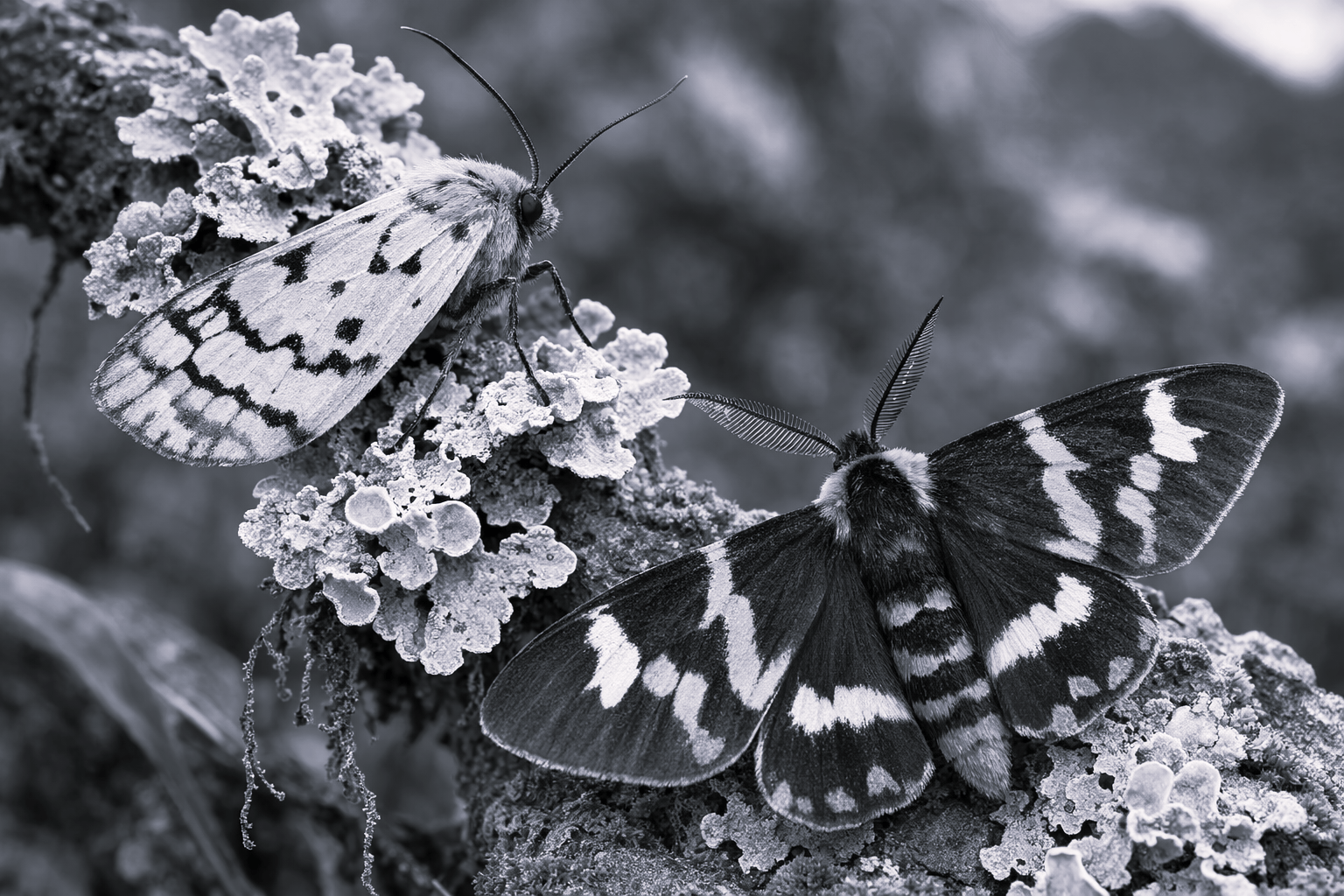
Scientists from the Zoological Survey of India recently discovered two new lichen moth species — Caulocera hollowayi and Asura buxa — in the Eastern Himalayas, highlighting the region’s biodiversity.
Q1. Where were these moth species discovered?
- Caulocera hollowayi was identified from specimens collected near Golitar (Sikkim).
- Asura buxa was discovered from specimens collected at Panijhora (West Bengal).
Q2. How were these species identified as new?
Scientists confirmed them as new species based on distinct physical and anatomical characteristics:
- Caulocera hollowayi was identified through its unique wing patterns, colour bands, and microscopic body features, which distinguish it from other moths in the same genus.
- Asura buxa shows distinctive wing colour patterns and internal anatomical structures, confirming it as a separate species.
Q3. Why are lichen moths ecologically important?
- The caterpillars of lichen moths feed on lichens. Lichens are highly sensitive to air pollution, making them good indicators of environmental quality.
- Therefore, the presence or absence of lichen moths helps scientists monitor air quality and environmental health, especially in fragile ecosystems like the Indian Himalayas.
Conclusion
The discovery of Caulocera hollowayi and Asura buxa highlights the rich biodiversity of the Eastern Himalayas and their importance in environmental monitoring and conservation research.
FAQs
Q1. What new lichen moth species were discovered in the Eastern Himalayas?
Scientists from the Zoological Survey of India (ZSI) identified Caulocera hollowayi in Sikkim and Asura buxa in West Bengal, highlighting the region’s rich biodiversity.
Q2. Why are lichen moths important for environmental monitoring?
Their caterpillars feed on lichens, which are highly sensitive to air pollution. Thus, lichen moths act as bio‑indicators of air quality and ecosystem health.
Q3. How do these discoveries contribute to Himalayan biodiversity research?
They expand scientific knowledge of insect diversity in fragile Himalayan ecosystems, supporting conservation efforts and ecological monitoring.