Context
Uzbekistan has become the 10th member of the New Development Bank (NDB), marking the first expansion of the BRICS-led institution into Central Asia and broadening its reach among emerging and developing economies.
About the New Development Bank (NDB)
- The New Development Bank (NDB) is a multilateral development institution established by the BRICS countries—Brazil, Russia, India, China, and South Africa.
- It was conceived at the 6th BRICS Summit (Fortaleza, Brazil, 2014) and became operational in 2015.
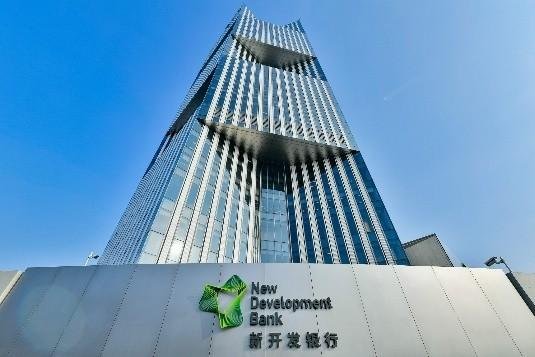
- Headquartered in Shanghai, China, the bank finances infrastructure and sustainable development projects in BRICS nations and other Emerging Market and Developing Economies (EMDEs).
- The NDB has an authorised capital of USD 100 billion, with an initial subscribed capital of USD 50 billion, contributed equally by the founding members.
- Its governance framework is based on equal representation, with each member having one vote and no veto power.
- The combined voting share of the founding BRICS members is maintained above 55% to ensure institutional balance and continuity.
Membership
- Membership is open to all United Nations member states under the bank’s Articles of Agreement.
- The NDB currently has ten members, comprising the five founding BRICS countries and Bangladesh, the United Arab Emirates, Egypt, Algeria, and Uzbekistan.
- Uruguay, Colombia, and Ethiopia have been approved for membership and will join upon completion of the accession process.
Significance of Uzbekistan’s Entry
- Uzbekistan is the first Central Asian country to join the NDB, extending the bank’s presence into a strategically important region.
- Its inclusion strengthens access to development finance for emerging and landlocked economies.
- The expansion strengthens the representation of the Global South in global development financing and financial governance.
- It also supports efforts to promote local currency financing and diversify funding sources beyond excessive reliance on the US dollar.
Conclusion
Uzbekistan’s accession reflects the NDB’s growing role as a development financing institution for emerging economies. It also highlights the expanding influence of the Global South in shaping a more inclusive and diversified global financial architecture.