Context
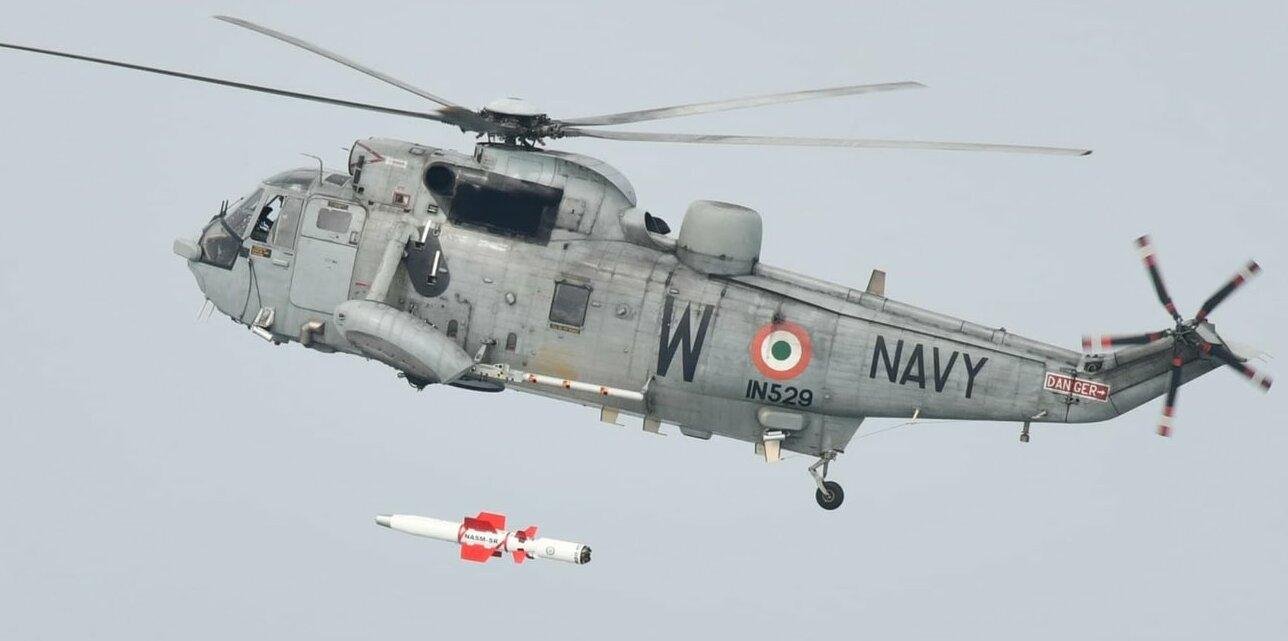
The Defence Research and Development Organisation (DRDO), in collaboration with the Indian Navy, has carried out the first successful salvo launch of the Naval Anti-Ship Missile–Short Range (NASM-SR) off the coast of Odisha in the Bay of Bengal.
About Naval Anti-Ship Missile–Short Range (NASM-SR)
- NASM-SR is a short-range, air-launched anti-ship missile developed for naval strike missions.
- It is designed to be deployed from naval helicopters to accurately target and damage enemy vessels, including strikes near the waterline.
- The missile has been developed by DRDO, led by the Research Centre Imarat in Hyderabad, with support from other labs and domestic industries.
- It follows a sea-skimming flight path, helping it stay low and avoid radar detection, with an effective strike range of about 55 km.
- The system supports salvo firing:
- Multiple missiles can be launched rapidly from a single helicopter platform
- Its propulsion setup includes:
- A solid booster for initial thrust
- A sustainer engine for continued flight
- For navigation and targeting, it uses advanced systems such as fibre-optic gyroscope-based inertial navigation and a radio altimeter.
- The missile is equipped with a two-way data link, allowing:
- Lock-on after launch
- Mid-course updates and retargeting
- It features electro-mechanical actuators and jet vane controls, ensuring better maneuverability during flight.
- Key components like the seeker, avionics, and guidance software have been developed within India, highlighting its indigenous nature.