Context
The Union Government has proposed an amendment to the National Food Security Act (NFSA), 2013 to revise foodgrain distribution under the Antyodaya Anna Yojana (AAY). The proposal seeks to replace the existing household-based allocation with an individual-based entitlement, a move opposed by Tamil Nadu and Kerala, which contend that it could reduce foodgrain support for smaller AAY households, particularly in States with predominantly nuclear families.
National Food Security Act (NFSA), 2013
Objective: Provides a legal entitlement to subsidised foodgrains to nearly two-thirds of India’s population through the Targeted Public Distribution System (TPDS), thereby ensuring food and nutritional security.
Coverage
- Covers up to 75% of the rural population.
- Covers up to 50% of the urban population.
Categories of Beneficiaries
- Antyodaya Anna Yojana (AAY): Covers the poorest and most vulnerable households.
- Priority Households (PHH): Covers other eligible households identified under the Act.
Entitlements under NFSA
- AAY: 35 kg of foodgrains per household per month.
- PHH: 5 kg of foodgrains per person per month.
Key Features
- Subsidised foodgrains: Rice at ₹3/kg, wheat at ₹2/kg, and coarse grains at ₹1/kg.
- Women-centric provision: The eldest woman (18 years or above) is recognised as the head of the household for issuing ration cards.
- Nutritional support: Provides supplementary nutrition to pregnant women, lactating mothers, and children.
- Maternity benefit: Pregnant and lactating women are entitled to a cash benefit of at least ₹6,000.
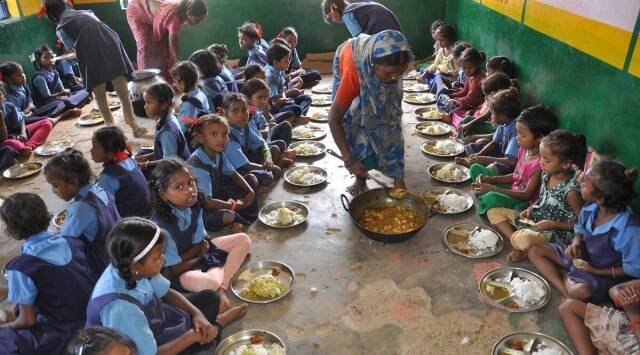
- Child nutrition: Age-appropriate meals are provided through Anganwadis for children up to six years, while schoolchildren receive cooked meals under the PM POSHAN Scheme.
- Grievance redressal: Mandates State Food Commissions, District Grievance Redressal Officers (DGROs), and Vigilance Committees.
- Transparency: Requires proactive disclosure of PDS records and beneficiary lists.
Proposed Amendment
The proposed amendment seeks to modify Section 3(1) of the National Food Security Act, 2013 by replacing the existing household-based allocation under AAY with an individual-based entitlement, while retaining an upper limit of 35 kg per household.
- Existing provision: Every AAY household receives 35 kg of foodgrains per month, irrespective of family size.
- Proposed provision: Every member of an AAY household will receive 7 kg of foodgrains per month, subject to a maximum of 35 kg per household.
- The Union Government has invited public comments before finalising the amendment.
Rationale Behind the Amendment
According to the Union Government, the present system results in unequal distribution among AAY households.
- The existing household-based system results in unequal per capita distribution, with smaller families receiving relatively higher allocations, while larger households may receive less foodgrain per member than Priority Household (PHH) beneficiaries.
- The amendment aims to:
-
- Ensure equitable distribution on a per-person basis.
- Rationalise subsidised foodgrain distribution.
- Align allocations more closely with household size and consumption needs.
Limitation: The proposal does not address the continued inclusion of ineligible beneficiaries under the NFSA.
Concerns Raised by Tamil Nadu and Kerala
- Lower entitlement for smaller households: States with predominantly nuclear families may witness reduced foodgrain support for many AAY households.
- Impact on vulnerable families: Kerala argues that AAY beneficiaries, being the poorest households, require stronger social protection.
- Higher out-of-pocket expenditure: Reduced allocations may compel beneficiaries to purchase additional foodgrains from the market.
- Inter-State equity concerns: States with larger average family sizes may benefit relatively more than those with smaller households, potentially creating regional disparities.
Evolution of Food Security in Tamil Nadu and Kerala
Kerala
- Developed one of India’s earliest Public Distribution Systems (PDS), with organised food distribution beginning in 1962, prior to the establishment of the Food Corporation of India (FCI).
- Raised concerns during the enactment of the NFSA in 2013 regarding the possible exclusion of deserving beneficiaries and the additional fiscal burden.
Tamil Nadu
- Food security has remained central to State politics since the rice shortages of the 1950s and 1960s.
- Since 2011, the State has implemented a universal free rice distribution system through the PDS.
- During the enactment of the NFSA, Tamil Nadu secured an assurance that its existing foodgrain allocation would remain protected.
Challenges and Way Forward
| Challenges | Way Forward |
| Balancing equity and social protection: An individual-based approach may reduce support for smaller but vulnerable households. | Adopt a balanced allocation model that ensures equitable distribution while guaranteeing a minimum quantity of foodgrains for every AAY household. |
| Federal concerns: Uniform national criteria may not adequately reflect regional demographic patterns. | Strengthen cooperative federalism through wider consultation with States before implementing the amendment. |
| Household food security and nutrition: Lower allocations may adversely affect the poorest families. | Safeguard minimum nutritional support while redesigning the entitlement framework. |
| Errors in beneficiary identification: Inclusion of ineligible beneficiaries and exclusion of deserving households continue to affect the effectiveness of the NFSA. | Undertake periodic revision of beneficiary lists using transparent and technology-enabled verification mechanisms. |
| Administrative complexity: Transitioning to an individual-based system requires updating beneficiary databases and ration card records. | Strengthen digital PDS infrastructure and ensure timely updation of beneficiary records before implementation. |
| Fiscal sustainability: Rationalising allocations may reduce subsidy expenditure but could increase the financial burden on poorer households. | Balance fiscal prudence with welfare objectives so that subsidy reforms do not disproportionately affect vulnerable sections. |
Conclusion
The proposed amendment seeks to improve fairness in foodgrain distribution by shifting from a household-based to an individual-based allocation under the Antyodaya Anna Yojana. However, its implementation should account for regional demographic differences and the welfare needs of vulnerable families. A balanced approach that upholds equity, nutritional security, fiscal sustainability, and cooperative federalism will be essential to fulfil the objectives of the National Food Security Act, 2013 without compromising food security for the poorest sections of society.