Context
Recently, researchers from Nagaland University emphasized the genetic richness of Musa sikkimensis. Their study highlighted that this wild banana species can play an important role in developing climate-resilient banana varieties, which is crucial for future food security and sustainable agriculture.
What is Musa sikkimensis?
- Also known as the ‘Darjeeling banana’ or ‘Sikkim banana’, it is a wild species of banana which is native to Eastern Himalayas and Northeast India.
- Physical Characteristics of the Plant
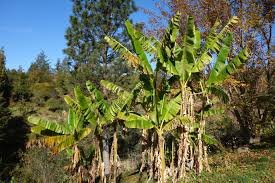
- Growth Pattern: It is a tall evergreen perennial plant, meaning it survives for many years and remains green throughout the year.
- Leaves: The plant produces very large, paddle-shaped leaves. These leaves can grow up to about 10 feet (3 metres) in length and around 2 feet (60 cm) in width.
- Flowers: It produces long hanging flower clusters (pendulous inflorescences). These flowers are deep maroon in colour and can grow around 2 feet (60 cm) long.
- Although Musa sikkimensis is not commonly cultivated for edible bananas, it has very high scientific value.
- It is a wild-seeded species, meaning it still retains natural genetic diversity. Such species act as genetic reservoirs, providing valuable traits that may be missing in cultivated crops.
- Adaptive Potential: The germplasm of this plant shows strong adaptability to different environmental conditions. This makes it extremely useful for crop improvement programmes.
- Climatic Conditions Required
- Humidity: It prefers moderately high humidity levels of about 50–60%.
- Temperature: The ideal temperature range is 20°C to 30°C.
- Cold Tolerance: The plant can tolerate slightly cooler temperatures, but it cannot survive below 10°C.
Significance for Future Agriculture
- Musa sikkimensis is extremely important for the future of banana farming.
- Disease Resistance: It contains genes that help resist plant diseases.
- Environmental Stress Tolerance: It has traits that allow survival under stress conditions such as climate variability.
- Climate Adaptation: These features make it valuable for developing climate-resilient banana crops.
- Crop Improvement: Scientists can use its genetic material in banana breeding programmes to create stronger and more productive varieties.
- Thus, even though it is not widely eaten, it contributes indirectly to long-term food security and sustainable agriculture.
FAQs
Q1. What is Musa sikkimensis and where is it found?
Musa sikkimensis, also known as the Darjeeling banana or Sikkim banana, is a wild banana species native to the Eastern Himalayas and Northeast India. It grows naturally in humid, subtropical environments.
Q2. What are the physical characteristics of Musa sikkimensis?
It is a tall evergreen perennial plant with large paddle‑shaped leaves (up to 10 feet long), deep maroon hanging flower clusters, and wild seeds. Unlike cultivated bananas, it is not commonly grown for food but valued for its genetic diversity.
Q3. Why is Musa sikkimensis important for agriculture?
This wild banana species acts as a genetic reservoir. It contains traits for disease resistance, climate adaptability, and stress tolerance, making it crucial for developing climate‑resilient banana varieties in breeding programmes.
Q4. What climatic conditions does Musa sikkimensis require?
It thrives in moderately high humidity (50–60%) and temperatures between 20°C to 30°C. While it can tolerate slightly cooler climates, it cannot survive below 10°C.
Q5. How does Musa sikkimensis contribute to food security?
By providing genetic material for stronger, disease‑resistant, and climate‑adapted banana crops, Musa sikkimensis indirectly supports future food security and sustainable agriculture, especially in regions vulnerable to climate change.