Context
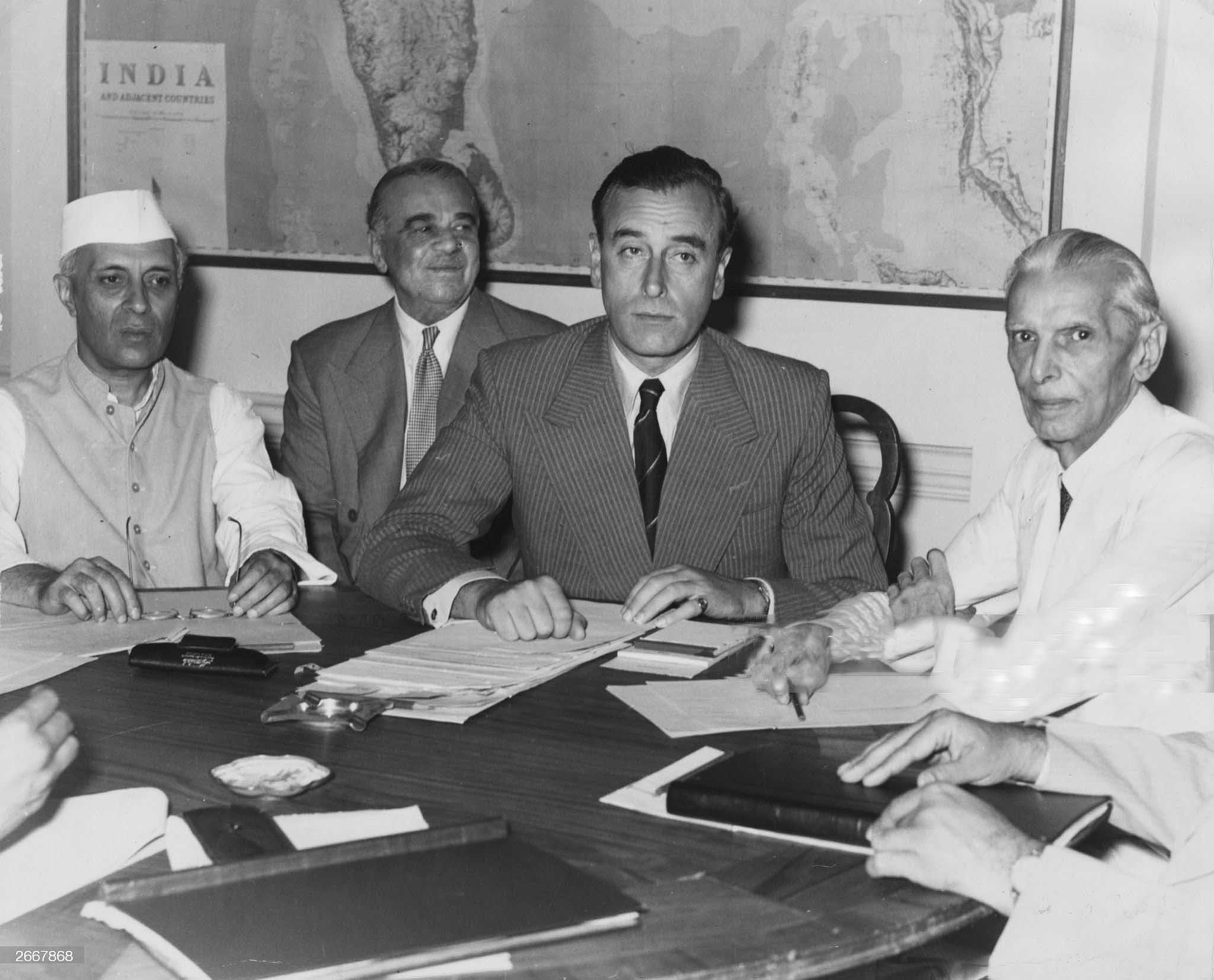
The Mountbatten Plan, announced on 3 June 1947, provided the final framework for the transfer of power from British rule in India. It led to the partition of British India into the independent dominions of India and Pakistan and paved the way for independence on 15 August 1947.
Factors Leading to the Plan
- The Cabinet Mission Plan (1946) failed to secure a united constitutional settlement.
- Communal tensions intensified after Direct Action Day (1946) and subsequent riots in different parts of the country.
- Political differences between the Congress and the Muslim League resulted in prolonged deadlock.
- The British government decided to expedite the transfer of power due to worsening law and order conditions.
Key Provisions
- British India was to be divided into India and Pakistan.
- The Legislative Assemblies of Punjab and Bengal would decide whether their provinces should be partitioned.
- Referendums would be held in the North-West Frontier Province (NWFP) and Sylhet.
- The Sindh Assembly would decide whether Sindh would join India or Pakistan.
- A Boundary Commission would be established to demarcate the borders.
- India and Pakistan would have separate Constituent Assemblies.
- Princely States were advised to accede to either India or Pakistan.
- The transfer of power was advanced to 15 August 1947.
Political Response to the Plan
- Indian National Congress:
- Congress accepted the plan to ensure an early transfer of power and prevent further communal violence.
- It preferred a strong central government to prolonged political uncertainty.
- It viewed partition as a lesser risk than further fragmentation of India.
- Muslim League:
- The plan fulfilled its long-standing demand for Pakistan.
- It was seen as necessary for safeguarding Muslim political interests and aspirations.
Significance
- Paved the way for the Indian Independence Act, 1947.
- Marked the final phase of India’s freedom struggle.
- Redefined the political geography of South Asia.
- Provided the constitutional basis for the creation of two successor dominions.
Consequences
- Triggered one of the largest mass migrations in modern history.
- Resulted in widespread communal violence, displacement, and loss of life.
- Created major administrative challenges relating to borders, refugees, and the division of assets.
- Left long-term political, social, and security challenges for both countries.
Legacy of the Mountbatten Plan
- Formalised the partition of British India after the failure of efforts to preserve a united India.
- Reshaped the political map of South Asia.
- Influenced nation-building processes in both India and Pakistan.
- Highlighted the limitations of constitutional negotiations in resolving deep communal and political divisions.
- Continues to influence India–Pakistan relations and regional security dynamics.
Conclusion
The Mountbatten Plan represented the final constitutional framework for ending British rule in India. While it enabled a swift transfer of power and the creation of two independent states, it also led to one of the largest humanitarian crises of the twentieth century, marked by mass migration and communal violence. Its legacy continues to shape the politics and security of South Asia.