Context
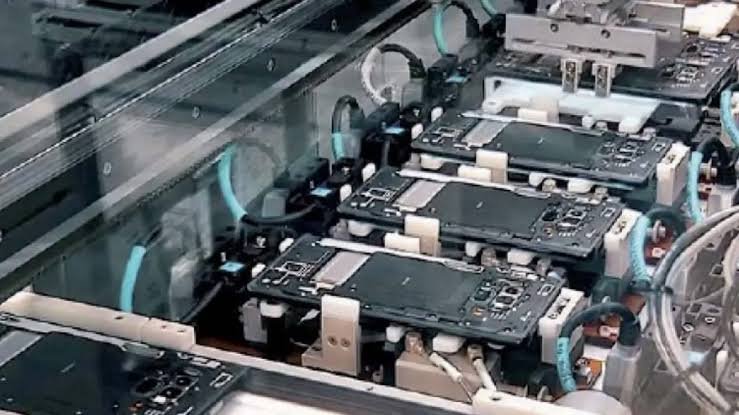
The Union Cabinet has approved the Mobile Phone Manufacturing Scheme (MPMS) with an outlay of ₹62,500 crore to increase domestic value addition, foster indigenous innovation, and promote globally competitive Indian smartphone brands.
About the Scheme
- The Mobile Phone Manufacturing Scheme (MPMS) will be implemented for five years (FY 2026–27 to FY 2030–31).
- It succeeds the Production Linked Incentive (PLI) Scheme for Large-Scale Electronics Manufacturing, which concluded on 31 March 2026.
- The scheme seeks to move India beyond assembly-led manufacturing by promoting design, innovation, domestic component manufacturing, and indigenous brand development.
Key Features
- Manufacturers will receive performance-linked incentives ranging from 2.25% to 5% on eligible sales.
- An additional incentive of up to 1.5% will be provided for the domestic sourcing of key components and sub-assemblies.
- Indian companies investing in product design, research and development (R&D), and innovation will receive an additional 3% incentive.
- The scheme also promotes exports, domestic value addition, and component manufacturing, thereby strengthening India’s electronics manufacturing capabilities.
Targets
- Achieve mobile phone production worth about ₹39 lakh crore during the scheme period.
- Significantly increase mobile phone exports.
- Generate around 60,000 direct jobs.
- Enhance India’s role in global electronics value chains.
Need for the Scheme
- Although India manufactures most smartphones sold in the domestic market, a significant share of the economic value is retained through foreign-owned technology, intellectual property, components, and brands, whereas assembly contributes only a small share of the overall value.
- The scheme aims to increase domestic value addition, promote technological self-reliance, encourage innovation and patent creation, and support the emergence of globally competitive Indian smartphone brands.
- It also seeks to bridge the cost disadvantage faced by Indian manufacturers, enabling them to compete more effectively in domestic and international markets.
Decline of Indian Smartphone Brands
- Companies such as Micromax, Karbonn, and Lava built a strong presence in the feature-phone and budget handset segments but struggled to keep pace with the rapid shift towards smartphones.
- In contrast, Chinese brands gained market leadership through competitive pricing, faster product innovation, extensive marketing, robust distribution networks, and efficient after-sales service.
India’s Mobile Manufacturing Journey
- Under the Make in India initiative, mobile phone production increased from ₹18,900 crore in 2014–15 to ₹6.27 lakh crore in 2025–26.
- Mobile phone exports rose from ₹1,566 crore to ₹2.60 lakh crore during the same period.
- India is now the world’s second-largest mobile phone manufacturer by volume, with over 99% of mobile phones sold in the domestic market manufactured in India.
- Smartphones have emerged as India’s largest merchandise export category.
- The earlier PLI Scheme attracted significant investment, expanded production and exports, and laid a strong foundation for the MPMS.
Significance
- The scheme is expected to reduce import dependence, increase domestic value addition, attract investment, and generate skilled employment.
- It will strengthen technology development and component manufacturing, making India’s electronics ecosystem more competitive and improving its position in global value chains.
- By promoting innovation, indigenous capabilities, and brand ownership, the scheme supports the vision of Viksit Bharat and positions India as a global hub for electronics manufacturing.
Challenges
- Developing globally competitive smartphone brands will require sustained investment in technology, innovation, intellectual property, and branding.
- Indian manufacturers face intense competition from established global players with integrated supply chains, economies of scale, advanced technological capabilities, and strong global brands.
- Long-term success will depend on expanding domestic component manufacturing, strengthening research and development, and reducing dependence on imported technologies.
Conclusion
The Mobile Phone Manufacturing Scheme (MPMS) marks the next stage of India’s electronics manufacturing strategy. By promoting innovation, higher domestic value addition, component manufacturing, and indigenous brand development, it seeks to strengthen India’s position in global electronics value chains while advancing the objectives of Make in India, Atmanirbhar Bharat, and Viksit Bharat. Its long-term success, however, will depend on sustained investment in technology, research, and a globally competitive component ecosystem.