Context
Melanoma is an aggressive form of cancer arising from melanocytes, the pigment-producing cells of the body. Although it is more frequently reported in fair-skinned populations, an important concern in India is that melanoma may present differently and remain undetected until a relatively advanced stage.
The India-specific issue is therefore not merely incidence, but recognition of atypical sites and timely diagnosis.
What Is Melanoma?
- Melanocytes produce melanin, which gives colour to the skin, hair and eyes.
- When these cells undergo uncontrolled malignant growth, melanoma develops.
- Melanoma is clinically important because it can spread through lymphatic and blood circulation to distant organs.
Why Is Melanoma Different in Darker-Skinned Populations?
A clinically important subtype is acral melanoma.
It develops mainly on:
- palms;
- soles;
- nail beds.
Unlike many conventional cutaneous melanomas seen in lighter skin, acral melanoma is not primarily associated with sun-exposed areas.
This creates a diagnostic challenge because lesions may resemble:
- fungal infection;
- trauma;
- ordinary pigmentation;
- benign nail changes.
Hence:
Less-visible site → Misidentification → Delayed diagnosis → Poorer prognosis
Another rare form is mucosal melanoma, which develops in mucous membranes such as the nose, mouth or genital tract. Because such sites are concealed, early symptoms may remain unnoticed.
Warning Signs
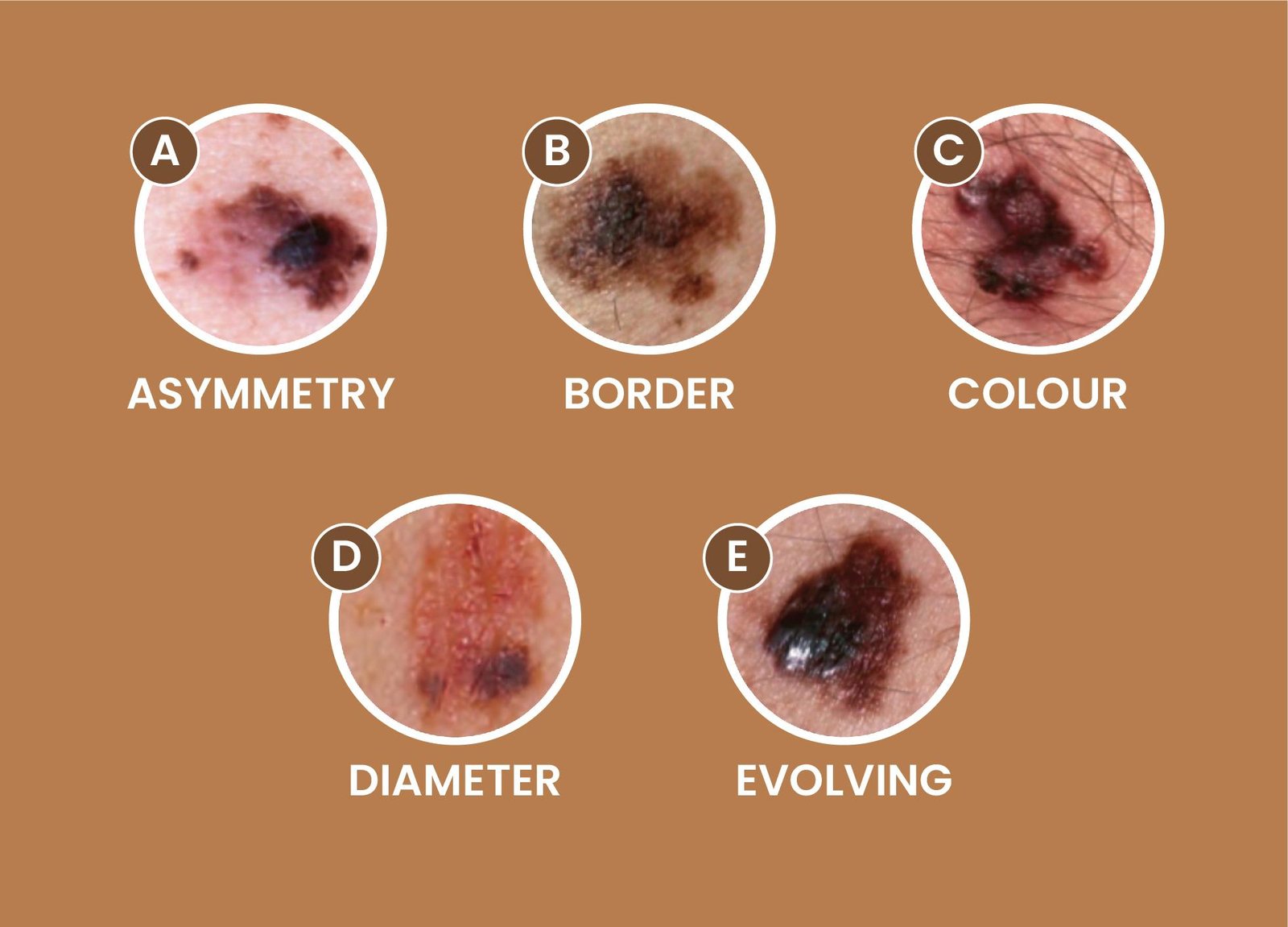
Medical evaluation is important when a lesion shows:
- change in size, shape or colour;
- irregular borders;
- bleeding or ulceration;
- persistent pigmentation on palms or soles;
- unexplained dark streak beneath a nail.
For darker-skinned individuals, examination should therefore extend beyond conventional sun-exposed areas.
Treatment Advances
Surgery
Surgical removal remains the preferred treatment for localised melanoma.
Immunotherapy
Immune-checkpoint inhibitors stimulate the patient’s immune system to identify and attack cancer cells.
Targeted Therapy
Some melanomas contain mutations such as BRAF alterations. Molecular testing can identify these mutations and guide use of specific targeted medicines.
This represents a shift from:
Uniform treatment → Molecular diagnosis → Precision therapy
Personalised mRNA Vaccines
Experimental mRNA-based cancer vaccines are being designed using tumour-specific antigens to stimulate a personalised immune response.
However, these remain under clinical investigation and are not yet standard therapy.
Why Does It Matter for India?
- Clinical awareness: Doctors and patients need greater awareness that melanoma can occur on palms, soles and nail beds.
- Diagnostic capacity: Dermatology and pathology services are important for distinguishing suspicious lesions from benign conditions.
- Precision oncology: Wider access to molecular testing can improve selection of targeted therapies.
- Cancer surveillance: Better data collection can improve understanding of melanoma patterns in Indian populations.
FAQs
Q1. What is melanoma?
A malignant cancer arising from melanocytes.
Q2. What is acral melanoma?
A subtype that commonly occurs on palms, soles and nail beds.
Q3. Is acral melanoma mainly linked with UV exposure?
No. It commonly occurs on less sun-exposed areas.
Q4. What are the major treatment approaches?
Surgery, immunotherapy and targeted therapy.
Q5. Are personalised mRNA vaccines routine melanoma treatment?
No. They are still under clinical investigation.