Context
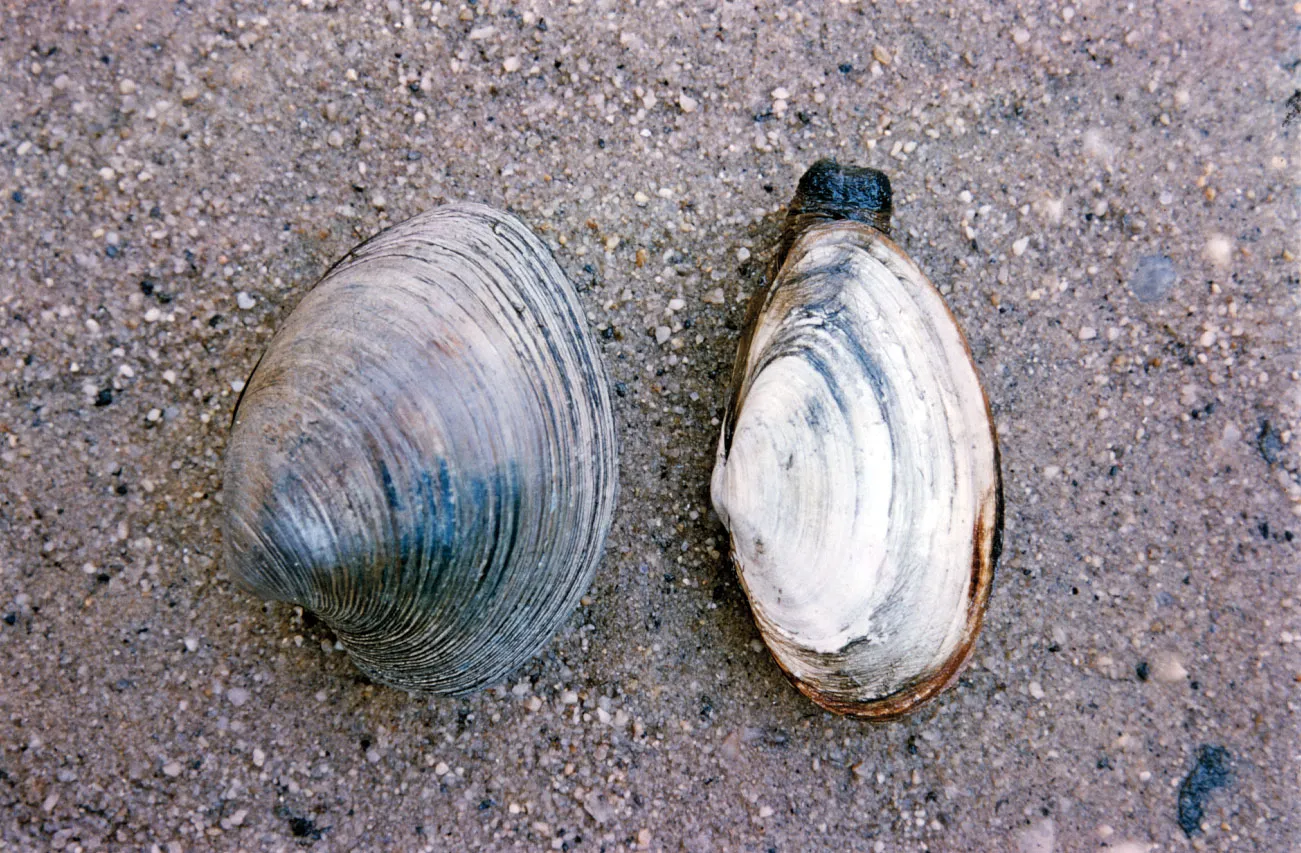
The ICAR–Central Marine Fisheries Research Institute (CMFRI) recently achieved a milestone by successfully breeding the mangrove clam (Geloina erosa) in captivity. This breakthrough is significant for both conservation and coastal livelihoods.
Overview and Distribution
- Common Names: Mangrove clam, mud clam, or locally as ‘Kandal Kakka’ in northern Kerala.
- Distribution: Widely found across the Indo-Pacific region.
- Habitat: Thrives in muddy, brackish, and nearly freshwater areas within mangrove swamps.
Key Characteristics
- Nature: A burrowing bivalve (mollusk with a two-part shell) that lives in organic-rich mud in intertidal zones.
- Resilience: Exhibits high tolerance to varying salinity levels, allowing it to survive in fluctuating water conditions.
- Feeding: A filter-feeder that is most active during low-tide immersion when the area is inundated with water.
Ecological and Socio-Economic Role
- Nutrient Recycler: Plays a vital role in recycling nutrients and stabilizing sediments, which strengthens the overall mangrove ecosystem.
- Livelihood: Provides essential food security and income for coastal communities in India.
Threats and Conservation
Wild stocks of mangrove clams in India—especially along the east coast and island regions—are declining due to:
- Over-collection for food and trade.
- Habitat Loss: Degradation of mangrove forests and coastal development.
- Pollution: Contamination of the organic-rich substrates they inhabit.