- Recently, the Prime Minister of Finland stated that Finland and India, along with global partners, can jointly lead resilient, sustainable, and human-centric technological development, highlighting Finland’s growing engagement with India.
- About Finland:
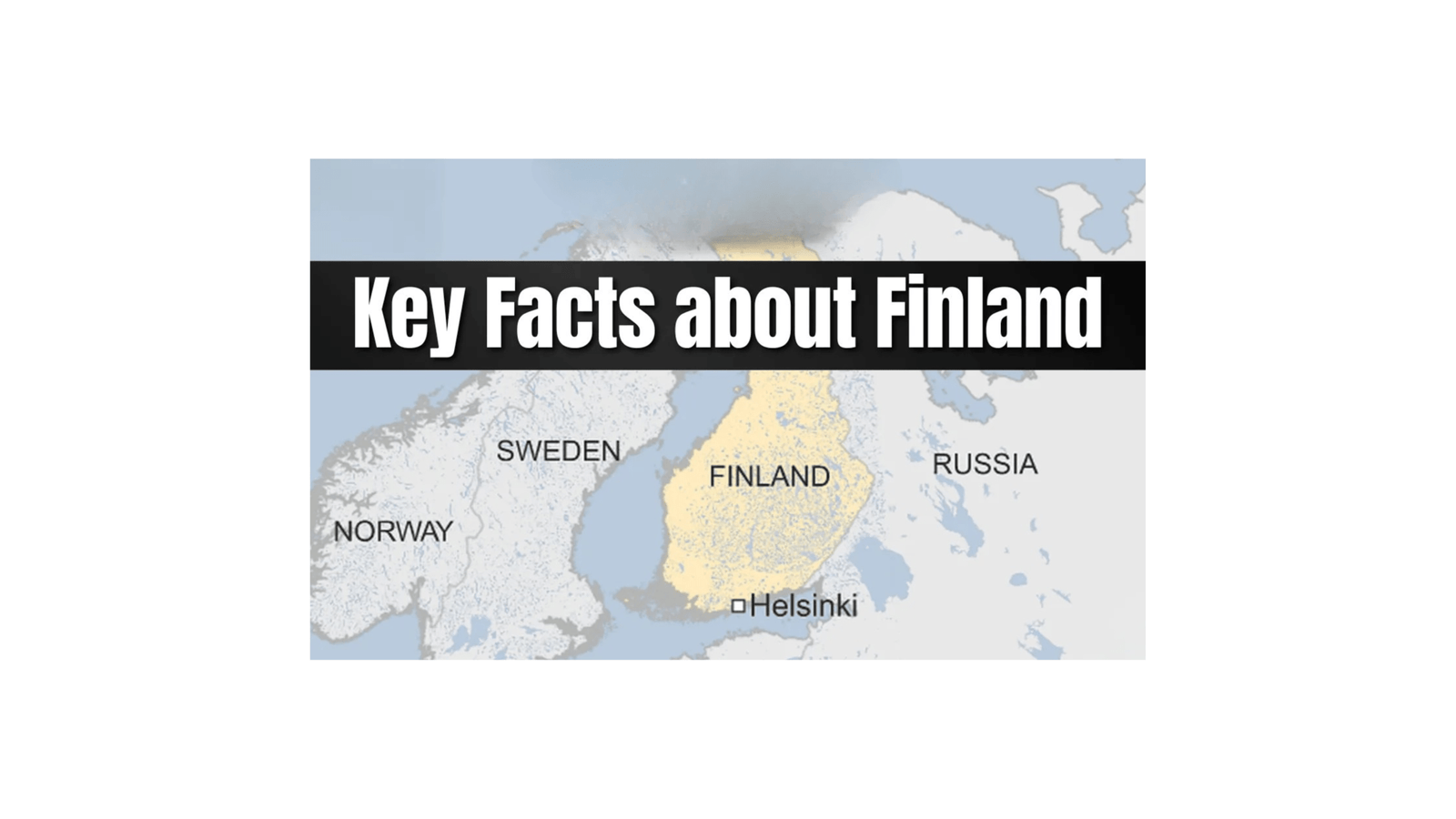
- Location: Northern Europe
- Borders: Norway (north), Sweden (northwest), Russia (east), Gulf of Finland (south), Gulf of Bothnia (southwest) and Baltic Sea. These water bodies connect Finland to the wider Baltic region and European trade routes.
- Capital city: Helsinki
- Membership: European Union (EU) and North Atlantic Treaty Organization (NATO)
- Climate: Because of its high latitude, Finland experiences a harsh northern climate. Winters are long and severe. In northern regions, temperatures can fall to around –30°C.
- Physical Geography: Finland is known for its distinctive natural landscape. The country is heavily forested with many lakes, rivers and large marshy areas.
- Finland has one of the highest lake densities in the world. Largest Lake – Lake Saimaa.
- Highest Point: Mount Halti (1,328 m)
- Natural Resources: Copper, iron ore, nickel, cobalt, and chromium.
FAQs
Q1. Where is Finland located?
In Northern Europe, bordered by Norway, Sweden, Russia, and the Baltic Sea region.
Q2. What is the capital of Finland?
Helsinki.
Q3. What international groups is Finland a member of?
It is part of the European Union (EU) and NATO.
Q4. What is Finland’s climate like?
It has a harsh northern climate with long, severe winters; northern areas can reach –30°C.
Q5. What are Finland’s key physical features?
Heavily forested land, thousands of lakes (largest: Lake Saimaa), marshes, and its highest point Mount Halti (1,328 m).