Context
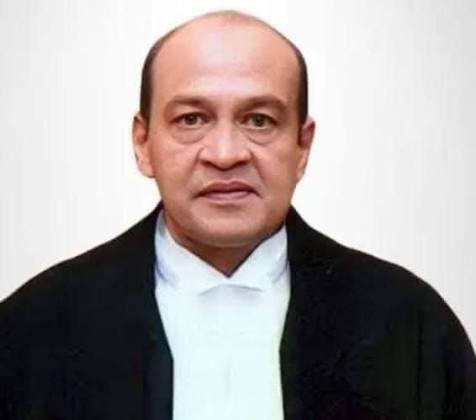
The Lok Sabha Speaker has decided to table the report of the parliamentary inquiry committee that investigated allegations of misconduct against former Allahabad High Court judge Justice Yashwant Varma, despite his resignation in April 2026. The decision marks a departure from the earlier parliamentary practice of treating resignation as the end of impeachment proceedings and has significant implications for judicial accountability, parliamentary oversight, and the integrity of the judicial impeachment process.
Genesis of the Case
- In 2025, bundles of burnt and partially destroyed currency notes were recovered from Justice Varma’s official residence in New Delhi. A subsequent Supreme Court in-house inquiry reportedly found prima facie evidence of judicial misconduct.
- Based on these findings, over 146 Lok Sabha MPs moved a motion seeking his removal, following which the Speaker constituted a three-member inquiry committee under the Judges (Inquiry) Act, 1968.
- Before the committee could complete its inquiry, Justice Varma resigned by submitting his resignation to the President.
Constitutional Position
- Article 217(1)(a) of the Constitution provides that a High Court judge may resign by addressing a written resignation to the President.
- In a 1978 Supreme Court judgment, the Supreme Court held that a judge’s resignation is a unilateral act that takes effect from the date specified by the judge and does not require formal acceptance.
- However, neither the Constitution nor the Judges (Inquiry) Act, 1968 expressly provides that resignation automatically terminates a pending inquiry into judicial misconduct.
Previous Parliamentary Precedents
Although no judge has been impeached in India, two previous cases have shaped the prevailing parliamentary practice:
- Justice P.D. Dinakaran (2011): Resigned while the inquiry was in progress, after which the proceedings were discontinued as the objective of removal had become redundant.
- Justice Soumitra Sen (2011): Resigned after the Rajya Sabha passed the impeachment motion, leading the Lok Sabha to discontinue further proceedings.
These cases established a parliamentary practice that resignation renders impeachment proceedings infructuous, although such a consequence is neither mandated by the Constitution nor by the Judges (Inquiry) Act, 1968.
Dissenting Legal View
- During the Justice P.D. Dinakaran inquiry, jurist G. Mohan Gopal, a member of the inquiry committee, argued that the Judges (Inquiry) Act, 1968 distinguishes between the investigation of judicial misconduct and parliamentary removal from office.
- According to this view, determining the truth of the allegations serves an independent public purpose and should continue irrespective of the judge’s resignation.
- Permitting resignation to terminate an inquiry would allow judges to evade institutional scrutiny, thereby weakening judicial accountability and eroding public confidence in the judiciary.
Significance of Tabling the Inquiry Report
- Strengthens judicial accountability: Affirms that inquiries into judicial misconduct serve a public purpose beyond merely facilitating removal from office.
- Revisits parliamentary practice: Challenges the convention that resignation automatically renders impeachment proceedings infructuous.
- Sets an institutional precedent: May guide the handling of future cases involving judges who resign during impeachment proceedings.
- Enhances public confidence: Ensures allegations of judicial misconduct are examined objectively, thereby reinforcing the credibility of the justice delivery system.
- May affect service benefits: Findings of proven misconduct could influence pensionary and other retirement benefits ordinarily available upon resignation.
- Facilitates further legal action: Official findings may provide the basis for appropriate legal or criminal proceedings, wherever warranted.
Conclusion
The Justice Yashwant Varma case underscores the need to balance judicial independence with judicial accountability. Clarifying that resignation does not automatically terminate misconduct inquiries would strengthen institutional integrity, reinforce public confidence in the judiciary, and uphold the constitutional principle that no constitutional office is beyond accountability.