Context
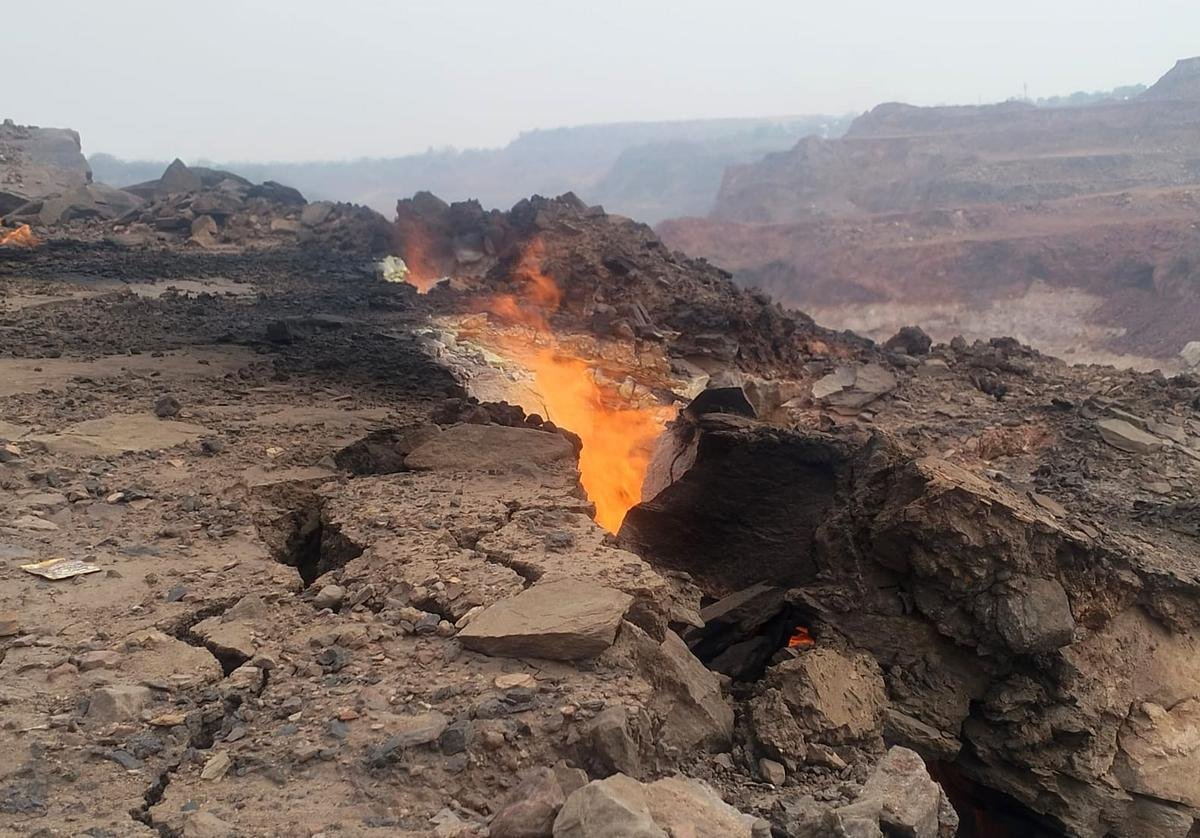
A recent study has suggested that the long-standing underground fires in the Jharia Coalfield may be burning at higher temperatures and releasing greater amounts of greenhouse gases than previously assessed.
About Jharia Coalfield
- The Jharia Coalfield is located in Dhanbad district of Jharkhand in the Damodar valley and extends over nearly 280 sq. km.
- It is the country’s most important source of high-grade coking coal and contains India’s largest coking coal reserves, estimated at about 19.4 billion tonnes.
- Mining operations in the region began in 1894, and the area currently has several underground and open-cast mining projects.
- Underground fires were first reported in 1916 and continue to cause land subsidence, environmental degradation and loss of life.
Coking Coal
- Coking coal, also known as metallurgical coal, is a type of bituminous coal used for the production of coke.
- Compared to thermal coal, it generally contains higher carbon content and lower ash and moisture levels.
- Coke produced through high-temperature carbonisation is an essential raw material in blast furnace-based steel production.
- In steelmaking, coke functions both as a reducing agent for iron ore and as support for the furnace charge.
Distribution
- Major producers of coking coal include China, Australia, Russia, the United States and Canada.
- India possesses estimated coking coal resources of around 37.37 billion tonnes, mainly concentrated in Jharkhand, with additional reserves in West Bengal, Chhattisgarh and Madhya Pradesh.