Why in the News?
- India ranked 99th out of 167 nations in the 2025 SDG Index, its best-ever performance, improving from 109 in 2024.
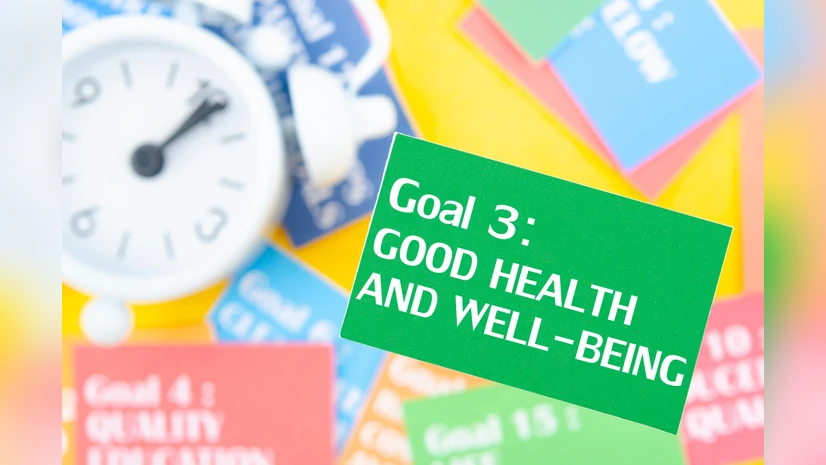
- Despite progress in basic services and infrastructure, India is lagging in health and nutrition outcomes, especially under SDG 3: Good Health and Well-being.
- There is an urgent need for universal health coverage, stronger primary healthcare, and health education in schools to achieve India’s SDG 2030 targets.
Key Highlights
- India’s SDG Performance in 2025
- In June 2025, India secured its best-ever SDG rank (99th), showing consistent improvement from 2021 onwards.
- This rise was attributed to progress in basic services like water, electricity, and sanitation, and better infrastructure delivery.
- However, the report clearly flagged that health and nutrition remain critical weaknesses, particularly for rural and tribal populations.
- Status of SDG 3 Targets in India
- Maternal Mortality Ratio (MMR): Currently 97 deaths per 100,000 live births, above the 2030 target of 70.
- Under-five mortality rate: 32 per 1,000 live births, higher than the global SDG target of 25. In developed countries, this figure is between 2–6.
- Life expectancy: 70 years, still below the target of 63 years.
- Out-of-pocket expenditure: Stands at 13% of total household consumption, almost double the target of 83%.
- Immunisation coverage: High at 23%, but yet to achieve universal 100% coverage.
- Underlying Reasons for Gaps
- Economic barriers: Limited affordability and poor healthcare infrastructure restrict access.
- Non-economic factors: Issues like malnutrition, poor hygiene, lack of sanitation, and rising lifestyle diseases aggravate health outcomes.
- Cultural and social barriers: Stigma around mental health and reproductive health discourages communities from using available services.
- Proposed Three-Pronged Strategy
- Universal Health Insurance: Aimed at reducing catastrophic health expenditure and promoting equitable access. Evidence from the World Bank shows that countries with strong insurance systems achieve better equity and affordability.
- Strengthening Primary Healthcare: High-quality Primary Health Centres (PHCs) should act as the foundation, with integrated referral systems connecting primary, secondary, and tertiary care.
- Digital Health Tools: Expanding telemedicine and digital health records can help bridge rural access gaps. WHO reports and Lancet studies show that such tools have improved maternal health and vaccination in other developing nations.
- The Role of Health Education in Prevention
- Since prevention is more cost-effective than cure, schools should integrate health education into the curriculum.
- Children should learn about nutrition, hygiene, reproductive health, mental well-being, and road safety, ensuring long-term behavioural changes.
- Global case studies highlight success:
- Finland (1970s): School health lessons reduced cardiovascular diseases in later decades.
- Japan: Compulsory health education improved hygiene practices and contributed to higher life expectancy.
- A structured and progressive curriculum in India can reduce maternal mortality, under-five deaths, and improve life expectancy and immunisation coverage.
Key Terms
- Sustainable Development Goals (SDGs)
- Adopted in 2015 under the UN’s 2030 Agenda for Sustainable Development.
- Annual SDG Report is prepared by the United Nations Department of Economic and Social Affairs (UN DESA), in collaboration with the entire UN Statistical System.
- Comprise 17 goals and 169 targets covering poverty, health, education, environment, and governance.
- SDG 3 focuses on health and well-being at all ages.
- India monitors progress via the NITI Aayog SDG India Index.
- SDGs are non-binding, but act as global benchmarks.
- Maternal Mortality Ratio (MMR)
- Refers to the number of women who die from pregnancy-related causes per 100,000 live births.
- Indicates effectiveness of maternal healthcare systems.
- High MMR reflects poor access to antenatal, delivery, and postnatal care.
- Global SDG 2030 target: less than 70 per 100,000 live births.
- Improving MMR requires skilled birth attendants, nutrition, and institutional deliveries.
- Primary Health Centres (PHCs)
- First point of contact in India’s three-tier rural healthcare system.
- Provide preventive, promotive, and basic curative services.
- Critical for reducing hospitalisation and disease burden.
- WHO stresses strong PHCs for universal health coverage.
- Effective PHCs reduce pressure on higher hospitals and improve early detection.
- Health Education
- Process of teaching individuals about healthy behaviours and practices.
- Covers nutrition, hygiene, sanitation, reproductive health, and mental well-being.
- Helps reduce non-communicable diseases and improve lifestyle choices.
- Builds long-term health habits from a young age.
- Proven successful in Finland and Japan, offering models for India.
Implications
- For Public Health
- A stronger focus on maternal, child, and preventive healthcare will reduce mortality and improve life expectancy.
- Widespread school-based health education can cut down future disease burden.
- For the Economy
- Reduced out-of-pocket expenditure will prevent millions of families from slipping into poverty.
- A healthier population means a more productive workforce, supporting India’s growth aspirations.
- For Governance
- India needs better Centre-State coordination in implementing health policies.
- Expanding digital governance in healthcare will enhance monitoring and accountability.
- For Society
- Tackling stigma in mental and reproductive health will promote inclusivity.
- Women and youth will be empowered to take informed health decisions.
- For India’s Global Commitments
- Meeting SDG 3 targets is vital for India’s credibility in achieving the 2030 Agenda.
- Strong health outcomes will support India’s vision of a Viksit Bharat 2047.
Challenges and Way Forward
| Challenges | Way Forward |
| Persistently high MMR and under-five mortality | Expand maternal health services, institutional deliveries, and child immunisation |
| High out-of-pocket expenditure | Strengthen universal health insurance, regulate private sector charges |
| Weak primary healthcare infrastructure | Upgrade PHCs, ensure integration with secondary and tertiary care |
| Unequal access to digital health tools | Improve rural internet penetration, promote telemedicine platforms |
| Lack of structured health education | Introduce compulsory health curricula in schools, supported by community awareness campaigns |
Conclusion
India’s improved SDG ranking in 2025 is a positive step, but health and nutrition remain key gaps. Without addressing high maternal and child mortality, poor life expectancy, and unaffordable healthcare, India risks missing SDG 3 targets. By expanding universal health coverage, investing in primary healthcare, leveraging digital health tools, and embedding health education in schools, India can build the foundation for a healthier and stronger Viksit Bharat by 2047.
| EnsureIAS Mains Question:
Q. India has made progress in its SDG ranking but continues to lag in health outcomes. Discuss the key challenges in achieving SDG 3 (Health and Well-being) by 2030 and suggest a multi-pronged strategy to overcome them. (250 Words) |
| EnsureIAS Prelims Question
Q. Consider the following statements regarding India’s progress on SDG 3: 1. India’s Maternal Mortality Ratio (MMR) has already achieved the 2030 SDG target. 2. Out-of-pocket expenditure on health in India is significantly higher than the SDG target. 3. Digital health tools can help bridge rural-urban healthcare disparities. 4. India has achieved 100% immunisation coverage for children. Which of the above statements are correct? Answer: (b) Explanation: Statement 1 is Incorrect: India’s MMR is 97, above the target of 70. Statement 2 is Correct: India’s out-of-pocket expenditure is 13%, higher than the target of 7.83%. Statement 3 is Correct: Telemedicine and digital health records can improve rural healthcare access. Statement 4 is Incorrect: India’s immunisation rate is 93.23%, short of the 100% goal. |
|
Also Read |
|
| UPSC Foundation Course | UPSC Daily Current Affairs |
| UPSC Monthly Magazine | CSAT Foundation Course |
| Free MCQs for UPSC Prelims | UPSC Test Series |
| ENSURE IAS NOTES | Our Booklist |