Context
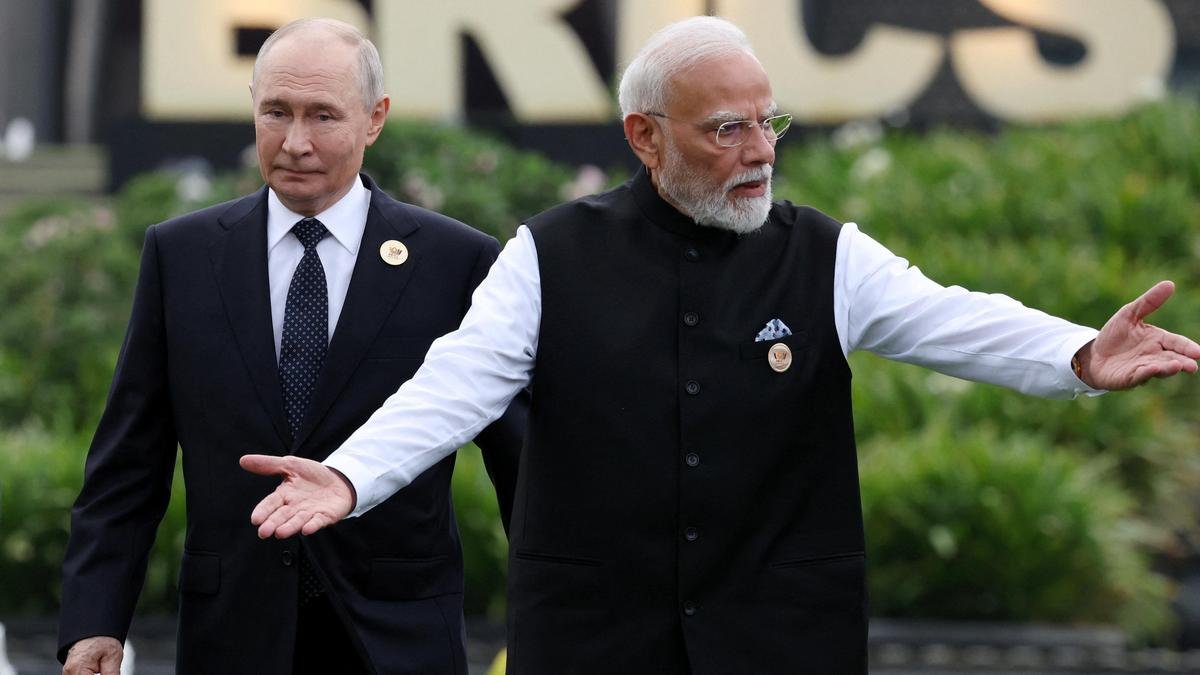
India’s shifting stances at the 2026 SCO and BRICS summits highlight the balancing act of its multi-alignment foreign policy. At the Bishkek SCO summit, New Delhi condemned strikes on Iran while Prime Minister Modi urged President Putin to end the Ukraine war. Yet, two weeks later at the New Delhi BRICS summit, India steered a consensus that completely omitted the Ukraine conflict, demonstrating the strengths and structural limits of its pragmatic diplomacy.
Strategic significance of SCO and BRICS
- Strict Multi-Alignment: Enables India to simultaneously engage non-Western groups (SCO, BRICS) and Western alliances (G7, Quad).
- Resisting Bloc Exclusivity: Functions as a critical global pivot point, avoiding complete dependency on either a Western or a Sino-Russian axis.
- Checking Chinese Influence: Counters Beijing’s assertiveness inside these forums, preventing them from shifting into purely anti-Western, China-led cartels.
- Direct Border Diplomacy: Provides a neutral, mandatory multilateral platform to manage severe bilateral friction directly with regional adversaries like Beijing.
- Eurasian Trade Links: Establishes an irreplaceable, direct institutional doorway into resource-rich Central Asian markets.
- Insulating Russian Assets: Secures a non-hostile framework to protect deeply transactional defense supply chains and discounted crude oil flows with Moscow.
- Global South Leadership: Anchors New Delhi as a primary champion for developing nations, forcing structural reforms in Western-dominated financial networks like the IMF and World Bank.
Concerns related to India’s Approach
- Selective Admonition: Refraining from publicly rebuking the US or Israel over West Asian strikes while repeatedly lecturing Moscow on Ukraine damages India’s moral consistency.
- Kinetic Contradictions: Using military force against Pakistan during Operation Sindoor complicates India’s normative stance against modern cross-border warfare.
- Eroding Moscow Trust: The Kremlin may view Prime Minister Modi’s peace appeals as performative gestures meant to satisfy the West rather than deeply held principles.
- Over-Extended Commitments: Attempting to back Iran while engaging Israel, and expanding Western alliances while anchoring BRICS, risks creating diplomatic gridlock.
- Sino-Russian Proximity: Russia’s deepening strategic and economic dependence on Beijing directly threatens India’s security interests with its primary regional adversary.
- Transactional Defenses: Shifting capital defense procurement to France and the US dilutes the legacy Indo-Russian military bond into short-term economic calculations.
- Western Economic Pushback: Continued acquisition of Russian energy assets exposes New Delhi to intense regulatory friction and the threat of penal tariffs from Western allies.
Strategic Advantages of India’s Balancing Act
- Maximized Global Leverage: Refusing to lock into a single power bloc keeps India as an irreplaceable partner for both Western nations and the Global South.
- Seized Institutional Power: Secures India a permanent, influential seat at all major international decision-making tables, from the G7 to BRICS.
- Contained Regional Adversaries: Active presence inside Eurasian forums prevents China and Pakistan from isolating New Delhi or building anti-India alliances.
- Energy and Economic Security: Shielding its economic interests allows India to buy cheap Russian crude while simultaneously importing advanced Western technologies.
- Uncompromised Strategic Autonomy: Ensures New Delhi makes all national security and foreign policy choices entirely on its own terms, free from foreign dictate
Strategic Way Forward for Indian Diplomacy
- Even Application of Principles: Speak out on state sovereignty and international law in the exact same manner across all global conflicts, rather than changing rhetoric per forum.
- Transparent National Interests: Explain in plain, unyielding terms exactly why India imports discounted Russian oil and why it defends Iran’s regional sovereignty.
- Value-Driven Use of Forums: Leverage the SCO and BRICS actively to pioneer Indian-led ideas—like structural reforms in global financial bodies—instead of just reacting to external events.
- Accelerated Defense Diversification: Expand domestic defense manufacturing and spread weapon acquisitions across multiple friendly nations to rapidly eliminate reliance on any single supplier.
- Sustained Moscow Engagement: Maintain regular, high-level diplomatic channels with Russia to reassure the Kremlin while New Delhi safely establishes deeper Western partnerships.
- Unyielding Strategic Autonomy: Drastically lower national dependencies on any individual foreign superpower for critical resources like energy, advanced tech, or military hardware.
- Focus on Internal Strength: Build a highly resilient domestic economy and a formidable, tech-driven military to naturally resist economic pressure or sanctions from external powers.
FAQs
Q1. What is strategic autonomy?
Ans: Strategic autonomy is a country’s ability to make its own foreign and defence decisions without being controlled by any other power.
Q2. What is multi-alignment?
Ans: Multi-alignment means building friendly ties with many different countries and groups at the same time, even if they are rivals. India works with Russia, the United States, Europe, Israel and Iran in this way.
Q3. What is the SCO?
Ans: The Shanghai Cooperation Organisation is a group of ten countries, including India, China, Russia and Pakistan, that cooperates on security, trade and culture. Its 2026 summit was held in Bishkek, Kyrgyzstan.
Q4. What is BRICS?
Ans: BRICS is a group of emerging economies that began with Brazil, Russia, India, China and South Africa and has since grown. India hosted its 2026 summit in New Delhi.
Q5. Why is India accused of selective diplomacy?
Ans: Critics say that India has urged Russia to end the war in Ukraine but has not spoken as firmly about wars involving Israel or the United States. They say this unevenness may weaken its credibility.