Context
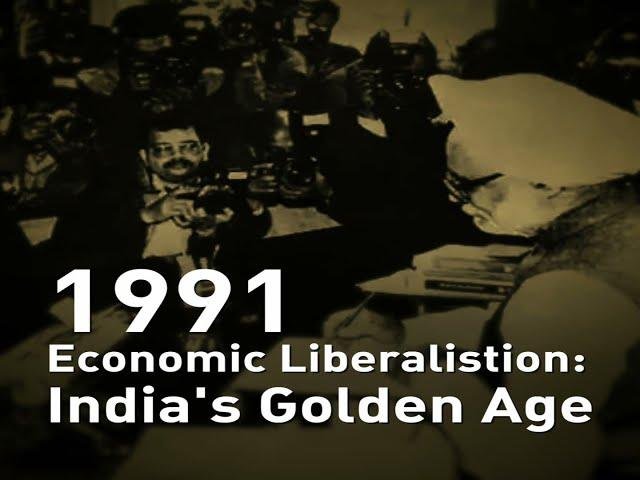
India’s 1991 Balance of Payments crisis, when forex reserves fell to about two weeks of imports, triggered major economic reforms. It marked India’s shift towards liberalisation, private-sector participation and greater global economic integration.
Causes of the 1991 Economic Crisis
- Gulf War and External Shock
- Iraq’s invasion of Kuwait (1990) sharply increased global oil prices, raising India’s import bill.
- POL (Petroleum, Oil and Lubricants) imports rose to ₹10,820 crore in 1990–91, about 72% higher than the previous year.
- The crisis also disrupted exports and remittances from Indians in West Asia, reducing foreign exchange inflows.
- Domestic Economic Imbalances
- High fiscal deficits, rising public debt and greater reliance on external commercial borrowing weakened the economy.
- The current account deficit was increasingly financed through foreign borrowing, raising debt-servicing pressures.
- By 1990–91, external debt including NRI deposits was about 23% of GDP, while debt servicing was around 21% of current account receipts.
- Loss of External Confidence
- Political instability (1989–91) weakened the government’s ability to respond quickly to the crisis.
- Falling creditworthiness restricted access to external commercial credit.
- NRI deposit outflows further reduced the country’s foreign exchange reserves.
Emergency Measures
- Gold Mobilisation
- State Bank of India (SBI) raised about $200 million in May 1991 by pledging 20 tonnes of confiscated gold, with a repurchase option.
- In July, the RBI pledged 46.91 tonnes of gold with the Bank of England and Bank of Japan, raising about $405 million.
- The RBI’s gold-backed borrowing was repaid by November 1991, making it a collateralised loan, not a sale.
- Rupee Devaluation
- The rupee was devalued in two stages on 1 and 3 July 1991, by about 18–19% overall.
- It aimed to improve export competitiveness and strengthen the Balance of Payments.
- IMF Assistance
- India secured emergency financial support from the International Monetary Fund (IMF).
- A $2.3 billion IMF Stand-by Arrangement supported the country’s BoP adjustment programme.
Economic Liberalisation: 1991 Reforms
- New Industrial Policy, 1991
- Announced on 24 July 1991, it dismantled much of the Licence Raj by removing industrial licensing for most industries.
- Reduced the exclusive role of the public sector and expanded opportunities for private-sector participation.
- Allowed up to 51% foreign investment through automatic approval in specified priority industries.
- Relaxed Monopolies and Restrictive Trade Practices (MRTP) restrictions to facilitate industrial expansion.
- 1991 Union Budget
- Presented by Finance Minister Dr. Manmohan Singh, focusing on:
- Fiscal consolidation
- Subsidy reduction
- Export promotion
- Import-policy reforms
- Greater economic efficiency
- Together, these measures laid the foundation for India’s shift towards a more market-oriented and globally integrated economy.
Significance
- Shift to market-oriented economy: Reduced industrial licensing and state controls, encouraging competition and private-sector participation.
- Global integration: Liberalised trade and foreign investment, strengthening India’s integration with the global economy.
- Economic stabilisation: Exchange-rate adjustment, fiscal correction and external assistance helped address the BoP crisis.
- Foundation for reforms: Created the basis for later reforms in industry, finance, taxation, trade and the external sector.
- Crisis-driven transformation: The crisis enabled implementation of reforms that had been discussed but could not be pursued earlier.
FAQs
Q1. What was the immediate nature of India’s 1991 crisis?
Ans. It was primarily a Balance of Payments and external liquidity crisis.
Q2. What was the New Industrial Policy, 1991?
Ans. It substantially dismantled the Licence Raj, reduced public-sector monopolies and liberalised foreign investment and industrial entry. It marked a major shift towards a more market-oriented economy.
Q3. Was the 1991 crisis caused only by the Gulf War?
Ans. No. The Gulf War was an important external shock, but the crisis was also rooted in persistent fiscal and current-account deficits, rising external borrowing, debt-servicing pressures and declining international confidence.
Q4. Why is 1991 considered a turning point in India’s economy?
Ans. It marked the transition from a heavily regulated economic system towards liberalisation, greater private-sector participation and increased integration with the global economy.